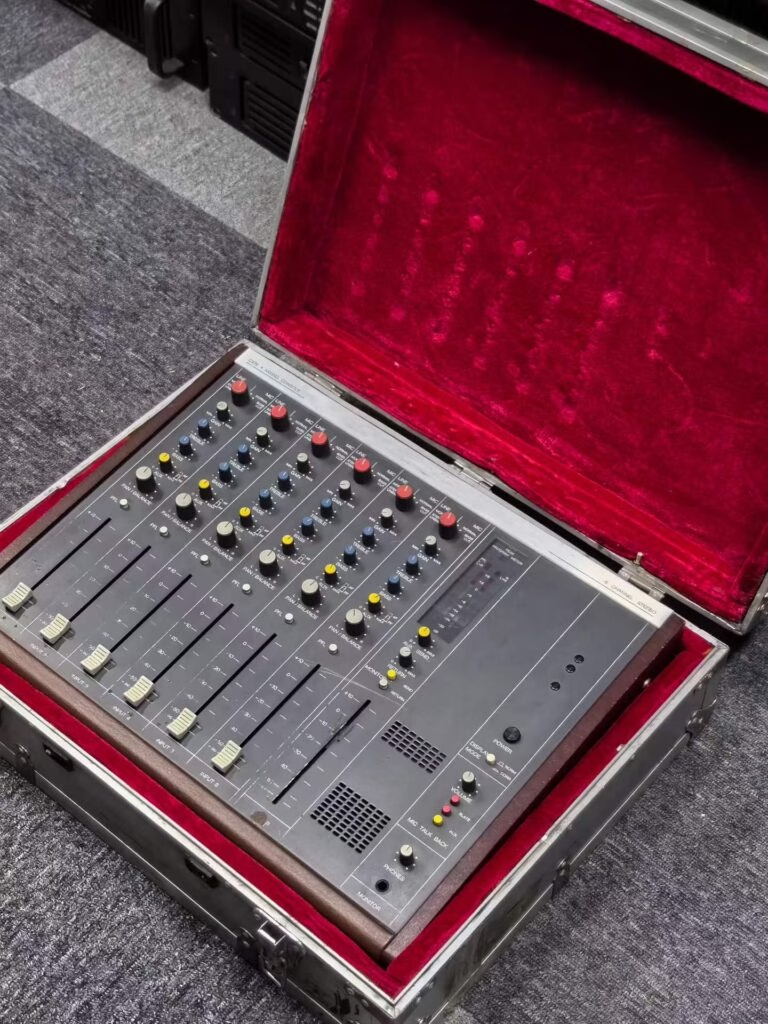
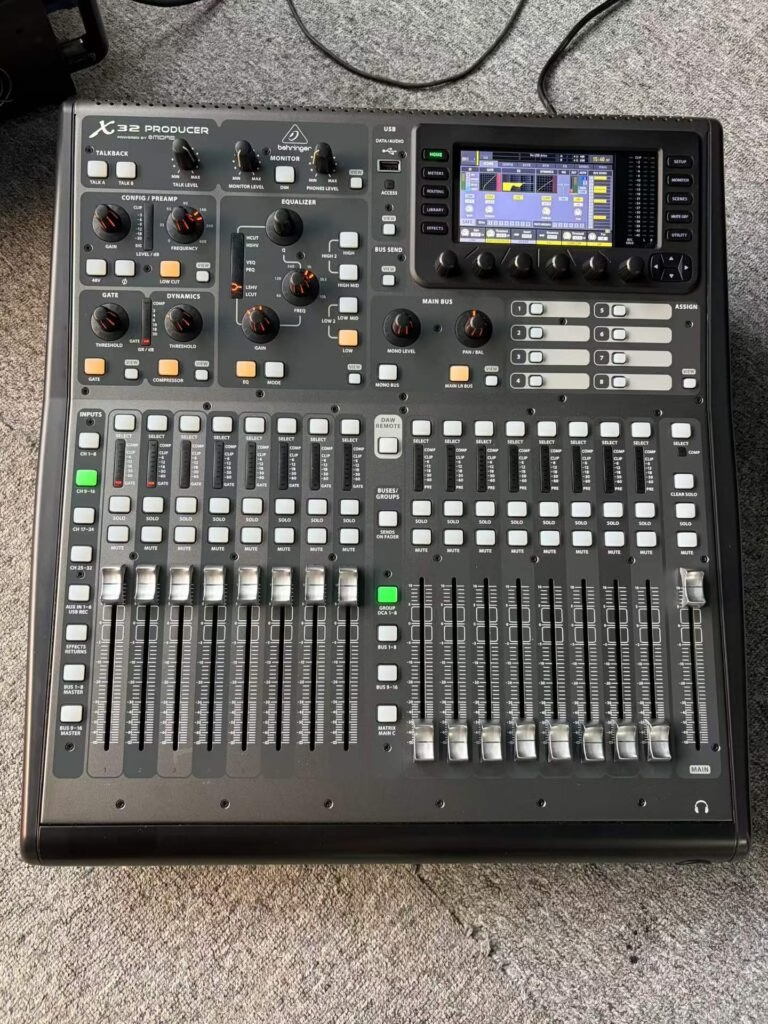
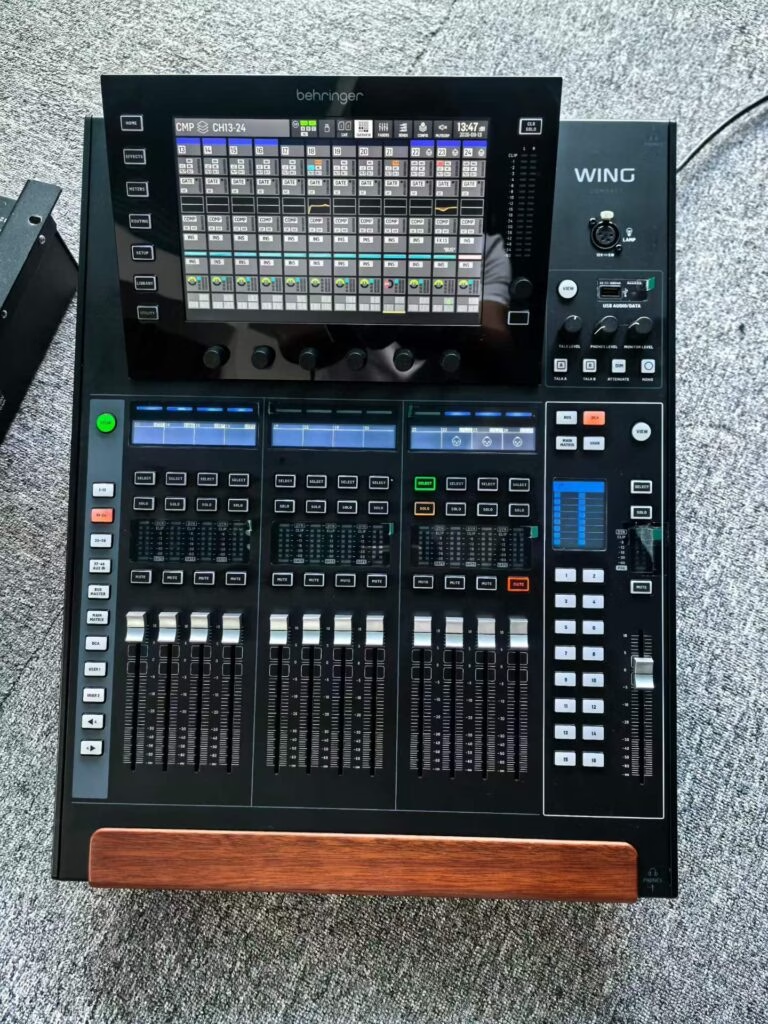
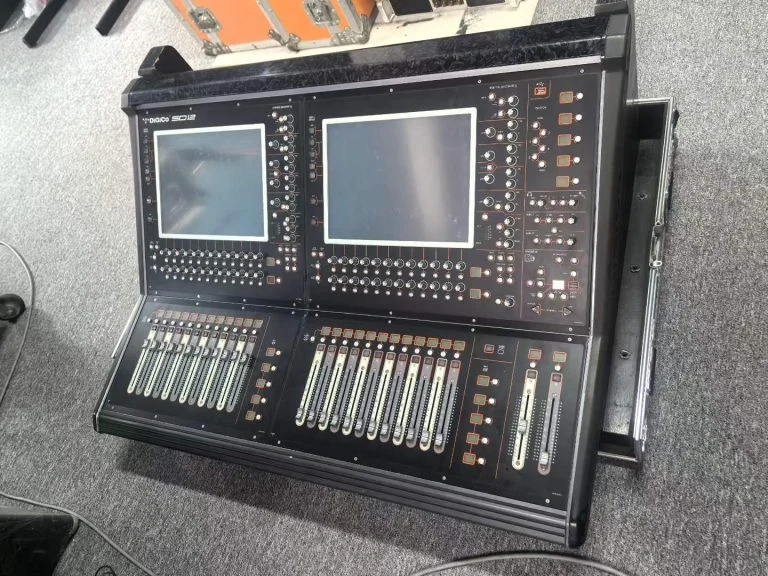
Choose used digital for touring, multi-band bills, and anything needing scene recall: 32-48 channels for $900-2,800 with effects and recording built in. Choose used analog for fixed installs and engineers who want one knob per function at $300-900. Most first-time buyers underestimate the outboard cost on analog.
What does a used digital console actually include?
Modern digital desks bundle compression, gating, four or more effects engines, and a USB multitrack interface. On a $1,400 used desk, that replaces roughly $2,000-3,000 of outboard gear.
Channel counts also stack up fast. A used 32-channel desk will run a full five-piece with individual drum mics, four vocals, and two DI lines without sub-mixing anything. That headroom is worth real money on a show day.
Channel counts also stack up fast. A Yamaha DM1000 delivers 48 input channels in a frame that fits in a small rack case, with full scene memory for every show. Twenty years old and still touring in smaller markets.
Where does analog still win?
Analog also holds value in places where nothing digital can be bought quickly. In several West African and South Asian markets, a broken analog desk can be fixed by a local tech with a soldering iron the same week. Digital brings a shipping delay and a customs bill.
Speed and muscle memory. An engineer who has run the same analog desk for a decade can chase feedback faster than anyone hunting through a menu page.
- No boot time. Power on and mix.
- Every channel strip in the same place, no banks to page through.
- Repairs are component-level and cheap: a $4 fader instead of a $400 board.
- Resale holds up because nothing in it becomes unsupported software.
What hidden costs hit each option?
Analog is not cheaper once you count outboard. A 32-channel analog desk at $700 still needs 8 compressors ($400-900 used), 4 effects units ($300), a graphic EQ rack ($250), and a case for all of it.
| Item | Used digital | Used analog |
|---|---|---|
| Desk | $900-2,800 | $300-900 |
| Outboard | Built in | $900-1,500 |
| Snake / stage box | $300-800 digital | $150 analog multicore |
| Case | $200-400 | $200-350 |
| Repair risk | Board-level, costly | Component-level, cheap |
Digital’s hidden cost is different: a dead fader board on a discontinued model can cost $400-700, and the firmware may never be updated again. Add a repair budget of about 30% of purchase price if the model is five years past its last firmware release.
One more cost people forget: digital desks need clean power. A brownout mid-show can corrupt a scene library, so a $120 UPS is not optional on a touring digital rig.
Which console suits a small touring band?
Digital, without much debate. Ten venues in two weeks means ten different rooms and no time to rebuild a mix from scratch. Scene recall saves 40 minutes per show, which over a 12-date run is two full working days of labour you are not paying for.
There is a caveat. Digital desks fail as a unit. When an analog desk loses a channel, you lose one channel. When a digital desk loses its brain, the whole show stops. Carry a spare or keep an analog backup in the van.
If the band records every show, built-in multitrack capture seals it. Sending 32 channels to a laptop over USB beats hauling an interface and a splitter.
For racks and network options on larger digital systems, see the DiGiCo MADI rack listing: 48 channels over MADI in a single stage box.
What about a fixed install in a club or church?
Analog often wins here. The desk is set once, taped down, and mixed by volunteers. Fewer menus means fewer Sunday morning panics, and a $4 replacement fader is a same-week fix.
Analog also survives power events with less drama. There is no boot sequence to fail at the wrong moment, and no firmware that refuses to load after a decade in a dusty booth.
Digital still makes sense if the room hosts events with different technical needs, or if you want remote control from a tablet during soundcheck.
Compare current listings in the mixers category before choosing a format.
Key Takeaways
- Used digital: 32-48 channels, effects and recording built in, $900-2,800.
- Used analog: $300-900 for the desk, plus $900-1,500 of outboard to match.
- Digital wins touring and multi-band bills through scene recall.
- Analog wins fixed installs and volunteer operators on repair cost and speed.
- A discontinued digital fader board can cost $400-700 to fix; budget for it.
Not sure which format fits your venue? See what consoles are in stock.