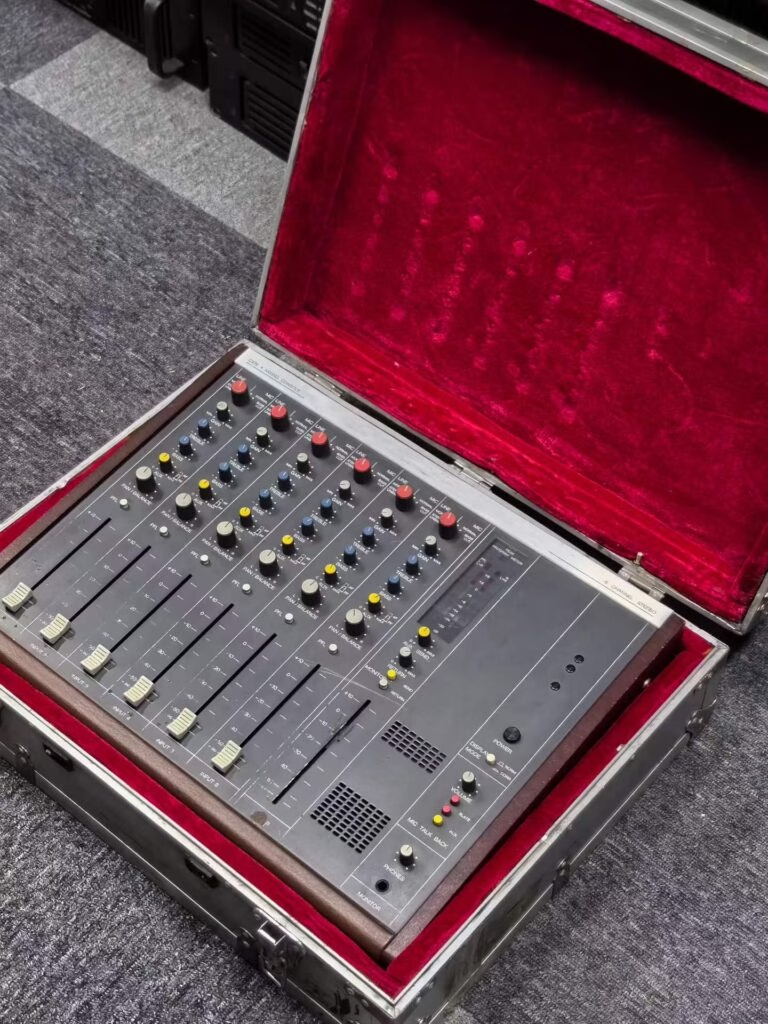
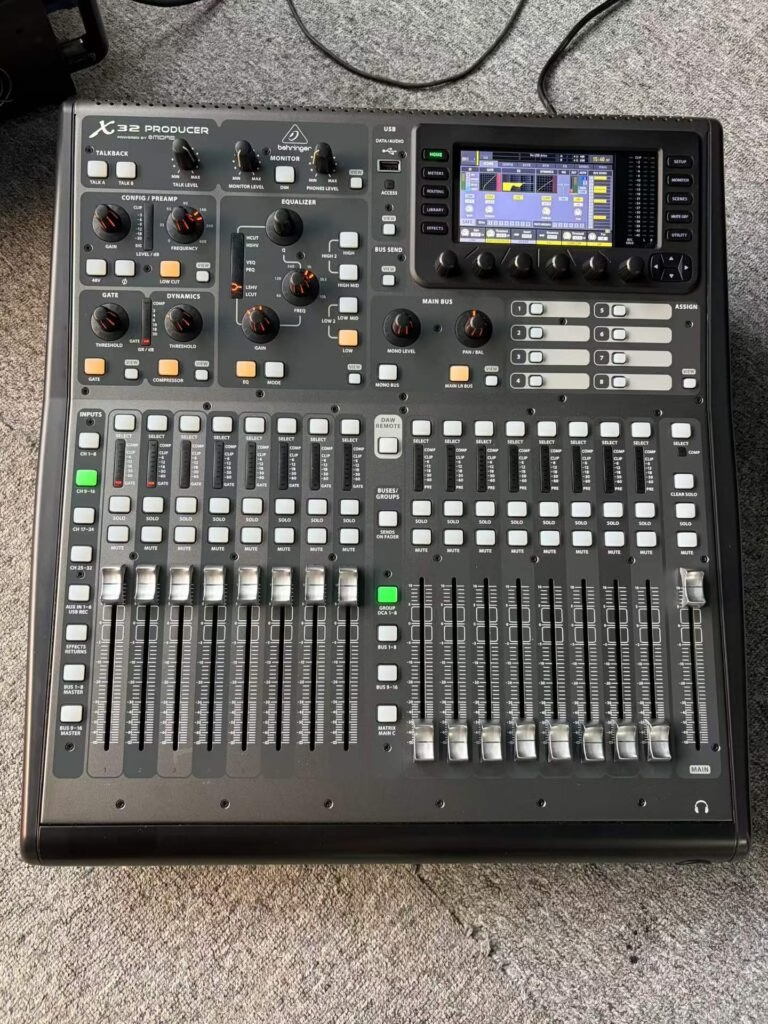
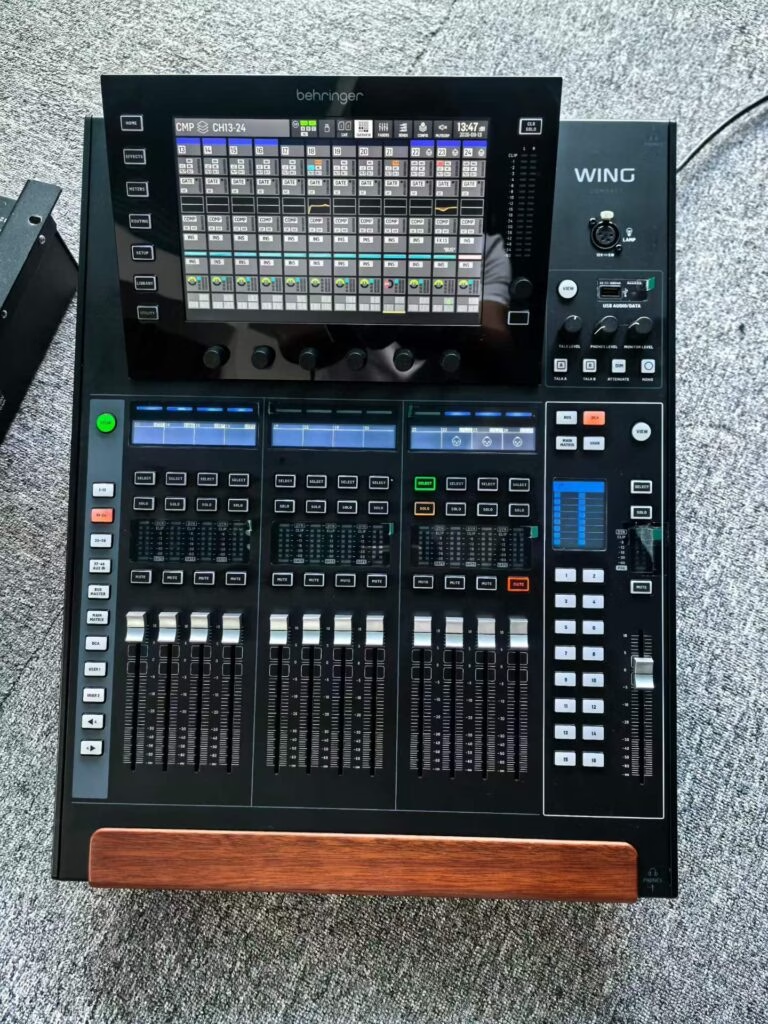
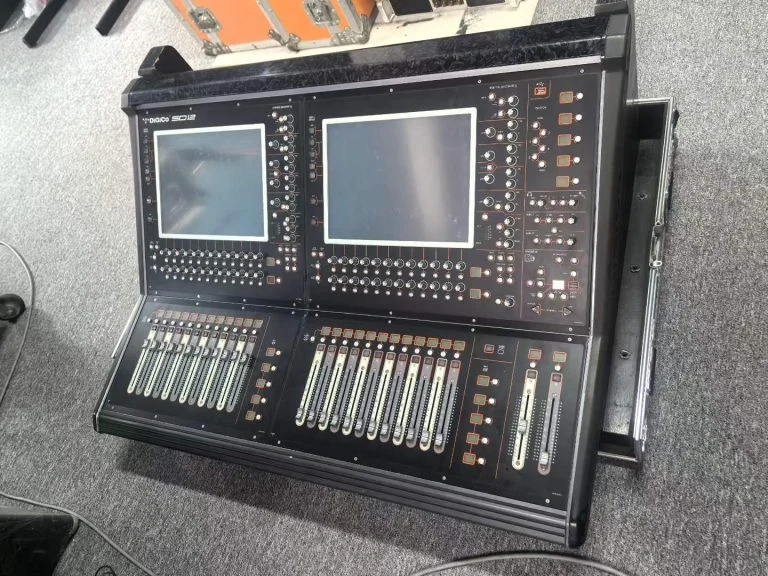
Take analog if you run fewer than 16 inputs in one fixed room and want something a local tech can repair with a soldering iron. Take digital if you need scene recall, more than 24 channels, or a desk that one person can reset between bands. The money gap: used analog desks run USD 400-1,200, used digital desks USD 1,100-3,000.
I have loaded both types of truck in Shenzhen yards, and the pattern has not changed in ten years. Analog desks fail gradually. Digital desks fail all at once.
Where does analog still win?
- Repair cost — a dead channel strip is a USD 15 pot, not a USD 400 board.
- Resale — a clean Soundcraft or Midas stays sellable for 20 years.
- Learning curve — new volunteers are usable in 15 minutes.
- No boot time — power on, faders move, done.
The cost is real, though. A 32-channel analog desk needs 32 channels of outboard if you want gates and compressors, plus a live engineer who can mix blind. That outboard is where the “cheap” analog rig suddenly costs more than a digital one.
Where does digital clearly win?
Scene recall, channel count per rack unit, and built-in dynamics and EQ on every channel. A used Yamaha DM1000 gives 48 inputs, 4-band EQ and dynamics per channel, and eight fader layers, in a 3U frame that weighs 24 kg. Nothing analog competes at that density.
| Factor | Analog | Digital (DM1000 class) |
|---|---|---|
| Used price | USD 400-1,200 | USD 1,100-1,600 |
| Channels | 16-32 | 48 |
| Scene recall | No | Yes, 99 scenes |
| Repair path | Component level | Board swap |
| Weight | 30-60 kg | 24 kg |
What kills a used digital console?
Power supplies and fader boards, in that order. Both are replaceable on the DM1000 and similar desks, but only if parts exist. Before buying, check that all faders travel smoothly to both ends without the motor stalling, that the touchscreen responds at the edges, and that the desk boots in under 60 seconds.
One more thing worth checking: firmware version. A desk stuck on old firmware may not talk to modern Dante or USB cards, and updates sometimes need a specific card that nobody sells anymore.
Which one holds value better?
Analog desks hold value longer but grow slowly. Digital desks drop fast for five years, then flatten. A 2004 Yamaha DM1000 was USD 6,000 new and now sells at USD 1,100-1,600. That is a stable floor, not a slide, because the workflow is still useful.
If you want to compare the numbers directly, our Yamaha DM1000 listing shows what a 48-channel digital desk costs secondhand today. For smaller analog-friendly setups, the mixers category covers both formats.
Key Takeaways
- Under 16 inputs in a fixed room, a used analog desk at USD 400-1,200 is the sensible buy.
- Over 24 inputs or rotating bands, digital recall saves more than it costs.
- A used Yamaha DM1000 gives 48 inputs in 24 kg for USD 1,100-1,600.
- Digital desks fail at once: test every fader motor and the boot time.
- Analog desks fail one channel at a time and stay sellable for two decades.