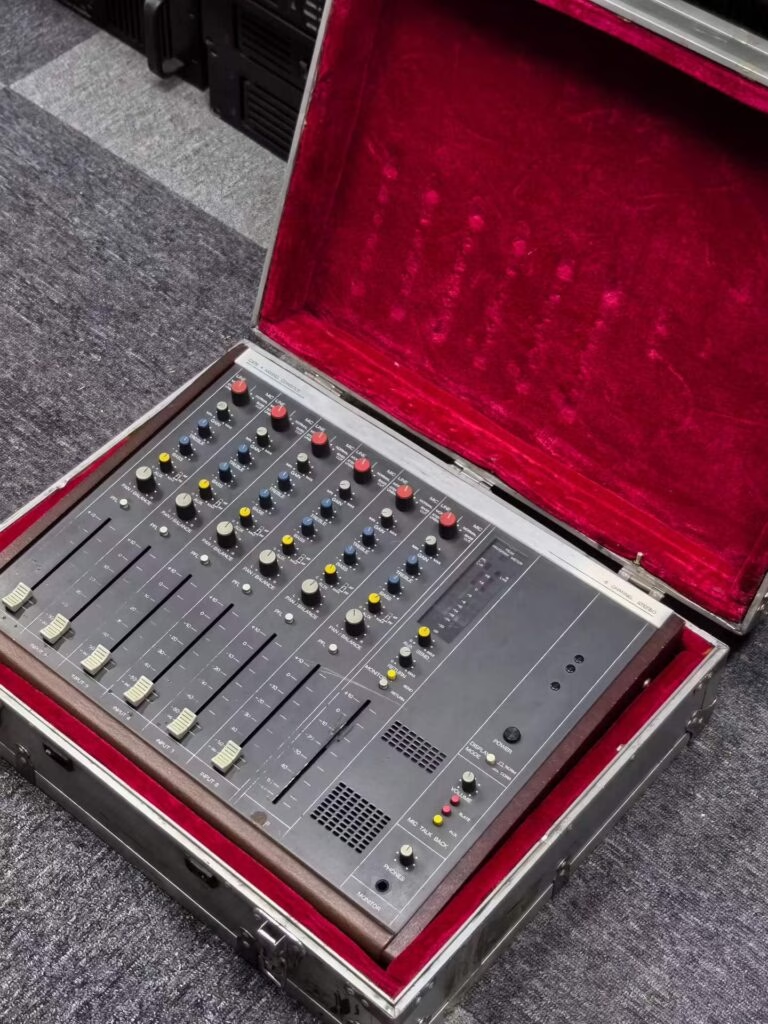
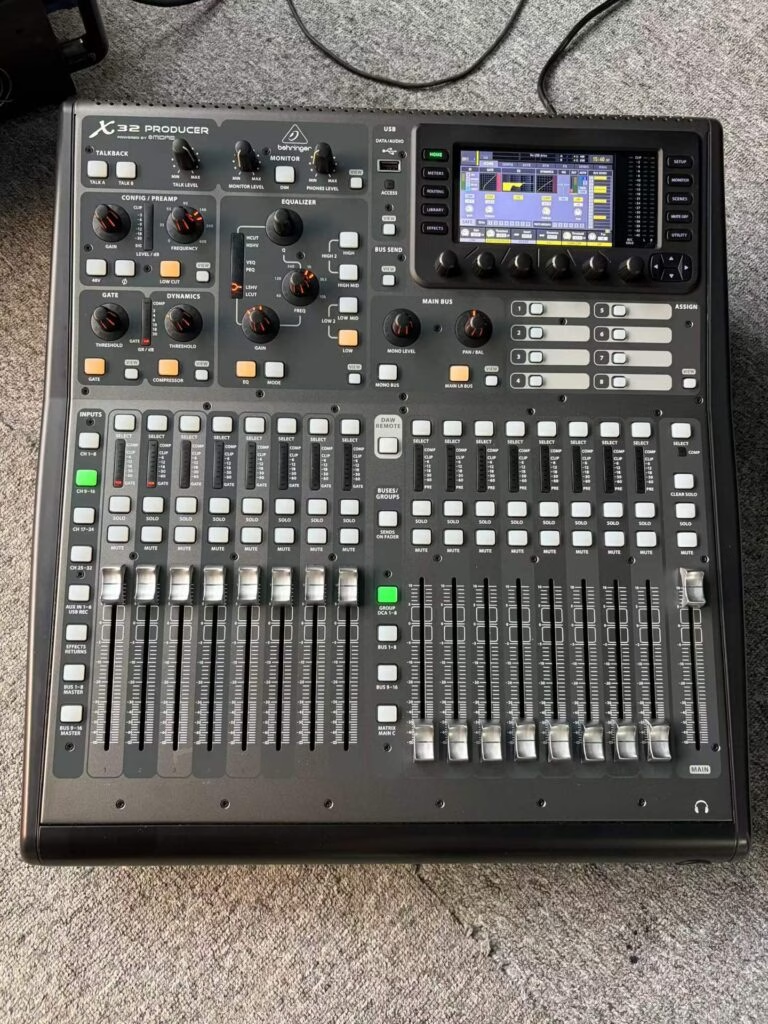
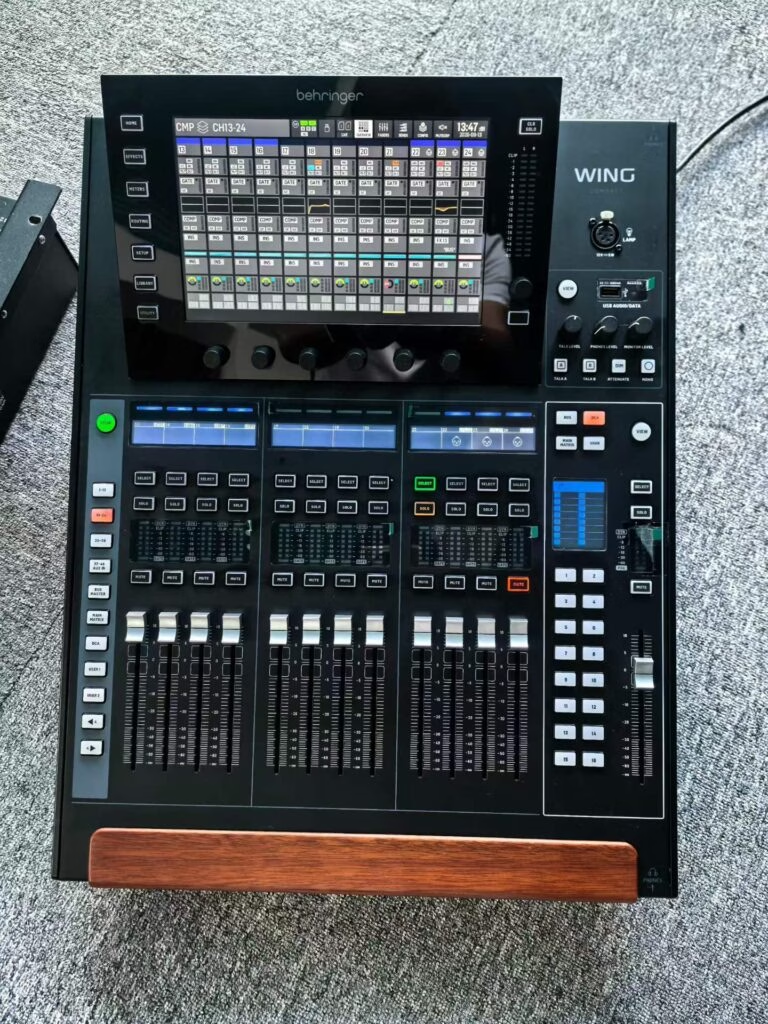
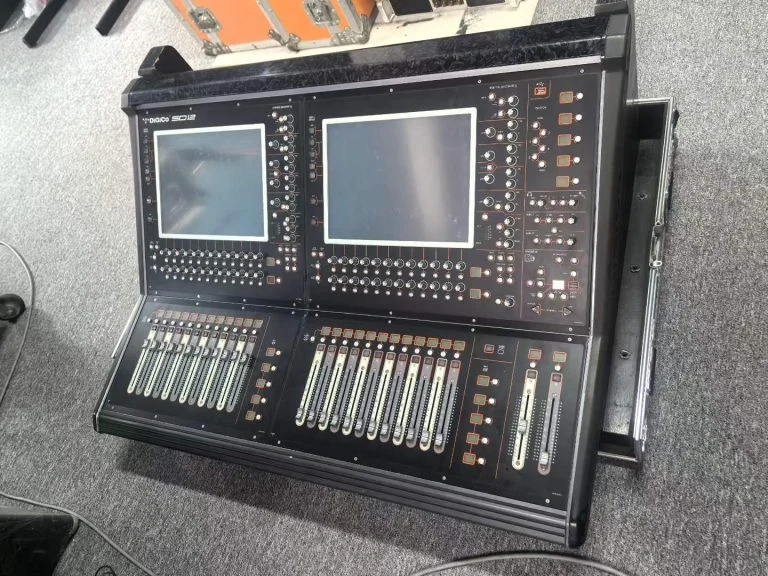
Analog for simple shows, digital for anything that has to be recalled. Used analog boards run $8-25 per channel and any tech can fix one. Used digital boards run $15-70 per channel and hand you scenes, per-input dynamics and built-in effects — plus a single point of failure and a learning curve.
The argument has changed in the last five years. Digital used to be the risky expensive choice. Now a used digital desk costs less than a used 32-channel analog in good condition, because analog desks have no resale demand outside of studios.
How do digital and analog compare on resale price?
| Analog | Digital | |
|---|---|---|
| 16-channel used | $150-450 | $400-900 |
| 32-channel used | $500-1,400 | $700-2,500 |
| Cost per channel | $8-25 | $15-70 |
| Repair path | Any bench tech | Parts availability critical |
| One board fault kills show? | Rarely | Often |
| Scene recall | None | Full |
The cost-per-channel comparison flatters analog until you extend the count. A 16-channel analog desk plus a rack of 8 compressors, 4 gates and 2 effects units costs more than a 24-channel digital desk that has all of it inside.
When does analog still win?
- Volunteer operators. Every knob does one thing and is visible at once.
- Redundancy. A dead channel is a dead channel. Nothing takes the whole board down.
- Long-term repairability. Through-hole parts, standard op-amps, any competent bench can work on it.
- Simple shows. A four-piece band with four vocals does not need scenes.
Analog desks also age well in a way that surprises people. A 1998 Soundcraft with new caps is a better console than it was new, because the caps were the weak point.
When does digital clearly win?
As soon as the show has more than four monitor mixes, more than two bands a night, or a requirement to recall settings between acts. Scenes are the whole point. A band change that takes 3 minutes on a digital desk takes 20 on analog, and at a festival that difference is the job.
Digital also wins on weight and footprint. A Yamaha DM1000 puts 48 channels and 16 auxes into 2U and 12 kg. The analog equivalent fills half a van.
Does one knob per function still matter?
For a trained engineer, no. For anyone else, yes — and that is a real constraint, not sentiment. Watch a volunteer hunt for a mute on a layered menu. Now watch the same person find it on an analog desk in half a second. If your venue runs on rotating volunteers, the analog board will produce fewer mistakes, and mistakes cost more than channel count.
What is the biggest hidden cost of used digital?
Software. Not the licence — the operating system. A 2008 digital desk may only have an editor that runs on Windows 7. When that laptop dies, you are hunting for a replacement OS, not a replacement console. Budget $150-300 for a dedicated machine and keep it off the network.
The second hidden cost is expansion cards. A used digital desk with no AD card may need $300-600 to reach its advertised input count. Always ask what cards are installed, not what the model supports.
What is the failure mode to plan for?
Digital desks fail as a whole, and the classic symptom is a boot loop or a frozen screen mid-show. Plan for it before it happens: keep a 16-channel analog desk in the van as a hot spare, or at minimum keep a small 8-channel mixer and enough cables to get vocals and a DI through. That $200 insurance has saved more gigs than any rack of outboard.
Which should you buy if you are new to this?
If you are new and buying for a small room, a used 16-channel analog desk at $250 teaches you gain structure faster than any digital desk, and when you outgrow it you lose almost nothing on resale. If you already know what a gate is and you are running multiple acts, skip analog and buy a used digital desk.
Whichever way you go, check the faders last. Faders are the one part that wears on both types, and it is the part sellers test least. You can browse current used mixing consoles with condition notes before you decide.
Key Takeaways
- Analog: $8-25 per channel, repairable anywhere, no scenes.
- Digital: $15-70 per channel, scenes and dynamics included.
- Budget $150-300 extra for a dedicated laptop on older digital desks.
- Ask which cards are installed, not which the model supports.