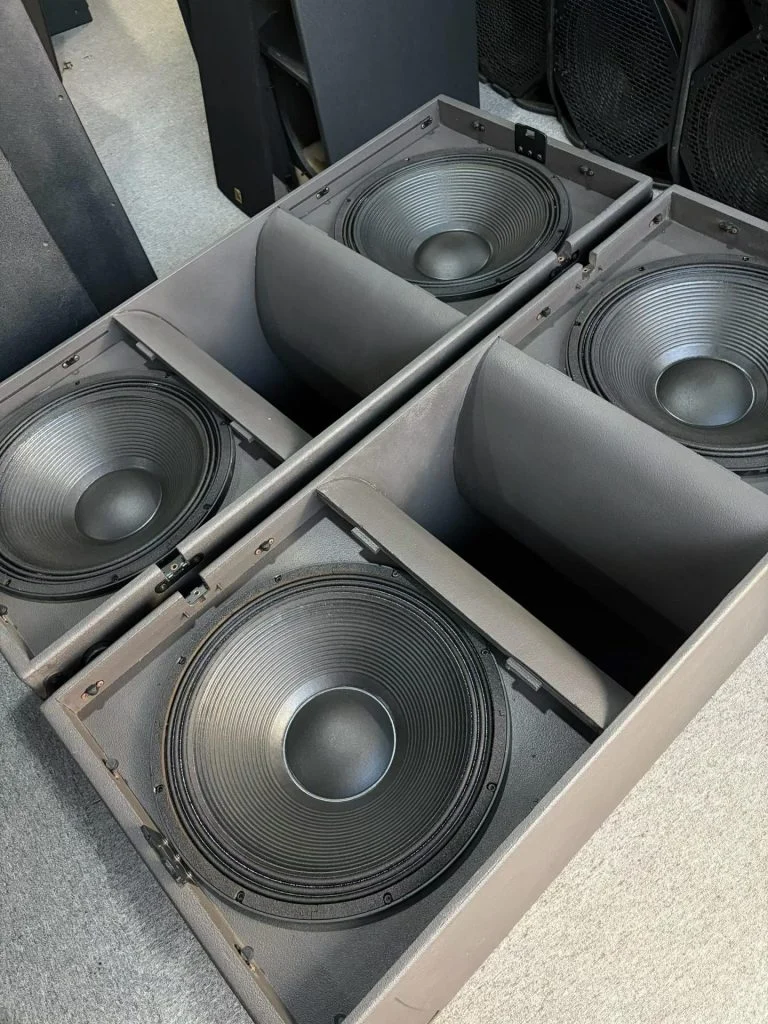
Yes, usually — if the amp module is still serviceable. Used powered PA speakers save 40-60% against new, and the drivers inside them are rarely the problem. The risk sits in the Class-D board and the switch-mode supply, which age in ways you cannot see from a photo.
That distinction is the whole buying decision. A passive cabinet fails in ways you can hear. A powered one can sound perfect today and fail at load-in because a supply cap dried out on the shelf last winter.
What fails first in used powered PA speakers?
- Power supply capacitors. Electrolytics dry out after 10-15 years. Symptom: hiss at zero input that grows as the unit warms up over 30 seconds.
- Protection circuit false trips. The cabinet cuts out at 70% of its rated level and recovers after a minute. That is a failing current sense, not a driver.
- DSP boot failures. Unit powers up but ignores preset changes, or reverts to a default after every power cycle.
- Inlet and IEC connectors. A loose inlet causes intermittent dropouts that look like amp faults.
How do you test the amp module in 10 minutes?
Three things, in order. First, power it up with nothing connected and your ear near the horn. You want silence or a faint hiss. A rising hiss over 30 seconds is a supply on the way out.
Second, feed music and run it to gig level for five minutes. If it protects before its rated output, that is an amp fault and the price should reflect it. Third, cycle the power three times and listen for a loud thump. A gentle thump is normal; a hard crack into the horn is not, and it will eventually take the compression driver with it.
Is the replacement module still available?
This is the question that decides the deal, and almost nobody asks it. Manufacturer spare modules typically stay available 7-10 years after a model is discontinued, then disappear. If the module is gone, a failed cabinet becomes a passive box plus an outboard amp — which is fine, but you should be paying passive-box money for it.
The K-array KF12 self-powered 2-way speaker is a good example of a unit where the amp is genuinely worth checking: 12-inch woofer, 1-inch compression driver, onboard DSP. When you inspect one, open the preset menu and confirm the DSP holds settings after a power cycle. That single test catches about half of the DSP faults I have seen.
Used powered vs used passive plus outboard amp?
| Used powered | Used passive + amp | |
|---|---|---|
| Cost for a pair | $500-1,600 | $300-1,000 |
| Setup time | One cable per box | Extra amp rack and speaker runs |
| Single point of failure | Yes | No |
| Repair path | Module swap if available | Any amp, any shop |
| Weight | Lighter | Heavier |
For a venue with a fixed install, powered wins because cabling is simpler and there is no amp rack to steal. For a rental fleet that gets moved weekly, passive plus a shared amp rack is more resilient. If you want the passive route, a JBL KP4010 passive 10-inch pair is the kind of box that pairs well with a 2×500 W amp and no DSP at all.
Does cabinet orientation change what you need?
A lot. A powered 12-inch box on a pole aimed at head height covers maybe 60 people. The same box lying on its side as a floor wedge beams into the back of the room and sounds thin up front. Two boxes per side on stands, splayed 20-30 degrees, will beat four stacked in a corner. Buy fewer boxes and mount them properly — that advice has never once been wrong.
How much should you pay, and when do you walk?
10-inch powered boxes: $250-500 a pair. 12-inch: $350-800. Anything 15-inch and 1000 W plus: $600-1,400. Add 15-25% if the original flight case and manuals come with it, because that tells you how it was stored.
Walk away if the seller will not power it up for five minutes, if the cabinet smells of burnt varnish (that is a cooked supply), or if the model has been discontinued more than eight years and no spare module exists. Cosmetic scuffs mean nothing. A hot smell means everything.
Key Takeaways
- Save 40-60% vs new; the amp module is the real risk, not the drivers.
- Rising hiss over 30 seconds = dying supply caps.
- Confirm a spare module still exists before you buy.
- Powered for installs, passive plus amp rack for rental fleets.