Usually yes — a used active PA speaker is the best value in live sound right now, as long as the plate amplifier is healthy. Used units go for 45-60% of new, and you skip the amp rack, the speaker cables and the crossover tuning. The risk sits in one component: the amp module. A replacement costs $180-450, which on a $300 speaker wipes out the entire saving.
What breaks first on an active speaker?
Not the drivers. In my experience, amplifier modules and power supplies fail before cones do. Class-D modules run hot, and electrolytic capacitors dry out after 8-12 years. The first symptom is usually a channel that cuts out at high volume, then a protection LED that stays lit.
- Capacitors — $60-140 in parts plus labour, the most common repair.
- Fan and thermal paste — $15-30, cheap insurance, often ignored.
- DSP board — $120-350, often not available after 10 years.
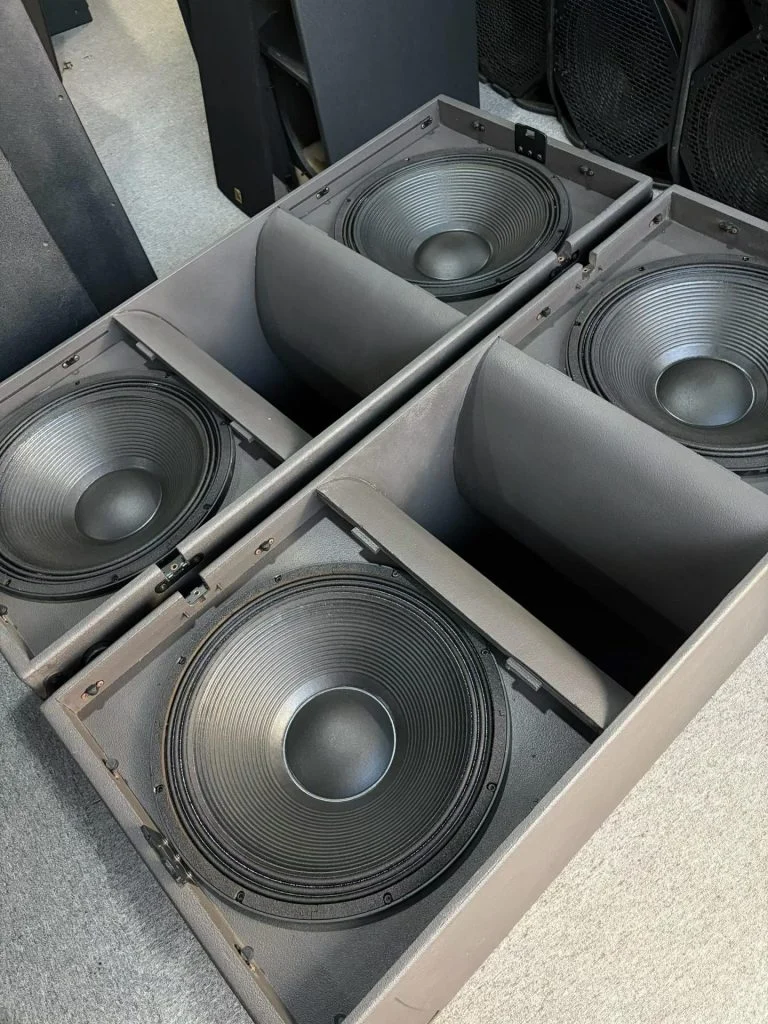
- Drivers — $70-150 per 12-inch recone, rarer than people assume.
How do you test one before paying?
Run it loud for 20 minutes, not 2. A cold amp passes every quick test and fails once the heatsink hits 60°C. Ask for a video showing a sine sweep at moderate level, then music at high level for ten minutes with the rear panel visible so you can see if the limit LED flashes constantly.
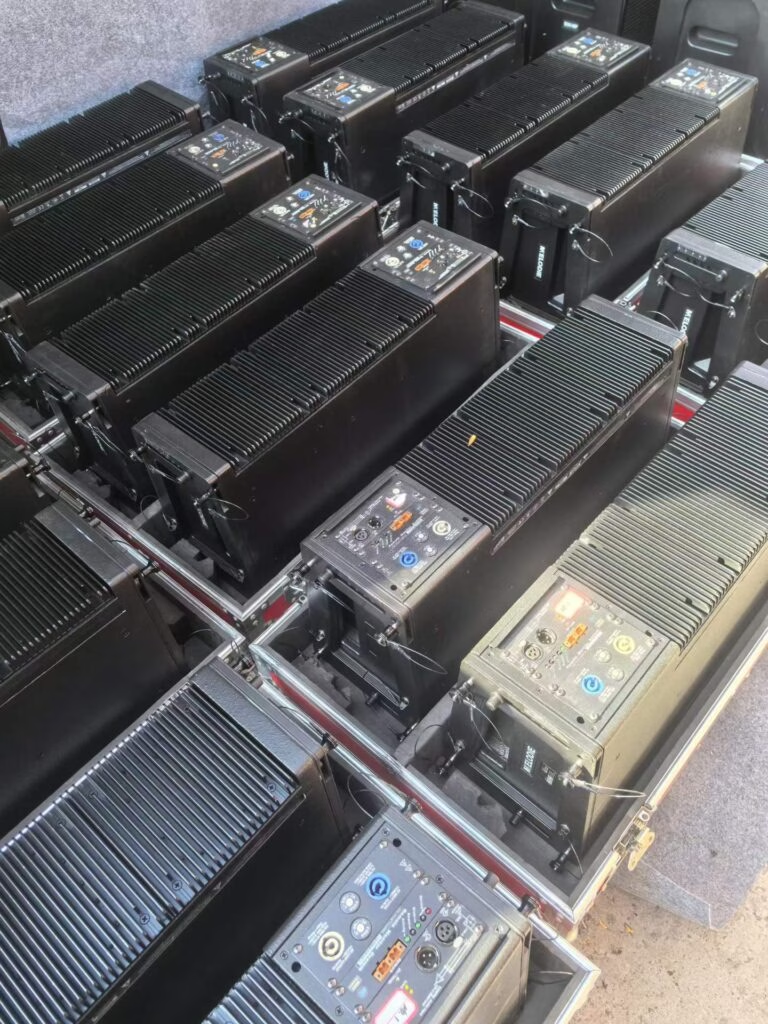
Check the input section too. XLR jacks get kicked, and a cracked connector means a board-level repair. On units like the K-array KF12, the rear panel also carries preset switches — ask for a photo of those, because missing or broken preset controls are a sign of rough handling.
Used active vs new active: where is the money?
| Used (Excellent) | New | |
|---|---|---|
| Price per 12″ top | $280-620 | $700-1,100 |
| Warranty | 30-90 days typical | 2-3 years |
| Expected life left | 6-10 years | 12-15 years |
| Repair risk year 1 | 10-15% | under 2% |
The maths favours used when the price gap is bigger than one module replacement. Two used tops at $450 each versus two new at $900 each saves $900 — enough to cover two amp module failures and still be ahead.
When should you not buy used?
Three situations. If the model is discontinued and the DSP board is unobtainable. If you need rider acceptance for touring work — promoters check model lists. And if the seller cannot tell you the firmware version. On modern active boxes the firmware controls limiter behaviour, and an outdated unit can sound noticeably different from its twin.
Also skip anything stored outdoors. Rusted screws on the rear panel are the giveaway, and moisture damage inside a class-D module is usually terminal. The speakers category lists units with panel photos, which is the fastest way to spot that.
What about powered subs and monitors?
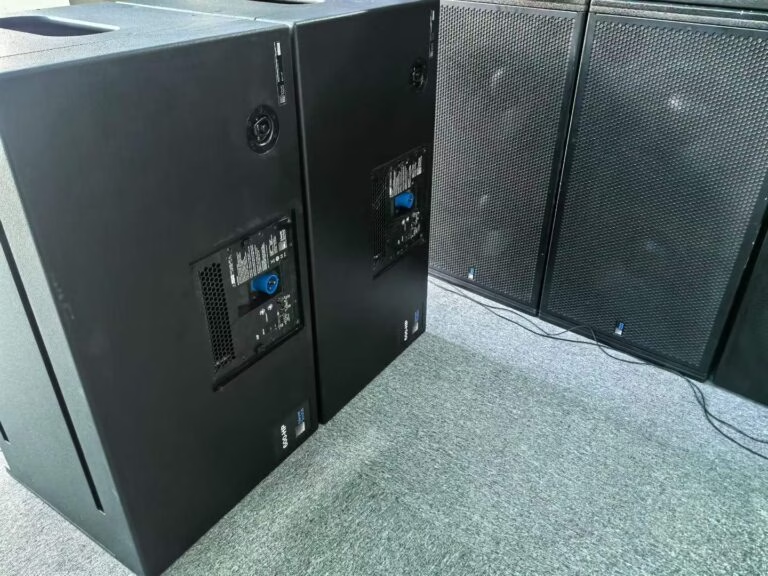
Subs are the better used buy. Their drivers are overbuilt, and a 15-year-old 18-inch sub with a fresh recone performs like new for 40% of the price. Stage monitors are the worst — wedges get kicked, spilled on, and their grilles hide crushed cones. Check monitor grilles with a torch before you commit.
Key Takeaways
- Used active speakers sell at 45-60% of new and skip amp racks entirely.
- The plate amp, not the driver, is the main failure point — budget $180-450 for a module.
- Test for 20 minutes at high level; cold amps pass quick tests.
- Buy used subs with confidence, used wedges with caution.
- Avoid discontinued models where DSP boards are no longer available.