Short version: for a venue that runs the same show every week, a used digital console wins on recall and channel count. For a club with a resident engineer and no scene changes, a used analog desk still wins on speed of repair and resale. Around $900-1,300 the used Yamaha DM1000 sits in the middle and is the safest bet for churches and small touring rigs.
The argument online is usually about sound. That is the least useful angle. A 1998 analog desk with tired caps sounds worse than a 2003 digital desk, and both sound fine when nothing is broken. The real decision is about who operates it and who fixes it.
Which one actually survives a bad night?
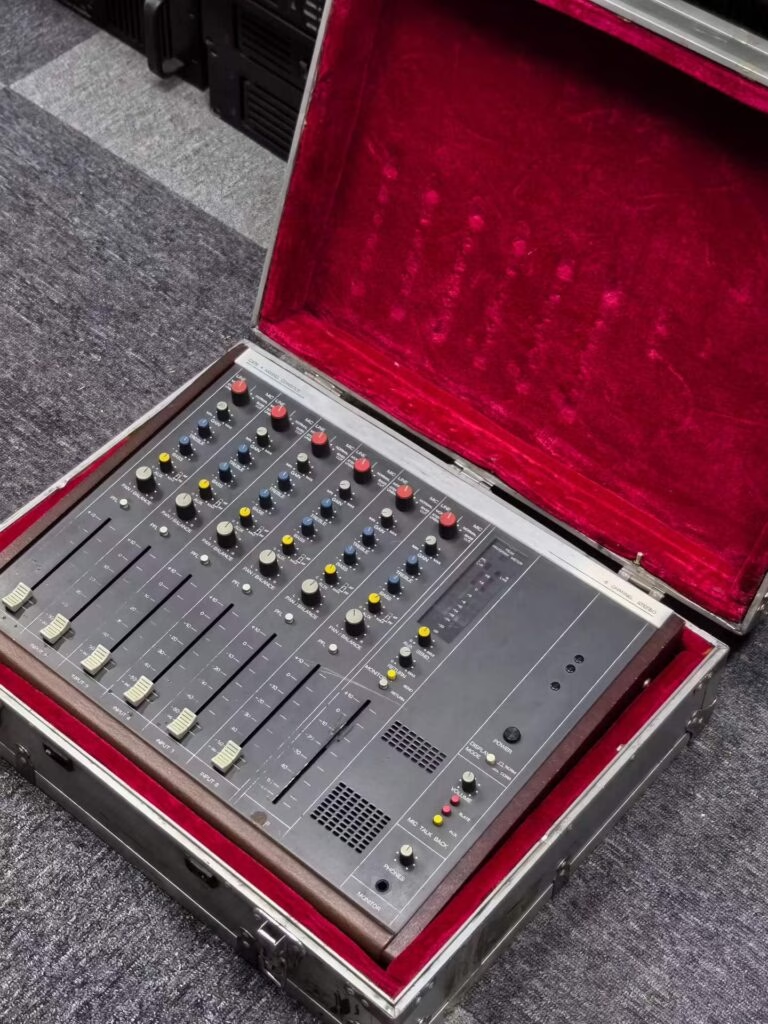
Analog. A dead channel on an analog desk means swapping a $4 op-amp or moving the mic to the next strip. A dead channel on a digital desk means a firmware state you cannot see, and possibly a mainboard that costs $400 and takes three weeks.
That is not a small point if you are 900km from the nearest service centre. I have shipped DM1000 consoles to buyers in Nigeria and Kenya, and the ones who stay happy are the ones who keep a spare PSU and a USB backup of their show file. The ones who treat it like an analog desk call me at 11pm.
How much does recall matter in real rooms?
| Use case | Analog makes sense | Digital makes sense |
|---|---|---|
| Club, same resident engineer | Yes, 16-24 channels is plenty | Optional |
| Church, 3 services a week | No | Yes, scene recall per service |
| Small touring band | Maybe, if 16 channels | Yes, repeatable every night |
| Corporate / conference | No | Yes, 40+ inputs and routing |
Recall is the thing people underestimate. A church that runs a 5-piece band plus three pastors needs at least 6 saved states a week. Doing that on an analog desk is a photo of the board taped to the case, and somebody always moves a knob.
What does a used Yamaha DM1000 give you that a $400 digital mixer does not?
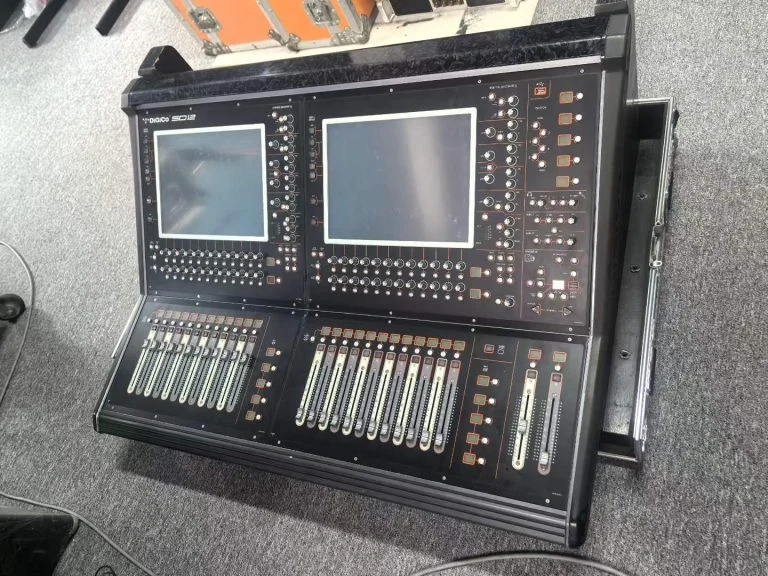
Three things, honestly. 48 channels at 96kHz, real motorised faders with 100mm travel, and an expansion slot that accepts ADAT or analog cards. A $400 mixer gives you 12 inputs, 60mm faders and a touchscreen that lags. The Yamaha DM1000 digital mixing console also has a flight case, which on a desk this heavy (about 16kg) is not a luxury.
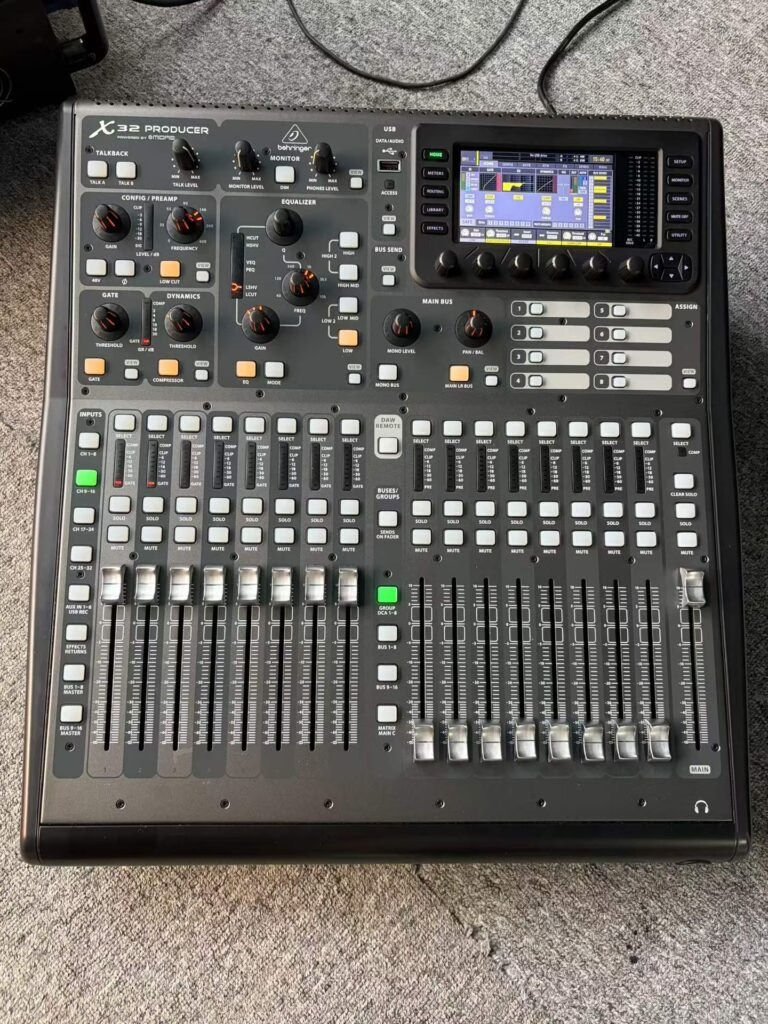
The counterpoint: the DM1000 launched in 2001. Its UI is menu-heavy, and anyone under 30 who learned on an X32 will find it slow for the first week. That is a training cost, not a gear problem.
Where does analog still beat digital outright?
- Latency: analog has effectively none, which matters for in-ear monitoring on a tight stage.
- Repair: a soldering iron and a multimeter fix most analog faults.
- Resale: a used Midas Venice holds value better than a 2008 digital desk nobody wants.
- Learning: new engineers learn signal flow properly on a desk with a knob per function.
Against that, analog cannot give you 48 channels in a 60cm footprint, and it cannot store a show. If your room changes configuration monthly, stop arguing and buy digital.
What is the honest recommendation at each budget?
| Budget (used) | Buy this | Why |
|---|---|---|
| $300-600 | 16-24 channel analog (Allen & Heath, Soundcraft) | Cheap, repairable, holds value |
| $900-1,300 | Yamaha DM1000 with flight case | 48ch/96kHz, motorised faders, proven |
| $1,500-2,500 | Used X32 / M32 class | Modern workflow, huge user base |
One warning that saves money: do not buy a $300 used digital desk from 2009. It will have a battery-backed memory that dies, and the firmware file will be gone from the internet. Analog desks from the 1990s still work. Digital desks from 2009 often do not.
How do you decide in ten minutes?
Answer three questions. How many inputs do you need on the busiest night? Does the operator change weekly? Is there a competent repair tech within 200km? If the answers are under 24, no, and yes, buy analog and keep $600 in your pocket. If any answer flips, buy digital.
I have watched rental companies ignore this and buy a $400 analog desk for a 40-input corporate job, then rent a digital desk twice a month at $150 a night. That mistake costs $3,600 a year, which is more than the digital desk would have cost outright.
If you want a concrete starting point, the Yamaha DM1000 digital mixing console is listed with its flight case and a tested show file. Compare it with the used mixers category before deciding on analog.
Key Takeaways
- Pick digital for recall-heavy rooms, analog for repairability and resale.
- A used Yamaha DM1000 at $900-1,300 gives 48 channels at 96kHz with motorised faders.
- Avoid 2008-2012 digital desks: dead memory batteries and vanished firmware.
- Budget $120-200 for spares either way; that is what keeps a desk alive.