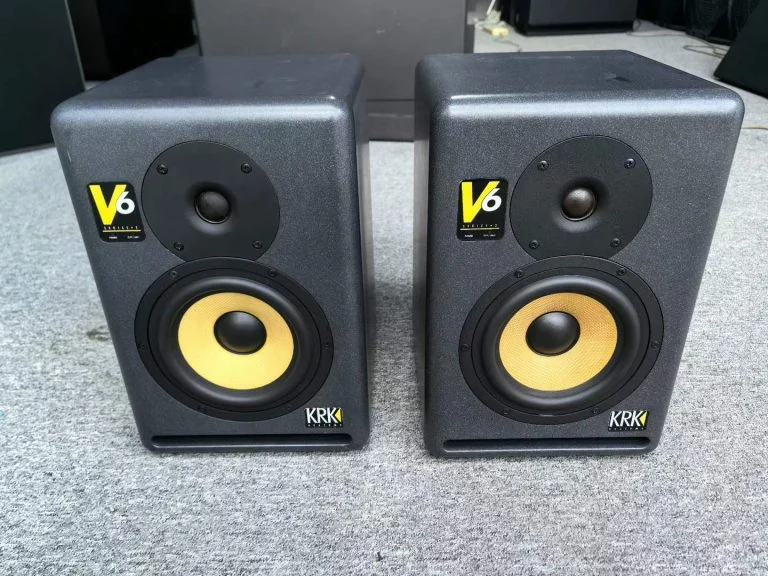
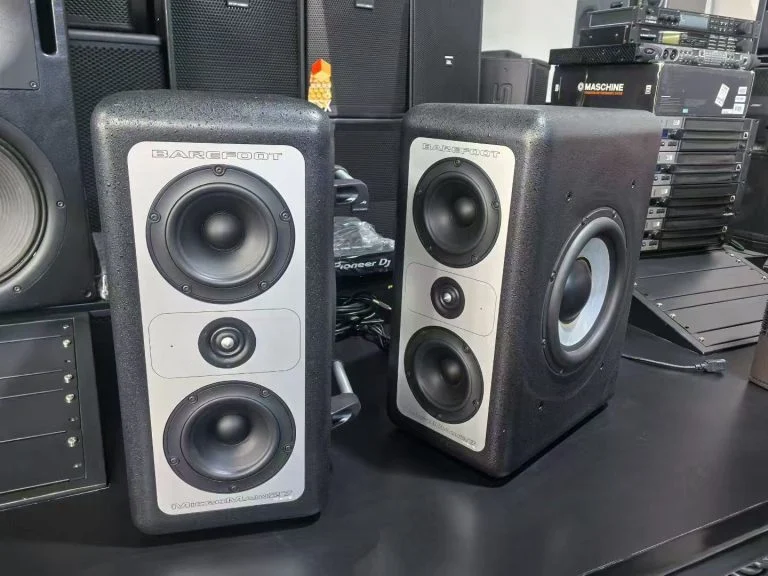
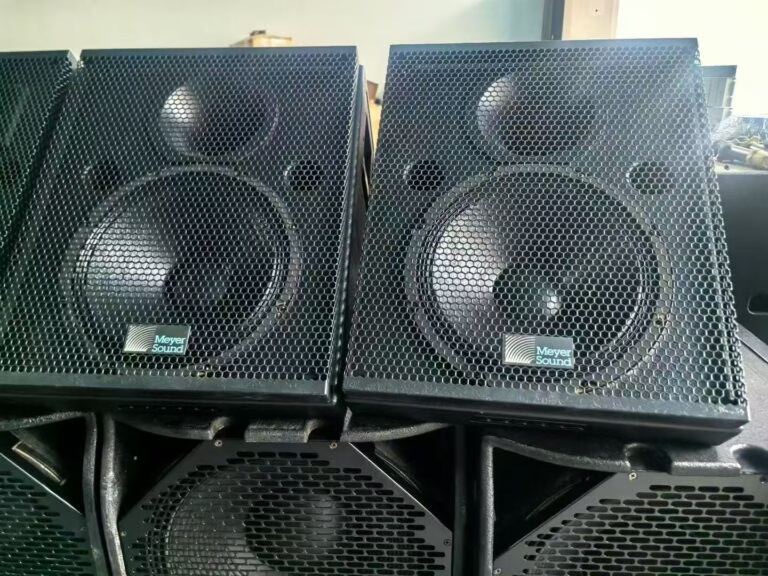
At the same budget, used usually wins. A used pair of mid-tier studio monitors beats a new pair of entry-level ones because you are buying better drivers, a heavier cabinet and a proven amp for the same money. The catch is that you must verify the pair is matched and that neither has a tired cone or a hissing amp.
Why do used monitors give you more for the money?
Monitors are a mature product. A well-regarded model from five years ago still measures well today — the physics of a 6.5-inch woofer has not changed. New budget monitors cut corners on cabinet bracing and crossover parts, which is exactly where used mid-tier monitors still have the advantage.
What should you check on a used pair?
- Both speakers must be the same model and revision — a mismatched pair is a problem
- Listen with the source muted and gain up — hiss means a tired amp module
- Inspect the woofer surround and tweeter dome for dents or tears
- Play a familiar track and check both sides sound identical
- Confirm the power supply works on your voltage, especially on imported units
Active vs passive used monitors — which is safer?
Active (powered) monitors are the modern norm and give you a matched amp and driver. The risk is that a dead internal amp makes the whole speaker a brick. Passive monitors need a separate amp, which is one more box but far easier to replace. For a used buyer with a spare amp, passive can be the lower-risk choice.
What are the red flags?
- One speaker sounds louder or brighter than the other
- Any buzz, hiss or crackle with no source playing
- Replaced drivers that do not match the original part number
- A cabinet that rattles when you tap it — loose bracing or a buzzing port
If you are building a room around a console, monitors pair cleanly with a digital desk — see our Yamaha DM1000 console for a supported mixing hub, and browse used studio gear by category for matched pairs.
How much should you pay for used monitors?
Rough 2026 bands: used entry 5-inch monitors $150-$350 a pair; used mid-tier 6.5-8 inch $400-$1,200 a pair; used high-end nearfields $1,500-$5,000 a pair. Prices drop fast when the pair is mismatched or the amp hisses.
Key Takeaways
- At equal budget, used monitors usually beat new entry-level pairs.
- Buy a matched pair of the same model and revision.
- A hissing amp module is the main failure risk on active monitors.
- Passive monitors are easier to keep alive if you have a spare amp.
- Always play a familiar track through both sides before paying.