Tap the grille gently and listen. If you hear a loose rattle, a dead or detached capsule, walk away. For a dynamic mic that one test catches most problems. For a condenser you also need phantom power and a quiet room, because capsule noise and a dying FET board only show up when it is actually powered.
Why does mic type change what you test?
A dynamic microphone has almost nothing to break — a diaphragm, a coil, a magnet, two wires. A condenser has a charged capsule and active electronics inside, so it has more failure points and needs phantom power to be judged. Testing a used SM58 and a used tube condenser are different jobs.
What should you test on any used microphone?
- Tap test: gentle taps on the body should not rattle the capsule
- Cable test: wiggle the connector while talking — dropouts mean a bad solder joint
- Connector check: XLR pins must be clean and straight, threads not stripped
- Grille check: no dents deep enough to touch the capsule
- Smell test: a burnt smell means heat damage, usually a hard no
How do you test a used condenser differently?
Apply phantom power and listen with gain up and no source nearby. A healthy condenser is quiet. If you hear hiss, crackle, or a low hum, the internal electronics are tired. Gently speak at different distances and listen for a thin or dead top end — a failing capsule often sounds dull before it stops working entirely.
For dynamics, the numbers are boring and reassuring: a good SM58-class mic is nearly indestructible and used ones sell for roughly half of new. That makes buying used a low-risk move as long as it passes the tap test and the connector is clean.
What are the red flags that should end the deal?
- A rattle on the tap test — the capsule is loose or dead
- Any crackle that changes when you move the cable
- Water marks or corrosion inside the grille or on the connector
- A condenser that hums or hisses with phantom power applied
- No original clip or case on a premium model — suggests careless handling
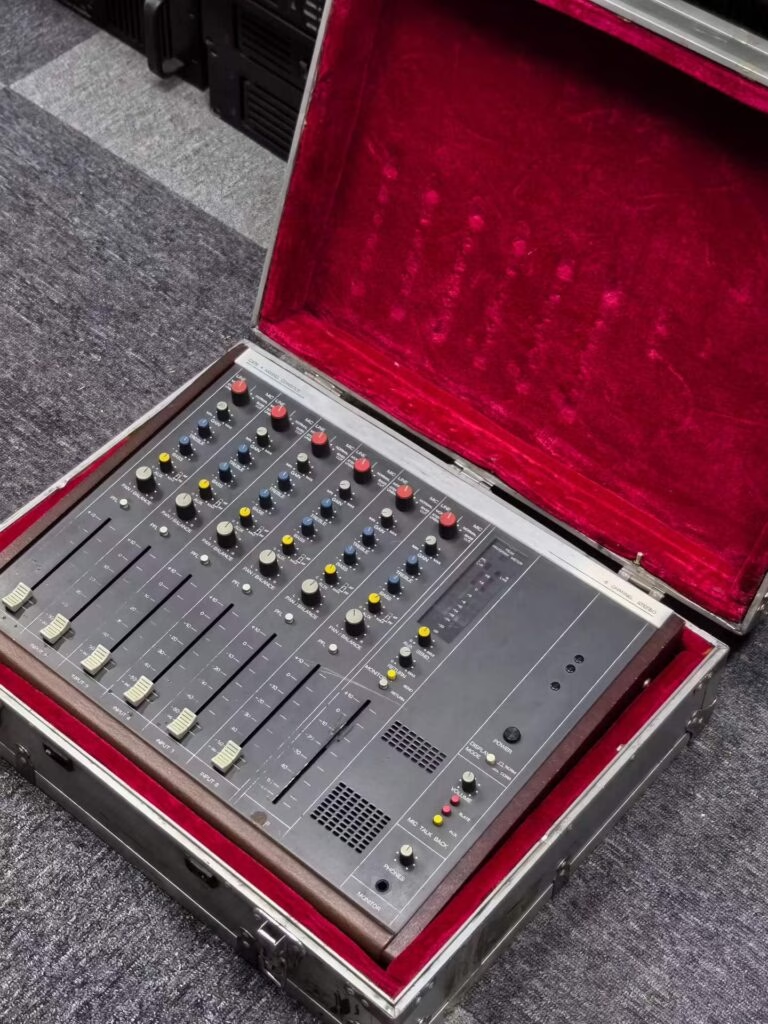
You can browse tested used microphones by category here, and if you mix live, a matched mic pairs naturally with a desk like the Yamaha DM1000 console. Buying from a seller who powers the gear up for you removes most of the guesswork.
How much should you pay for a used mic?
Rough 2026 bands: a used SM58-class dynamic is $50-$80; a used small-diaphragm condenser $80-$250; a used large-diaphragm studio condenser $200-$1,500 depending on the model. If the price is far below the pack, assume the capsule is the reason.
Key Takeaways
- Tap test first: a rattle means a loose or dead capsule.
- Wiggle the cable while talking to catch intermittent dropouts.
- Condensers must be tested powered, with phantom power and quiet gain.
- Used SM58-class dynamics are low-risk and sell near half of new.
- Water marks, corrosion and burnt smells are immediate rejects.