Description
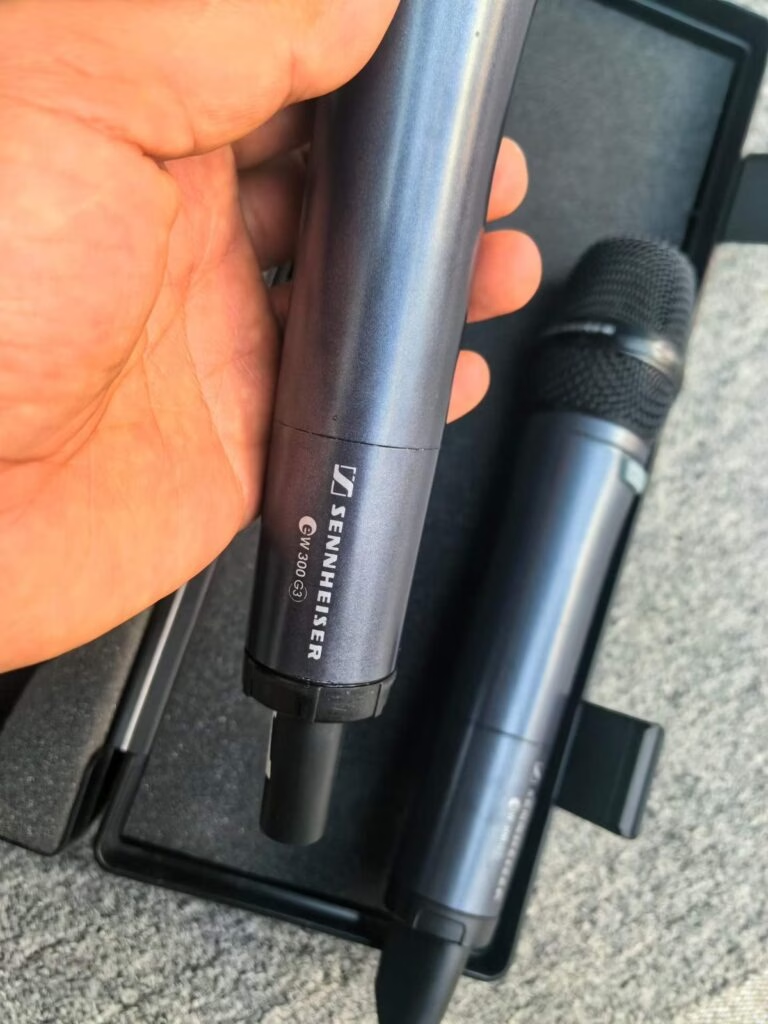
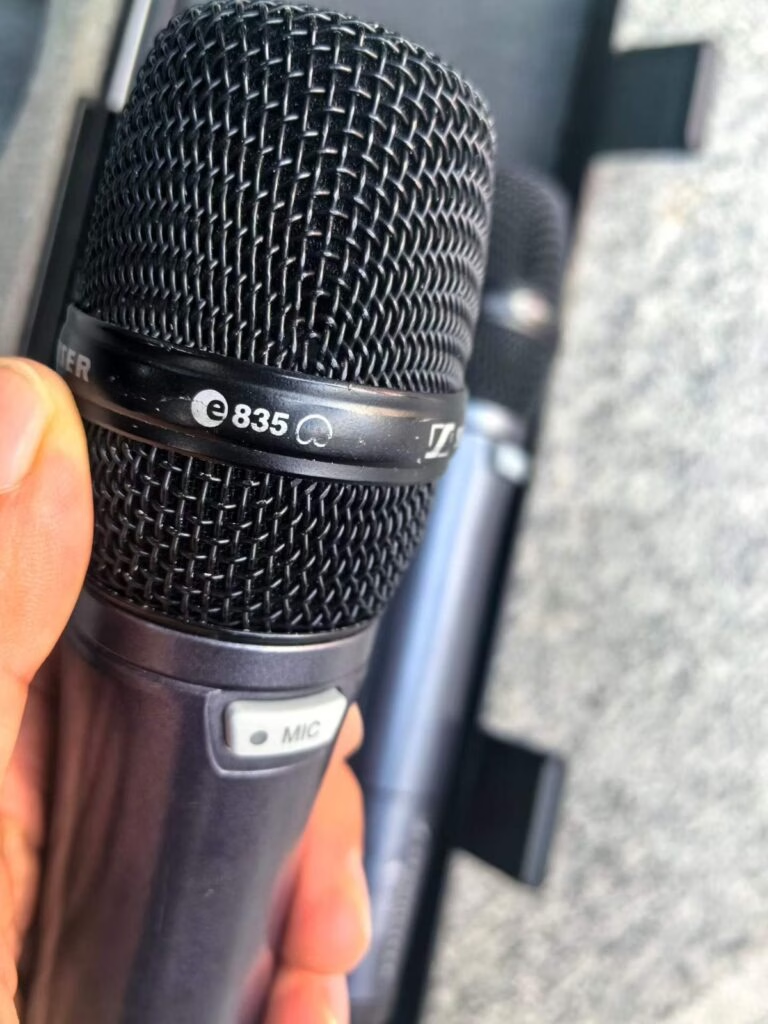
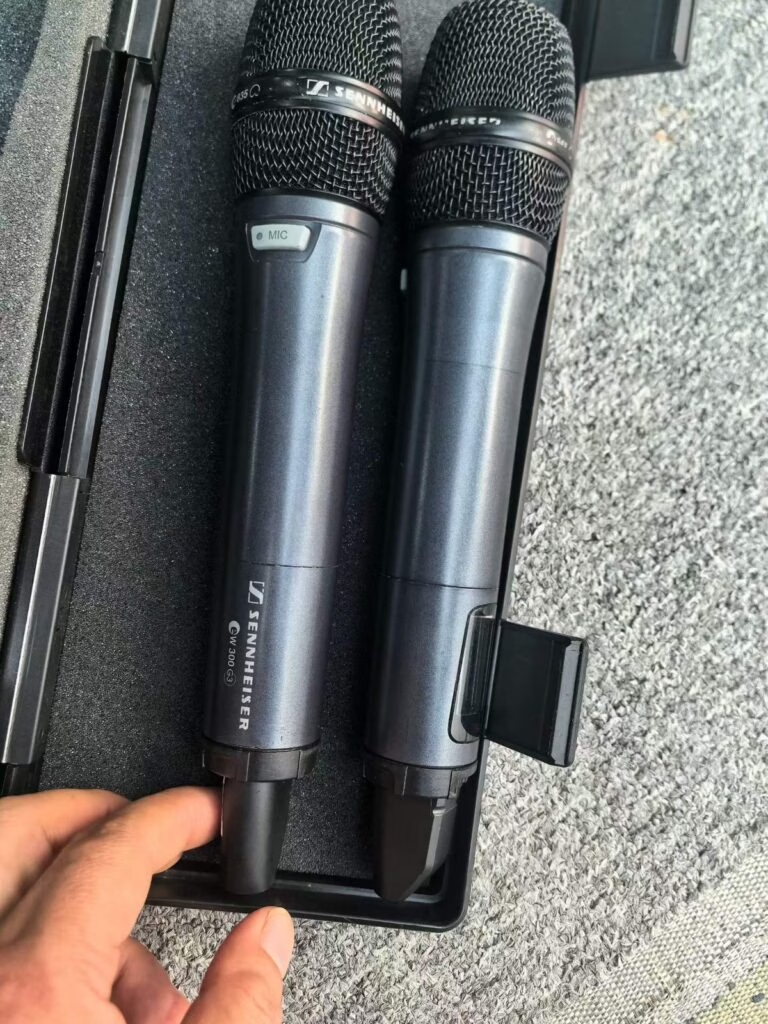
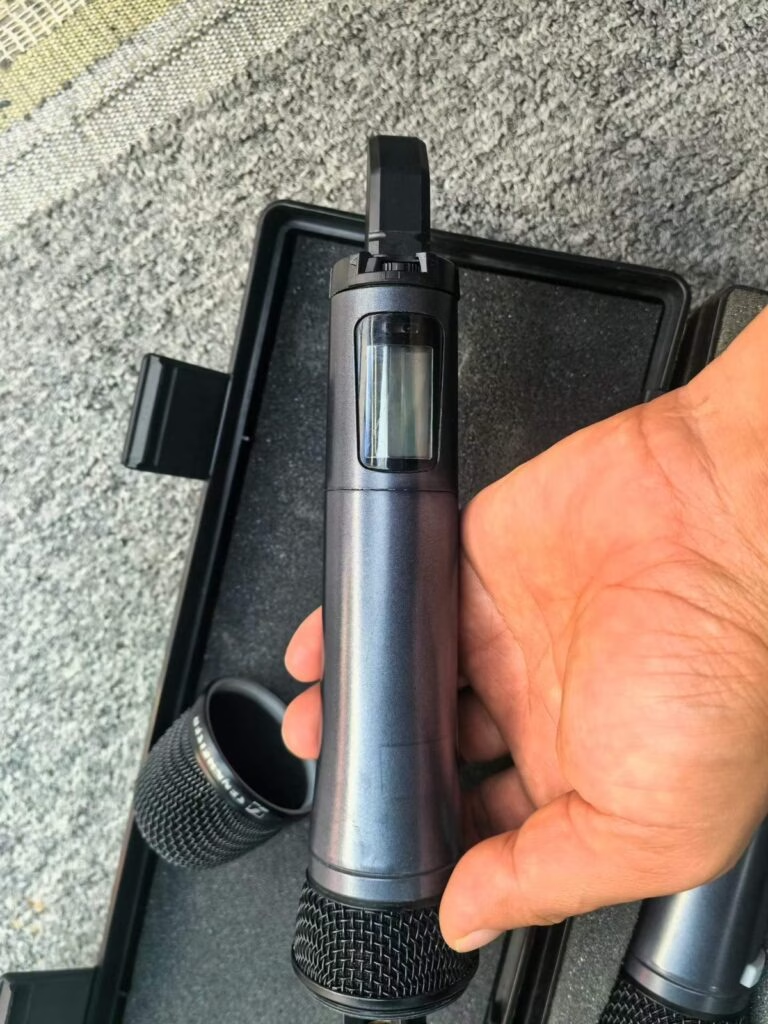
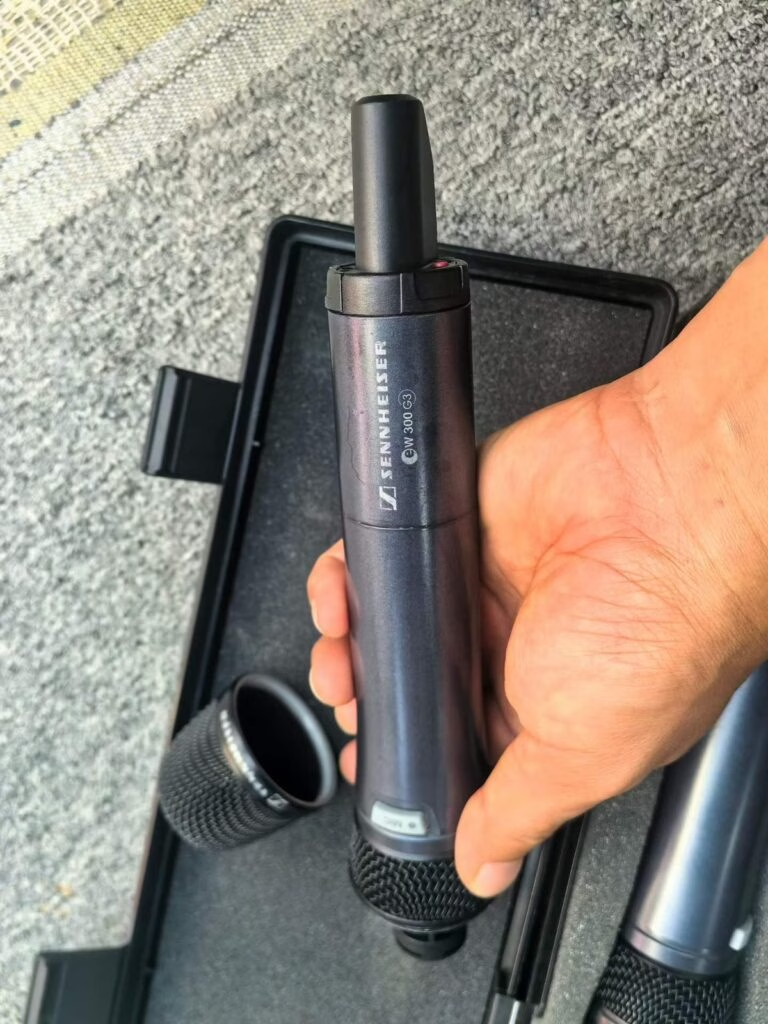
The EW 300 G3-835 is Sennheiser’s mid-tier evolution-series handheld radio system: an SKM 300 G3 handheld transmitter with an e835 capsule screwed onto it. It is the combination you see on small festival stages, conference lecterns and church platforms, because it does three things well — it rejects feedback from the sides, it runs all night on two AA cells, and the sync between handheld and receiver is a thirty-second job rather than a menu-diving session.
The units listed here are used stock held in our warehouse and available now. Price is on request because it depends on frequency band and quantity — ask for a quote and we will confirm the band, the quantity available and freight to your door.
What exactly is in the EW 300 G3-835?
Two parts matter, and they are worth separating because buyers often confuse the capsule with the radio.
The e835 capsule is a cardioid dynamic. It is the same head Sennheiser puts on the wired e835 vocal mic, which means it behaves like a familiar stage mic: tight cardioid pattern, solid rejection of monitors at the sides, and a presence lift that cuts through a band without sounding thin on speech.
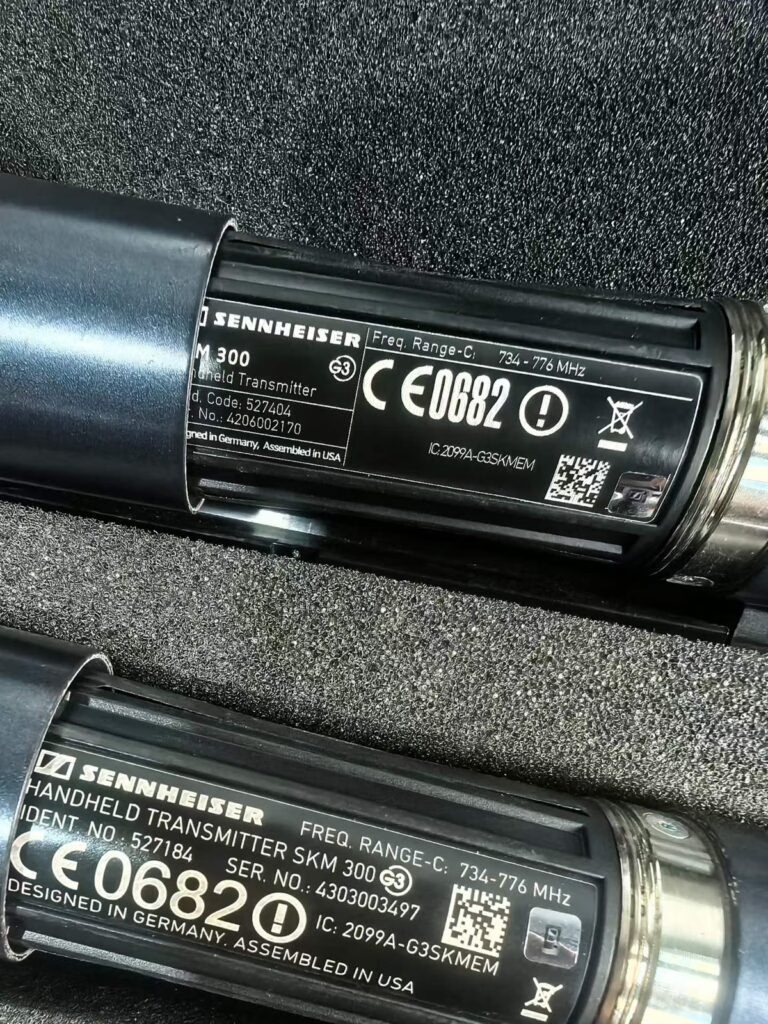
The SKM 300 G3 is the handheld transmitter body. UHF, available in several sub-bands (A, B, C, D, E and regional variants), with 10mW or 30mW switchable RF output, powered by two AA cells, and the automatic frequency scan and wireless sync that the evolution G3 range is known for. It needs a matching EM 300 G3 receiver to work — the handheld on its own is not a complete system.
| Part | Specification |
|---|---|
| Capsule | e835, dynamic, cardioid |
| Frequency response | 80 Hz – 18 kHz |
| Sensitivity | 2.7 mV/Pa at 1 kHz |
| Nominal impedance | 350 Ω |
| Transmitter | SKM 300 G3, UHF handheld |
| RF power | 10 mW / 30 mW switchable |
| Power supply | 2 × AA (5号) cells |
| Battery life | approx. 8 hours |
| Functions | auto scan, wireless sync, adjustable output level, mute switch |
| Required partner | EM 300 G3 receiver (same band) |
Why does the e835 capsule suit live vocals?
The cardioid pattern is the reason. A cardioid rejects most of what arrives from behind the capsule, which on a stage means the wedges in front of the singer and the drum kit behind them. That rejection is what buys you gain before feedback, and it is the single most useful property of this capsule in a room with a hard back wall.
The 80 Hz to 18 kHz response is intentionally not flat. There is a lift in the presence region that makes consonants audible over a loud band, and a controlled low end that keeps a close-miking vocalist from turning the mix to mud. For speech — a host, a lecturer, a pastor — that presence lift is the difference between being understood at the back of the room and not.
The trade-off is proximity effect, as with any cardioid dynamic: work the mic too close and the low end thickens. Experienced presenters use that deliberately. New users should stay a fist away from the grille.
How do the 10 mW and 30 mW settings differ in practice?
RF power is not the same as audio level, and this is where a lot of new owners set themselves up badly.
10 mW is the low setting. It covers most indoor rooms — a club, a church, a conference hall — comfortably, and it draws less current, so batteries last closer to the rated 8 hours. It also keeps the transmitter’s RF footprint smaller, which matters when several systems share a band.
30 mW is the high setting. You want it for long throw, for a room with a lot of absorption, or for a stage where the receiver sits far from the performance area. The downside is battery life and, in a densely packed frequency plan, more chance of interfering with a neighbouring system.
The practical rule: start at 10 mW. If you see dropouts at the far edge of the room during a walk test, step up. Do not default to 30 mW because it feels safer — it usually just shortens your runtime.
Does the 8-hour battery figure hold up?
Roughly, yes, on alkaline cells at 10 mW, and it degrades from there. Cold stages, high RF power and rechargeable cells at a lower nominal voltage all shorten it. Two things follow from that number.
First, always change cells before a long event rather than trusting yesterday’s runtime. The transmitter shows remaining capacity, but the last segment drops fast.
Second, keep a spare pair in the case. The battery door on the SKM 300 G3 opens without tools, so a change takes under a minute — provided someone on stage remembers how to do it before the presenter is mid-sentence.
What else do you need to run it?
An EM 300 G3 receiver in the matching frequency band. The band is the part buyers get wrong: an A-band handheld will not talk to a B-band receiver, even though both are EW 300 G3. Before ordering, confirm which bands are available and match the receiver you already own.
A complete working set also needs an XLR cable to the console and, if you are running several channels, a proper antenna distribution setup. Two handhelds on one receiver is not possible — one transmitter, one receiver channel.
If you are building a multi-channel system from scratch, compare against the microphones in our current stock before committing to a single band, because mixing brands across channels is easy but mixing bands within one brand is not.
How is the sync and frequency scan used?
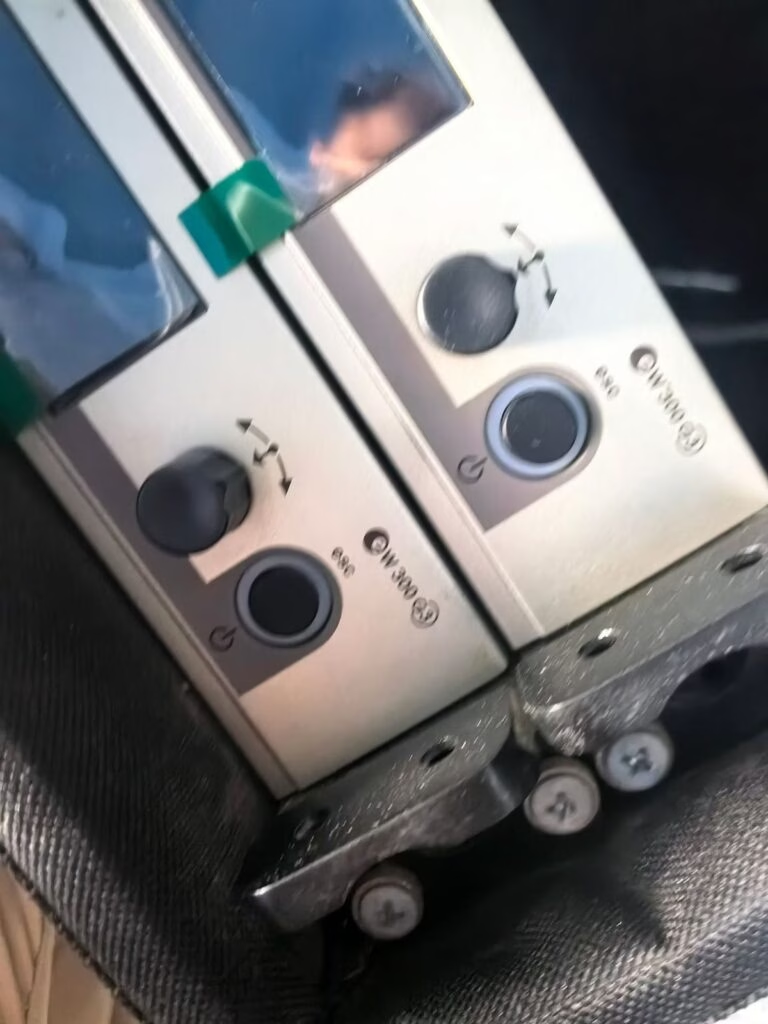
Auto scan runs on the receiver: it sweeps the band, finds clear frequencies, and stores them. Wireless sync then copies the receiver’s settings to the handheld over infrared. Put the handheld near the receiver’s IR port, trigger sync, and the frequency, name and sensitivity settings transfer in a few seconds.
That workflow matters at events because it lets a non-technical operator re-tune a system without menus. It is also why the G3 range stayed in rental inventories long after newer digital systems arrived: the sync is fast and it fails loudly rather than silently.
What is daily maintenance on a used unit?
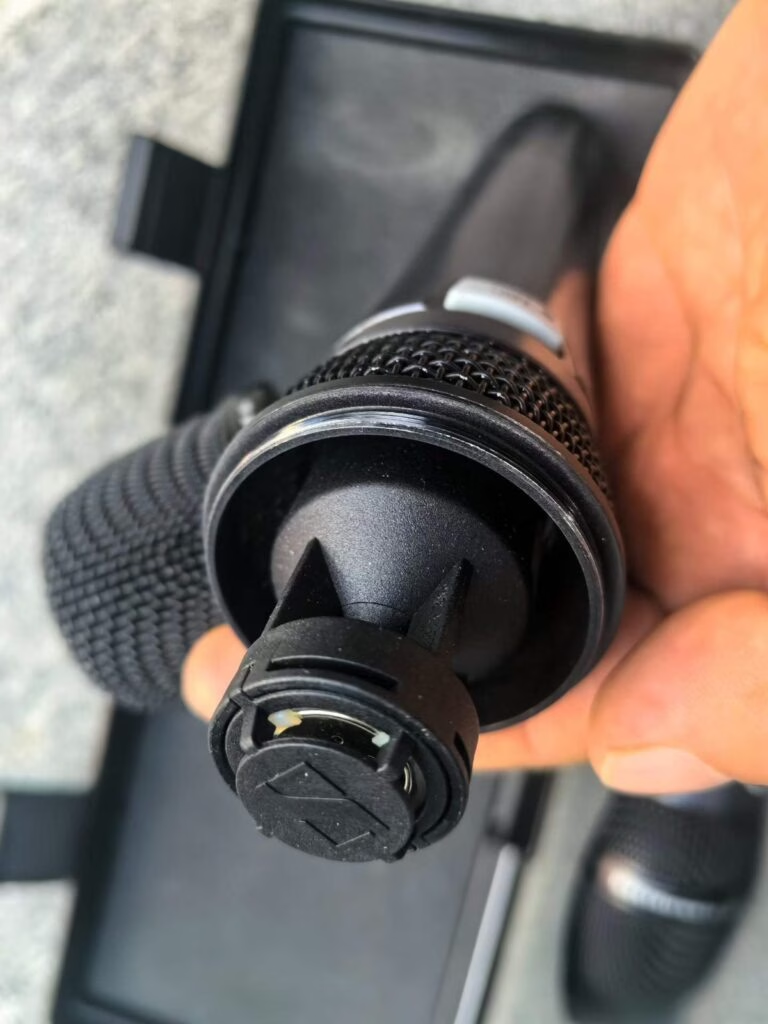
Four things, all cheap. Wipe the capsule grille, because dried spit and dust change the frequency response more than people expect. Check the capsule thread for cross-threading, since a handheld that has been dropped often has a distorted thread. Inspect the battery contacts for corrosion. And confirm the mute switch still clicks into position rather than drifting, because a mute that engages mid-speech is the classic failure of an old handheld.
The capsule is also replaceable, which is the reason this system ages well. An e835 head costs far less than a new handheld, and swapping it takes a minute. If the body is sound, a tired capsule is not a reason to replace the system.
Who is this system right for?
Front-of-house engineers who want a predictable handheld without digital latency or a learning curve. Conference and worship venues where the same presenter uses the same mic every week. Rental companies that already stock EM 300 G3 receivers and want more transmitter bodies.
It is not the right choice for a large arena with heavy RF congestion, where digital systems and coordinated frequency plans win. For the mid-sized room, it is still a sensible working tool.
Key Takeaways
- Handheld system: SKM 300 G3 transmitter + e835 cardioid dynamic capsule.
- Needs a matching EM 300 G3 receiver in the same frequency band.
- 10 mW is the everyday setting; 30 mW is for long throw and costs battery life.
- Around 8 hours from two AA cells on alkaline at 10 mW.
- In stock now, price on request — ask for band and quantity.