Jog wheels first, then the crossfader, then the buttons, then USB playback, then headphone output on both sides. Those five checks in that order find almost everything wrong with used DJ gear. Jogs and faders are mechanical and wear with use; screens and firmware are expensive and hard to fix.
Skip the surface check. Scratched faceplates on a 2016 media player mean nothing. A sticky jog that resists your finger means the unit was used at 40 events a year, and that surface scratch becomes irrelevant.
What wears out first on a used DJ player?
- Jog wheel bearing. It should spin with almost no resistance and no grinding. A gritty jog is $80-160 to service.
- Cue and play buttons. They should click cleanly. Mushy buttons mean the dome switch is near failure, $15-40 each.
- USB port. Plug in a stick and check that it reads within 5 seconds. Loose ports mean a board-level repair.
- Display. Look for dead pixels and uneven backlight at an angle.
- Link port. Test both players talking to each other, not just one alone.
What about mixers and turntables?
On mixers, the crossfader is the whole story. Run it end to end 20 times and listen for crackle or a channel that drops. A crossfader replacement is $30-90 in parts but needs soldering, and on some models the whole control board has to come out. On turntables, check platter wobble and the tonearm bearing; a Technics SL-1200MK2 holds value above $600 only if the arm is straight.
Test the phono stage too. A turntable that sounds fine on line level but noisy on phono has a preamp problem, which is a $100-200 repair on a unit you might be buying for $400.
How much should used DJ gear cost in 2026?
| Item | Used price | Wear risk |
|---|---|---|
| CDJ-class media player (pair) | $1,400-2,800 | Jog, USB, link |
| 2-channel battle mixer | $200-500 | Crossfader |
| 4-channel club mixer | $600-1,400 | Faders, FX board |
| DJ controller (2 deck) | $150-450 | Jogs, faders |
| Turntable (direct drive) | $400-900 | Tonearm, platter |
Prices 30% under those bands usually mean a failed jog or a mixer with a dead channel. Budget $150-300 for one repair on anything that has been gigged weekly for five years.
Does firmware status matter when buying used?
Yes, and it is invisible in photos. Check the installed firmware against the manufacturer’s latest release. If the unit is two or three versions behind, either the previous owner never connected it to a computer, or the update failed once and they gave up. Both are fine if the unit works, but old firmware can break USB stick compatibility with newer media.
Also check whether the seller still has the licence or account tied to the unit. Some controllers need an account link before extra features switch on, and an unlinked unit will feel crippled on the first night.
What should make you walk away?
Liquid damage. Look for residue around the faders and inside the jog well. Sprayed drinks kill a mixer’s control board slowly, and a unit that works today can die in three weeks. Same for gear that was stored in a car; heat warps jog assemblies and the display panel.
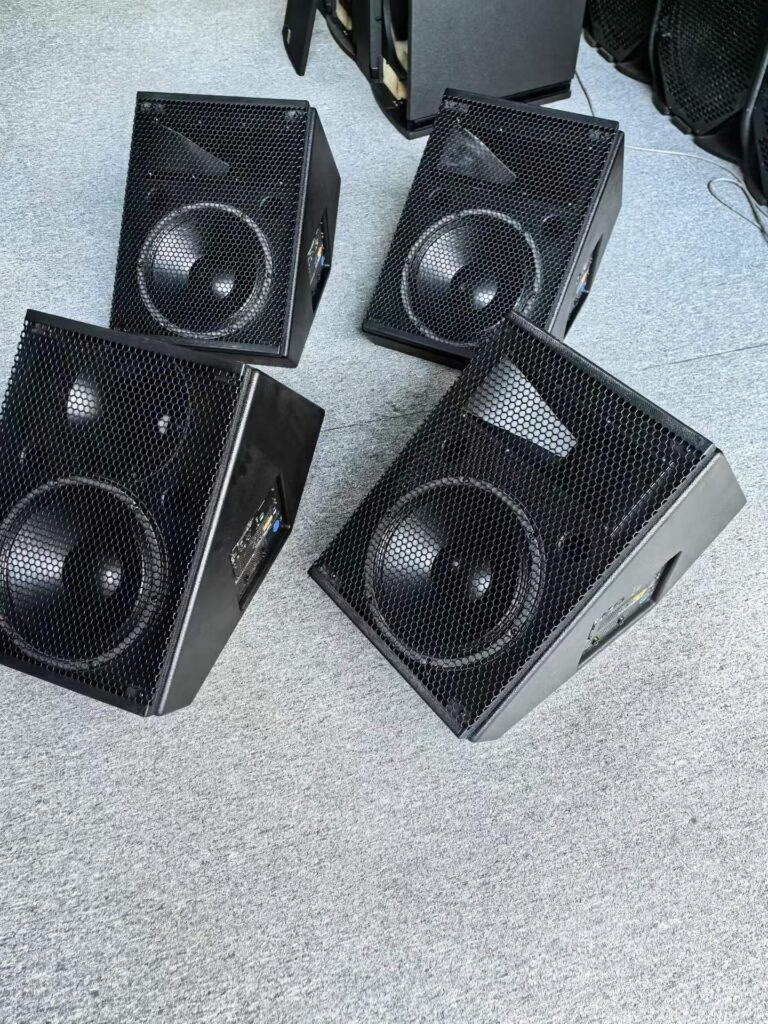
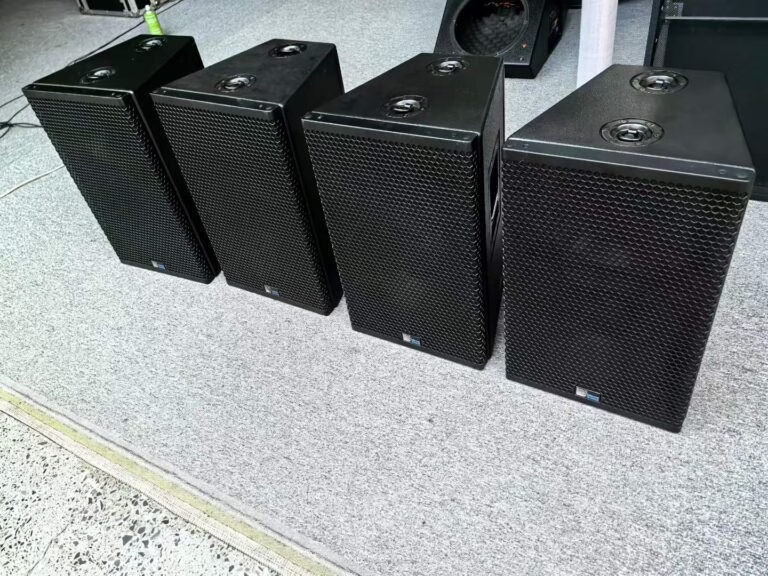
If you are outfitting a booth from scratch, budget for a solid used DJ gear set plus a matched speaker pair, because a booth with great players and a tired pair of boxes will sound worse than the other way round.
How do you buy DJ gear for a venue rather than yourself?
Buy two of everything that matters. A club booth with one media player pair and one mixer is one failure away from silence on a Saturday. A spare pair of jogs or a spare mixer at $300 sits in the back room and has paid for itself the first time a crossfader dies at 1 a.m.
Also insist on identical models across the booth. Two different mixer models confuse guest DJs, and guest DJs are the primary reason gear gets treated badly. Consistency reduces damage more than any flight case.
Key Takeaways
- Jog wheel resistance is the fastest way to judge a used media player.
- Crossfader travel decides whether a used mixer is worth buying.
- A media player pair runs $1,400-2,800; controllers $150-450.
- Residue near faders means liquid damage, which shows up weeks later.
- Check firmware version and account linkage before you pay.