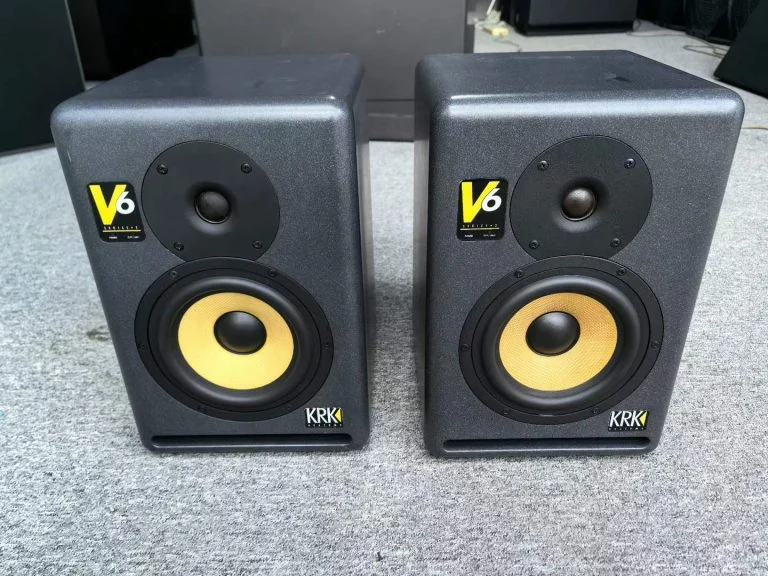
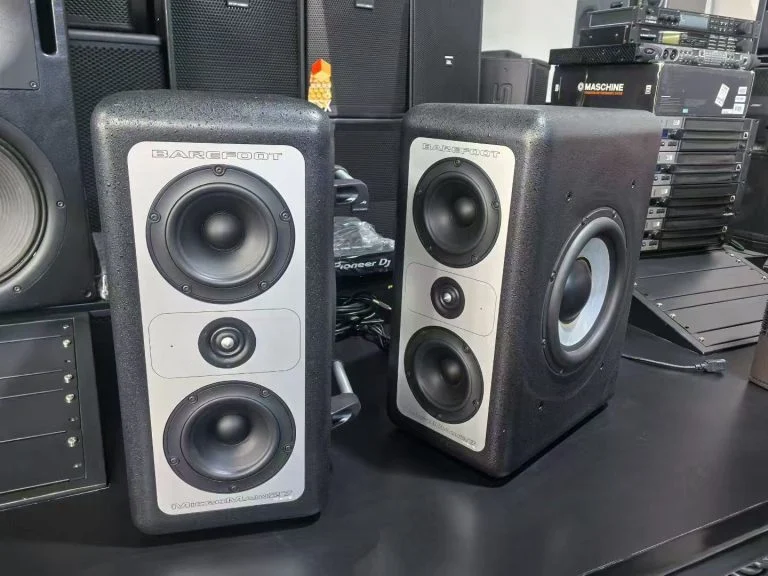
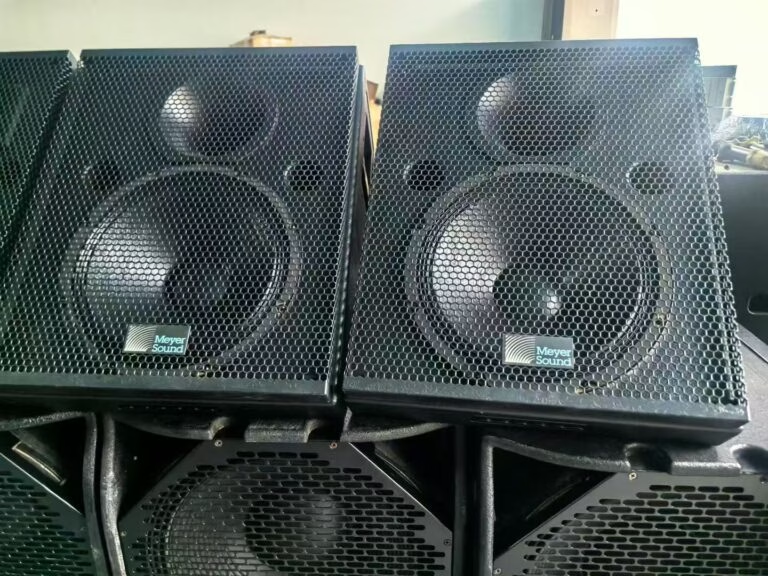
Used, for almost everyone. Studio monitors are the least-abused category in used audio: they sit on stands, at low volume, in a treated room, and rarely move. A pair at $400-700 that cost $900 new is usually identical in sound. What you must check is the amplifier board and the cabinet seal, not the drivers.
The one case for new is a pair you cannot hear first and cannot return. In that situation, the warranty is worth more than the discount.
What actually degrades in a used monitor?
- Amplifier capacitors. Active monitors run class-D or class-AB boards at 40-60°C for years. Caps dry out at 8-12 years.
- Cabinet seal. Foam gaskets compress and leak, which changes low-frequency response.
- Foam surrounds. On older 8-inch woofers, foam rots at 10-15 years. Replacement kits are $25-60.
- Potentiometers. Volume and trim knobs get scratchy at 10 years, $5-15 in parts.
What does not degrade: the woofer cone, the tweeter dome, and the enclosure itself, assuming nothing was dropped. Those are the expensive parts and they are usually fine.
Why does matching matter so much?
A pair of monitors is a matched system. Mixing a 2014 unit with a 2019 unit of the same model is sometimes fine, sometimes not, because the factory changed the amp board mid-production. If the serials are more than two years apart, ask for photos of the rear panel on both. Identical connectors and heatsinks are the minimum evidence.
Buying a single used monitor to add to one you already own is the classic mistake. The new unit will have a different amp revision and you will spend a month chasing a phantom imbalance in your mixes.
How do used monitors compare to new on cost?
| Class | New | Used | Verdict |
|---|---|---|---|
| 5-inch nearfield pair | $400-700 | $200-380 | Used is safe |
| 8-inch pair | $800-1,400 | $400-750 | Check surrounds |
| 3-way midfield pair | $2,500-6,000 | $1,200-3,000 | Insist on a demo |
What should you test in the room?
Play a familiar track, one you have heard on 50 systems. Listen for a mismatch between left and right before anything else. Then walk to the rear of each cabinet and listen for port chuffing or rattles at moderate level. Finally, turn the volume knob through its full range with no signal and listen for crackle; that is the cheapest failure to catch.
If you cannot demo, ask the seller for a 30-second recording of a sine sweep from 40 Hz to 2 kHz, played at a fixed volume, with the mic placed 30 cm from the woofer. A rattle or a drop at a specific frequency is visible in the waveform even from a phone recording.
Are cheap monitors ever worth it?
Not usually, and this applies to new as well. A $180 new pair of 5-inch monitors has a crossover and cabinet that cost almost nothing, and the low end is a guess rather than a measurement. A used pair from a brand that publishes real response curves at $300 will mix better than $500 of unknown new stock.
If you are building a first room and need monitors plus a speaker pair for reference, a used studio gear listing with real measurements beats a bigger discount on an unmeasured box every time.
Does room treatment beat monitor upgrades?
Yes, by a wide margin in most small rooms. $300 of bass trapping changes what you hear more than moving from a $400 pair to a $1,200 pair. If your room is 3 x 4 metres and untreated, a big monitor upgrade will just let you hear the room’s problems more clearly.
That said, monitors with a real low-frequency cutoff below 45 Hz are worth having even in a small room, because you can hear the problem and treat it. A box that rolls off at 65 Hz hides the issue entirely, which feels better and mixes worse.
Key Takeaways
- Used studio monitors save 40-55% and drivers rarely fail.
- Capacitors in active monitors degrade at 8-12 years.
- Keep pairs matched; serials more than two years apart can differ internally.
- Foam surrounds rot at 10-15 years; replacement kits cost $25-60.
- Ask for a sine sweep recording if you cannot demo in person.