Used wins on value: 40-55% below new for the same model, and the acoustic difference between a 2019 pair and a new pair is close to zero. Buy new only if you need warranty on an active monitor or the used pair has no test recording. Check foam surrounds and amp hiss first.
Does a used monitor sound different from a new one?
The single biggest difference between a used pair and a new pair is the amp module in an active design, and that is the part nobody lists in the description.
Not if the drivers are original and the amp is healthy. Drivers do not break in after 200 hours in any measurable way that survives a blind test. What changes is the foam surround and the capacitors.
Foam surrounds rot after 10-15 years. A rotted surround shows as a visible crack or a sticky residue at the cone edge, and it changes the tuning of the box before it fails audibly. Refurbishment costs $60-120 per driver, which is worth it on a good pair and not worth it on a cheap one.
Also listen for a dull top end on one side only. That asymmetry means one tweeter has been replaced with a non-matching part, and the pair will never image properly again.
What should you check on a used pair?
Six things, in this order:
- Foam surround condition on both woofers.
- Cone discolouration or water staining.
- Hiss at zero input with the gain at normal position.
- Any rattle at 80-120 Hz.
- Matching serial numbers, or at least matching revisions.
- Power supply hum, which points to tired caps.
Mismatched revisions are a subtle problem. Crossover changes between production runs can make a pair image poorly, and you will chase it for months before realising the problem was the speakers, not your mix.
Active monitors also hide amp faults well. Set the gain to zero and listen with your ear close to the tweeter. Any hiss, crackle, or hum is a tired supply, and on a sealed cabinet it is a bench job rather than a DIY fix.
Why do used monitors cost less than used PA speakers?
Market size. Studio monitors sit in one room and rarely move, so the second-hand supply is steady while the buyer pool is small. PA speakers get bought by rental fleets, which keeps used prices firmer.
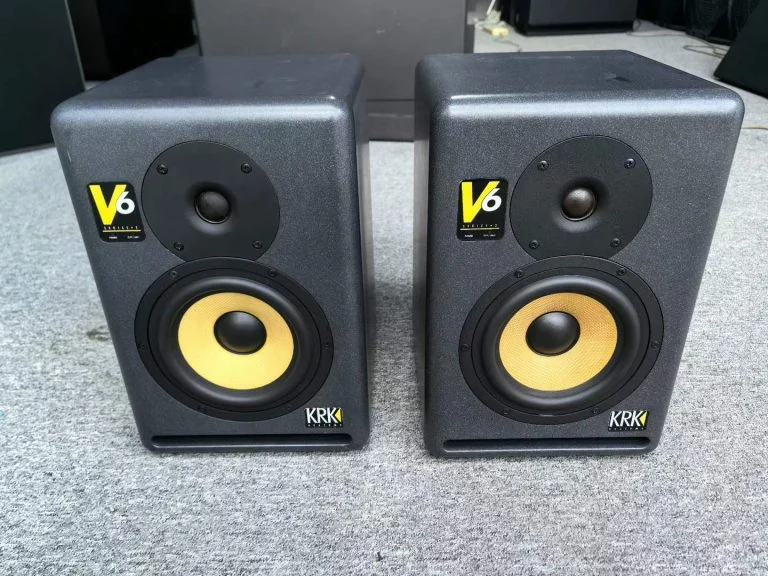
A pair of KRK V6 Series 3 monitors, for example, trades at roughly 45% of new. The same money buys one used 12-inch PA box, which tells you how differently the two markets price risk.
Monitor buyers usually want a pair, which keeps prices down. Mixing one monitor with another brand is amateur, so buyers bid on pairs and single units sit unsold for months.
That is where the deal is. If you find a single unit that matches one you already own, the seller often accepts a low offer because nobody else wants half a pair.
When does new actually make sense?
Three cases: you need the warranty on an active design with DSP, the model is brand new with no used supply, or you are buying for a commercial studio where downtime costs more than the price difference.
There is a fourth, less obvious case. If you mix at very low volume in a small room, driver matching matters more than usual, and a factory-matched pair is worth paying for. Used pairs with unmatched serials can be 2-3 dB apart at 60 Hz, which throws off every bass decision you make.
For a home studio doing 20 hours a week, used is the better call every time. A $700 used pair plus $250 of acoustic treatment beats a $1,100 new pair in an untreated room.
What should you spend the savings on?
There is a practical reason to keep the spend low: monitors are the component most likely to be sold again when you move to a bigger room. Paying 45% of new means you lose less on the next trade.
Treatment, then a measurement mic. Bass traps in the corners do more for mix translation than any monitor upgrade under $2,000.
If you also run live sound, the same logic applies to your PA: a used powered speaker and a decent measurement setup beats new boxes in a bad room.
Browse the studio gear category for current monitor listings.
Key Takeaways
- Used studio monitors sell at 40-55% off new; sound difference is negligible if drivers are original.
- Foam surrounds rot after 10-15 years and change the box tuning before failing audibly.
- Mismatched revisions within a pair can ruin imaging.
- New only wins for warranty on active DSP designs or commercial uptime needs.
- Spend the savings on bass traps before upgrading the monitor.
Want a tested pair with matching serials? See studio monitors in stock.