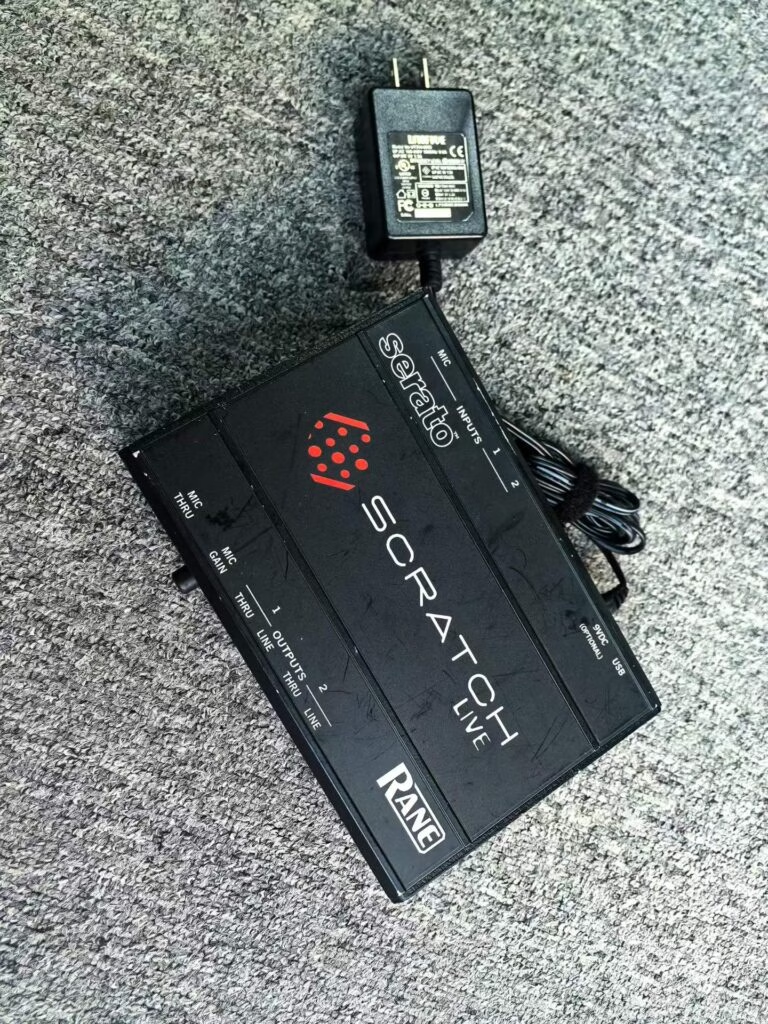
Check in this order: jog wheel feel, channel faders, crossfader bleed, USB ports, headphone outs. Faders are the cheapest fix ($20-60). A dead jog encoder or a cracked main PCB means walking away, because repairs often exceed 40% of the unit’s value.
Why do faders wear out first?
Faders take every physical input a DJ makes. A club controller doing four sets a week will see hundreds of thousands of fader strokes in two years, and the carbon tracks wear thin.
Test by moving each fader slowly from zero to full while listening. Scratchy noise or jumps means worn tracks. A replacement fader is $20-60 and takes an hour to solder, provided the part is still made for that model.
On older units, fader parts are the first thing to disappear. Before you buy a five-year-old controller, search the model number plus the word fader and see whether anyone still sells the part. If not, you are buying a disposable.
How do you test a crossfader properly?
Set both channels to the same track and move the crossfader slowly through centre. Any audio dip, spike, or crackle at the middle means the crossfader is worn.
- Cut sharply back and forth 20 times. A good crossfader cuts clean.
- Check the crossfader curve switch if the unit has one.
- On controllers, confirm the unit still reports crossfader movement to software, not just physically moves.
For scratch DJs this is the single most important check. A worn crossfader ruins the feel faster than any other fault, and a premium replacement crossfader can cost $90-150 on its own.
Budget for it. A $600 controller with a dead crossfader is a $450 controller plus a week of waiting for the part.
What do broken jog wheels tell you?
Jog wheels use optical or magnetic encoders. When one fails, the deck drifts, jumps, or refuses to nudge. On most controllers the encoder is not a user-replaceable part and the whole top panel has to come off.
Spin each jog wheel ten turns and watch for hesitation. Any stutter is a failing encoder, and on discontinued units, that is the end.
Also check the touch function where the unit has one. Jog wheels with capacitive touch plating stop responding when the plating wears, and the software then refuses to recognise a hand on the platter. That is a strange, quiet failure mode that only shows up in a real set.
Which connections should you test last?
USB ports fail from cable strain more than anything else. Plug in a laptop and confirm the controller is detected, then bend the cable at the connector and check it stays connected.
Test both headphone outputs with a known-good pair. A dead 3.5 mm jack is common on gear that lived in a bag without a case, and a $3 adapter is not the problem, the cracked jack solder is.
What is a fair price for used DJ gear in 2026?
Four-channel controllers: $420-800 used against $1,100-1,600 new. Two-channel controllers: $180-400. CDJ-style media players: $500-900 each depending on generation. Turntables in good condition: $250-500, and they hold value better than any controller.
Club-standard media players hold their price because the format does not change. Controllers lose value fast because a new model appears every 18 months with a different feature set.
That makes buying a used controller a good deal for a home setup and a bad deal if you plan to resell in a year.
Be sceptical of listings that price a two-year-old controller near new. Either the owner is testing the market or the unit has a fault they have not mentioned. Ask for the purchase receipt; it tells you the age without argument.
Discount harder for anything missing the power supply, the software license card, or the original box. A missing license can cost $99 to replace on its own.
Browse the DJ gear category for current units and condition notes.
What else should you check before paying?
One last thing worth checking: the software version. Some controllers lock features behind the manufacturer cloud, and an older unit may need an account you cannot create in your country.
Ask for a video of a full 60-second mix with both channels, the crossfader, and a headphone cue. Then confirm the firmware version and whether the manufacturer still supports it.
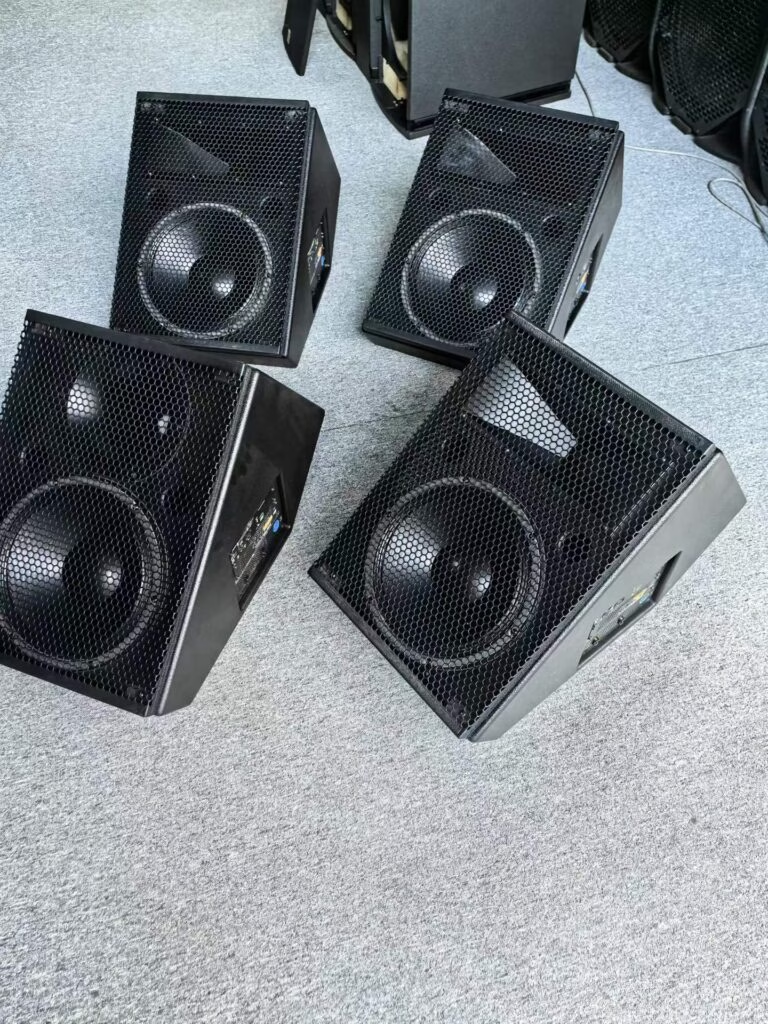
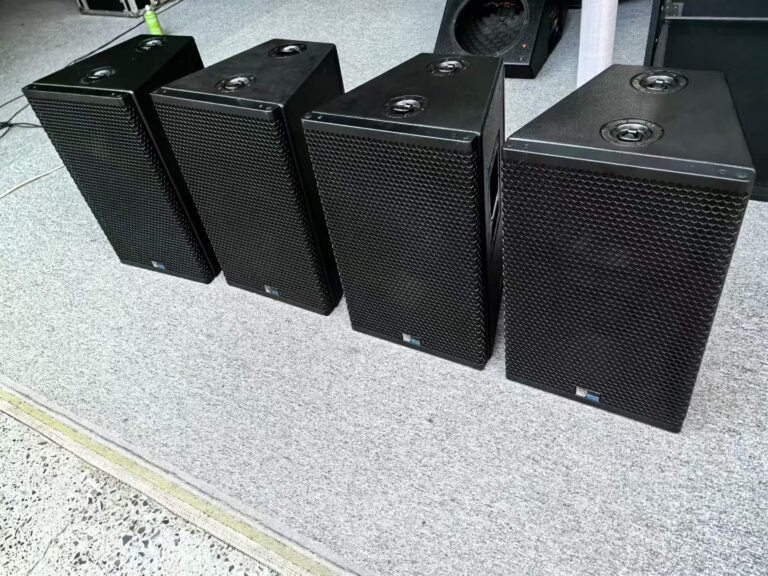
Keep the rest of the rig in mind too. A DJ setup is only as good as the speakers it feeds, and a tired pair of boxes will make a good controller sound broken.
Key Takeaways
- Test order: jog wheels, channel faders, crossfader bleed, USB ports, headphone outs.
- Faders are the cheapest fix at $20-60; a dead jog encoder often totals the unit.
- Crossfader wear is the most important check for scratch DJs.
- Four-channel controllers run $420-800 used against $1,100-1,600 new.
- A missing software license can add $99 to the real price.
Building a DJ rig from scratch? See DJ gear and speakers in stock.