Four checks settle it: tap test the body for capsule rattle, sweep the grille with your thumb while monitoring for dropouts, inspect the XLR pins for green corrosion, and A/B it against a known-good mic at the same gain. Rattle or dropouts mean walk away.
Why does a rattle matter more than a dent?
A dented grille is cosmetic and costs $20 to replace. A rattle means the capsule has come loose from its mount, and that changes the polar pattern and can produce distortion at high SPL.
Tap the body lightly with a fingernail, then shake it gently next to your ear. Any ticking that is not from the switch is a loose capsule or a broken shock mount.
Then speak at normal level from 10 cm and move off axis. A capsule that has rotated in its mount will drop 6-10 dB more than it should at 90 degrees, and you hear it as a lumpy, uneven pickup pattern.
How do you find a dropout in the cable?
Plug in, monitor with headphones, and bend the cable at every 10 cm while talking into the mic. Then rotate the connector in the body. Dropouts usually appear at the strain relief or the XLR solder joints.
A drop near the connector is a $15 re-solder. A dropout inside a molded connector means a new cable, which is fine. A dropout that changes when you move the mic body means the internal wiring is failing, which is not fine.
What do the XLR pins tell you?
Green or white corrosion on pins 2 and 3 means the mic lived somewhere damp. Clean it and retest; if the noise floor stays high, the capsule has moisture damage.
- Bent pins: usually fixable, but a sign of rough handling.
- Missing locking tab on the connector: the cable will pop out mid-show.
- Glue residue around the grille: someone has opened it before.
- Serial number worn off: no service history, no resale value.
How do you A/B it properly?
Do the comparison in the room you will actually use. A mic that sounds fine in a treated room can pick up HVAC hum in a venue, and you only find that out by testing in place.
Set the same gain on both mics. and record 30 seconds of speech on each. Compare the noise floor in silence, then the proximity effect at 5 cm, then handling noise while tapping the stand.
A healthy dynamic vocal mic should have a noise floor well below the room noise. If you can hear hiss in a quiet room at normal gain, the capsule or the transformer is tired.
Also test handling noise. Wrap your hand around the body and tap the stand with a drumstick. A good dynamic mic barely registers it; a mic with a collapsed internal shock mount will boom through the PA.
Which used mics are worth the risk?
Price the risk before you fall in love with a listing. A $40 savings on a mic that needs a $70 capsule replacement is not a savings.
Workhorses with parts available: Shure SM58, SM57, Beta 58A, Sennheiser e835. A used SM58 in good shape at $55-85 is a solid buy; new is $99-109, so the discount has to be real.
Condensers are riskier. A used large-diaphragm condenser with no test recording is a gamble, because capsule contamination shows up as a dull top end rather than an obvious fault. Moisture damage is usually permanent, and a replacement capsule often costs 60% of a new mic.
Wireless systems add a second layer: check the transmitter battery door latch and the receiver sync function, and confirm the frequency band is legal in your country. A cheap wireless set from the wrong region is a fine paperweight.
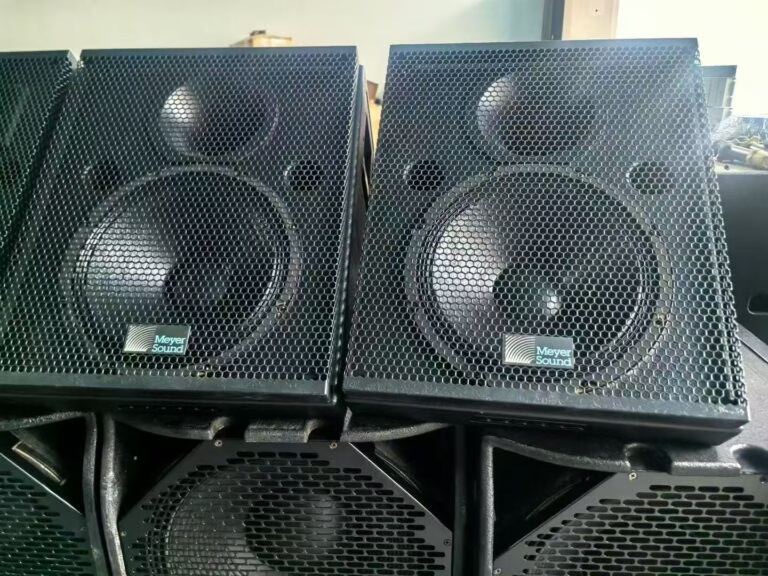
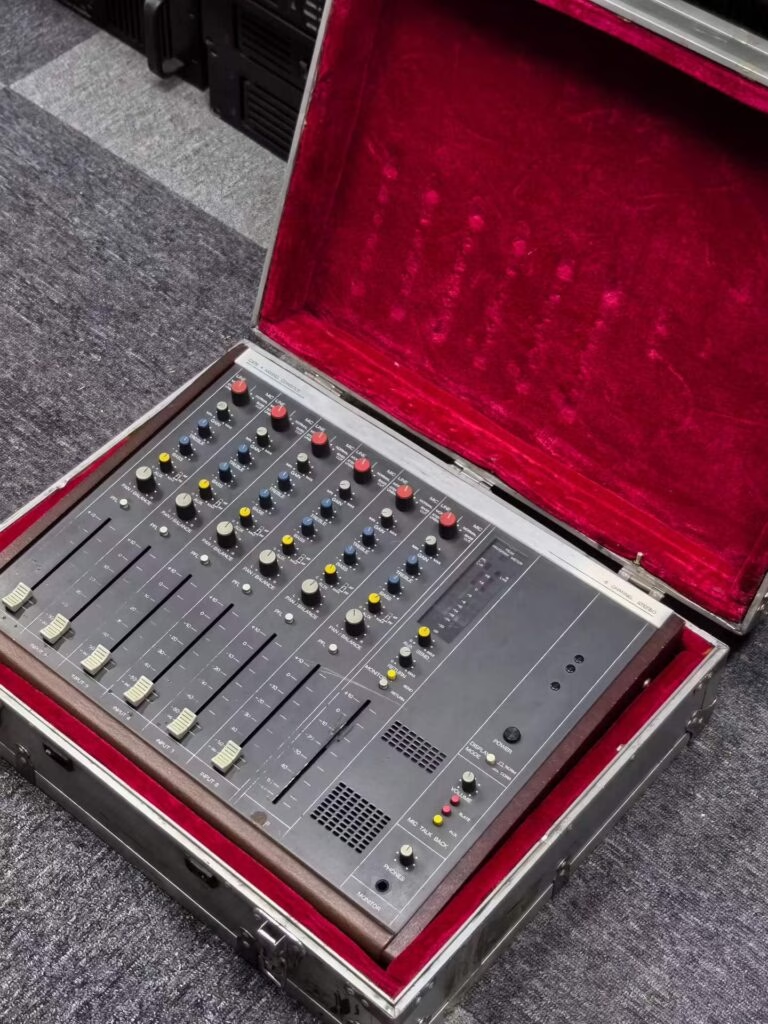
Once you have a mic you trust, sort out the rest of the rig: powered speakers and a console that will not fight you.
Key Takeaways
- Rattle after a light tap means a loose capsule; a dented grille is only cosmetic.
- Bend the cable every 10 cm while talking to expose dropouts.
- Green corrosion on XLR pins 2 and 3 signals damp storage.
- A used Shure SM58 is worth $55-85; new is $99-109, so check the gap.
- Avoid used condensers sold without a test recording.
Building a full rig around your mic? Compare speakers in stock.