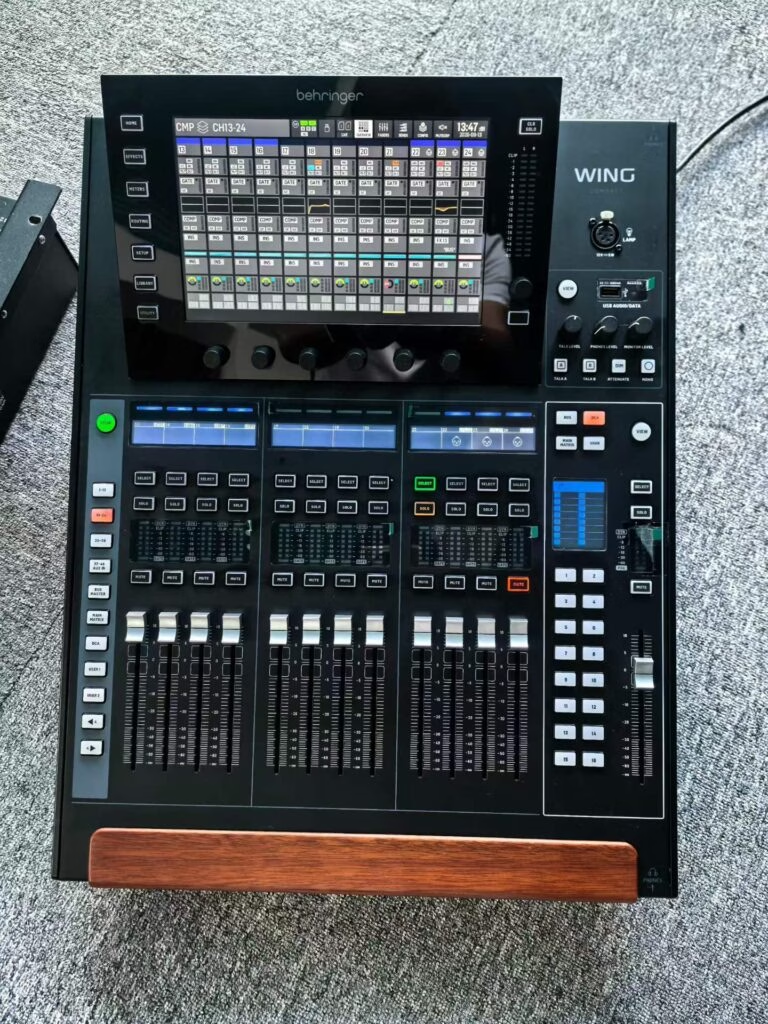
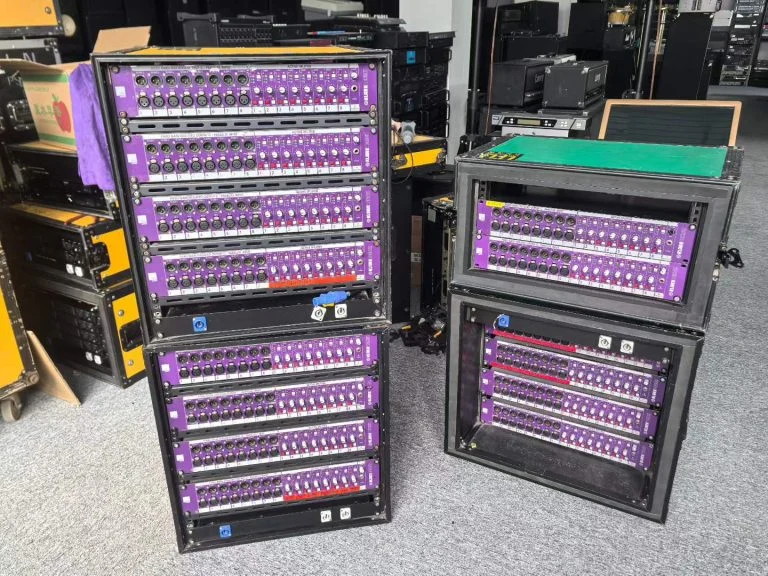
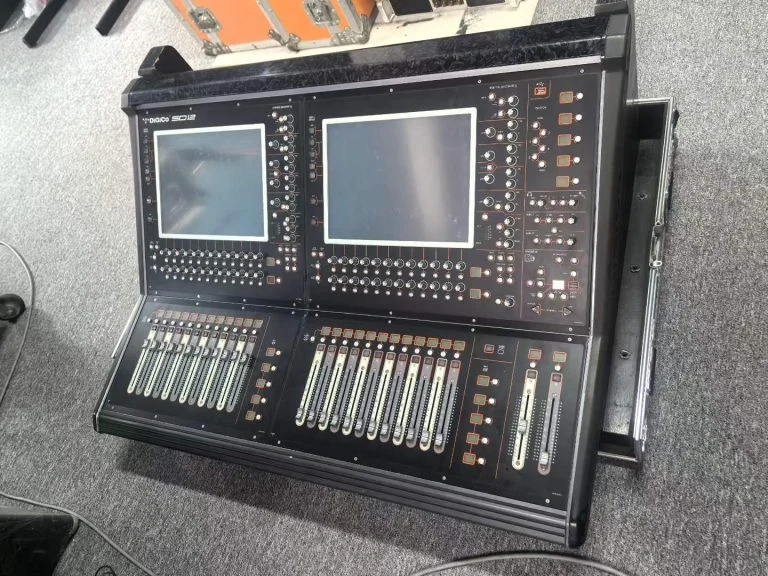
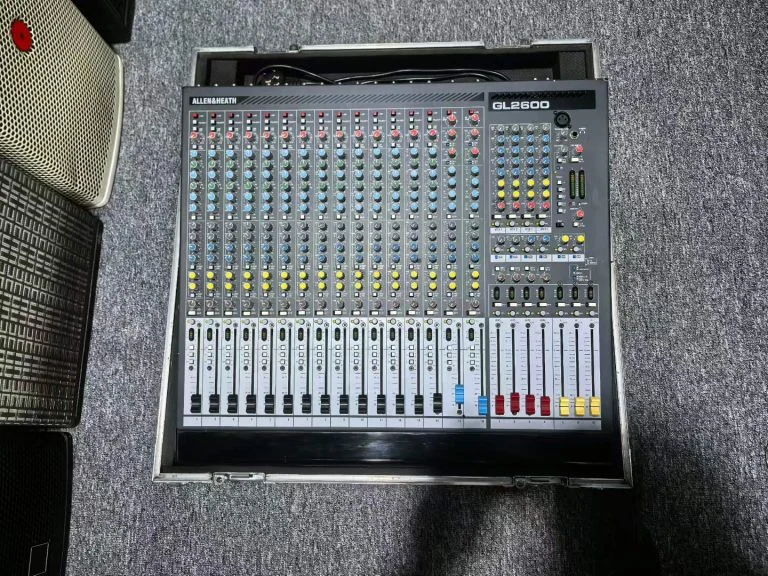
Digital wins once you cost the outboard. A used 16-channel analog desk is $250 to $500, but running a real show on it needs an EQ rack, four compressors and an effects unit, which is another $900 to $1,600. A used 16-channel digital console at $600 replaces all of it and fits in one case.
What is the real total cost each way?
| Item | Analog route | Digital route |
|---|---|---|
| Console | $250-500 | $450-900 |
| 31-band EQ x2 | $250-500 | included |
| Compressors x4 | $300-700 | included |
| Effects unit | $150-350 | included |
| Rack, patch, cabling | $200-400 | $50-100 |
| Total | $1,150-2,450 | $500-1,000 |
Where does analog still win?
Speed of learning, and repair. An analog desk can be fixed with a soldering iron by anyone who knows electronics. A digital desk with a dead DSP board is a paperweight unless the manufacturer still supports it. Ask about parts availability before you buy any used digital desk, and check the firmware date. A desk stuck on 2014 firmware is a risk.
Analog also wins on latency and on nothing surprising the operator mid-show. No one has ever had an analog desk freeze during a set.
Which one is cheaper to own over five years?
Digital, by a wide margin, if the desk stays supported. Resale on a used digital desk held at about 50 to 60 percent over three years in 2026. Analog desks in the same bracket fell to 30 to 40 percent, because the buyers are getting older and smaller in number.
What should you actually buy?
- Weddings and corporate: digital, 16 channels, app control is worth it
- Rock club band: digital if you use more than 4 monitor mixes
- Vintage-toned recording: analog, the workflow is the point
- Teaching: analog, because students need to see signal flow
What is the catch with cheap digital desks?
Preamps. A $500 digital desk has preamps that run out of headroom fast, and you will notice it on a loud stage with a close-mic’d snare. That is the honest trade: you gain processing and routing, you lose two or three dB of usable preamp range. Budget a small external preamp for the snare if that matters.
For a bigger desk with proper preamps, the Yamaha DM1000 digital mixing console at 48 channels is the sensible step up. Compare current stock in the used mixers category.
Key Takeaways
- Analog console plus outboard totals $1,150 to $2,450; digital totals $500 to $1,000.
- Digital saves $400 to $900 once outboard is counted.
- Analog wins on repairability and on nothing freezing mid-show.
- A used digital desk holds 50 to 60 percent of value over three years.
- Cheap digital desks trade preamp headroom for processing.
How much outboard do you actually need for a small show?
For a four-piece band in a 150-capacity room: two compressors (kick, bass), one for vocals, plus a 31-band EQ for the main mix, and a reverb. That is about $500 of used analog outboard, not $1,200. So the honest gap on the low end narrows to $200 to $500 rather than $900.
Where digital pulls ahead is when you need per-channel dynamics and a separate EQ per monitor mix. That is where analog outboard costs explode, and where a used digital desk pays for itself in one season.
Does a digital desk add hidden costs?
- Learning time: expect 6 to 10 hours before a show feels natural
- A tablet or laptop if the desk relies on app control
- Firmware discipline: an unsupported desk is a dead end
- Backup: save scenes to a stick before every event
What is the resale picture after three years?
A $700 used digital desk holds about $380 to $420 after three years, or 55 percent. A $400 analog desk plus $500 of outboard holds about $380 total, or 42 percent, and the outboard is harder to sell because the buyers are older and fewer. Digital is the better financial decision unless you specifically want the analog workflow.