Description
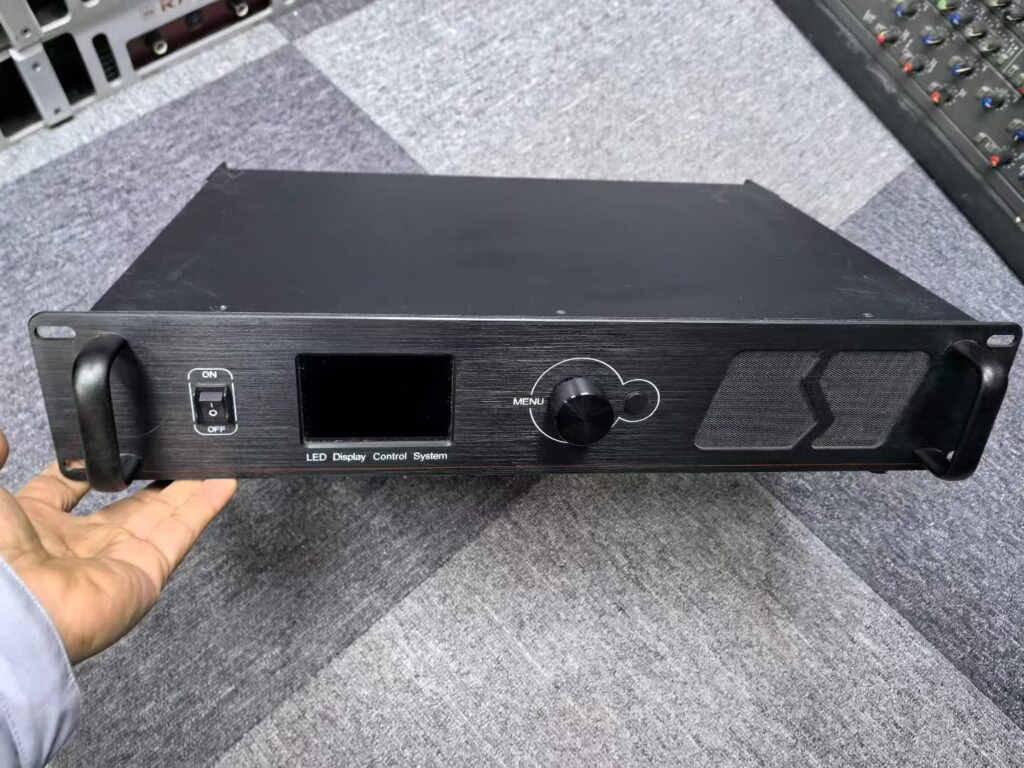
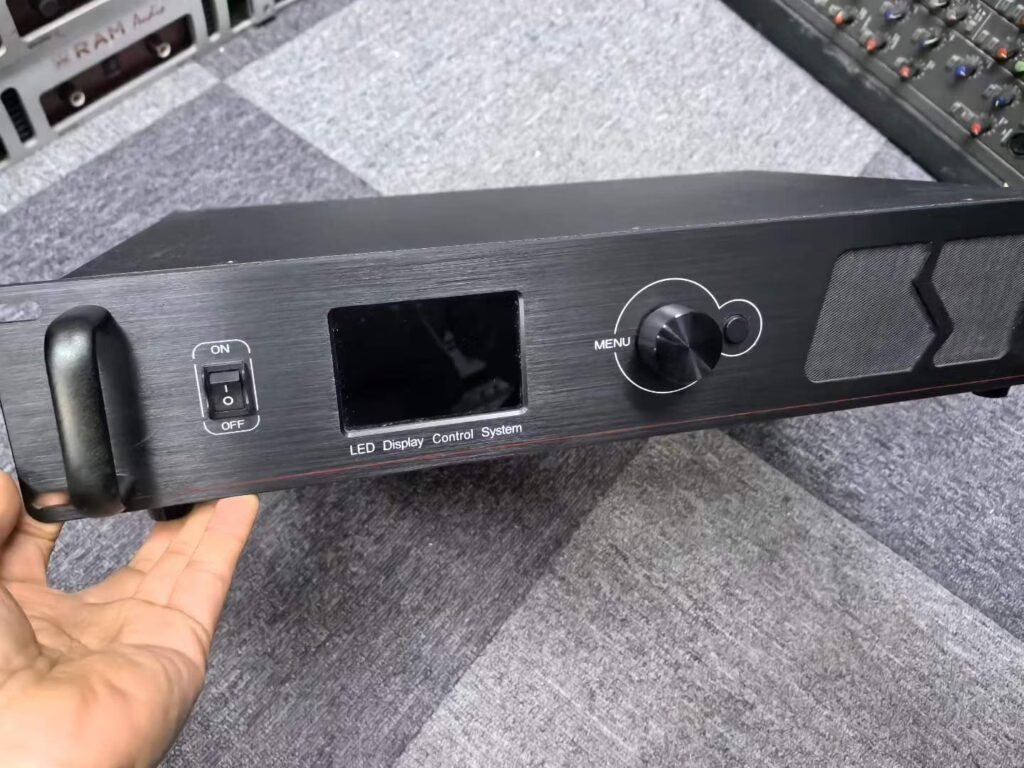
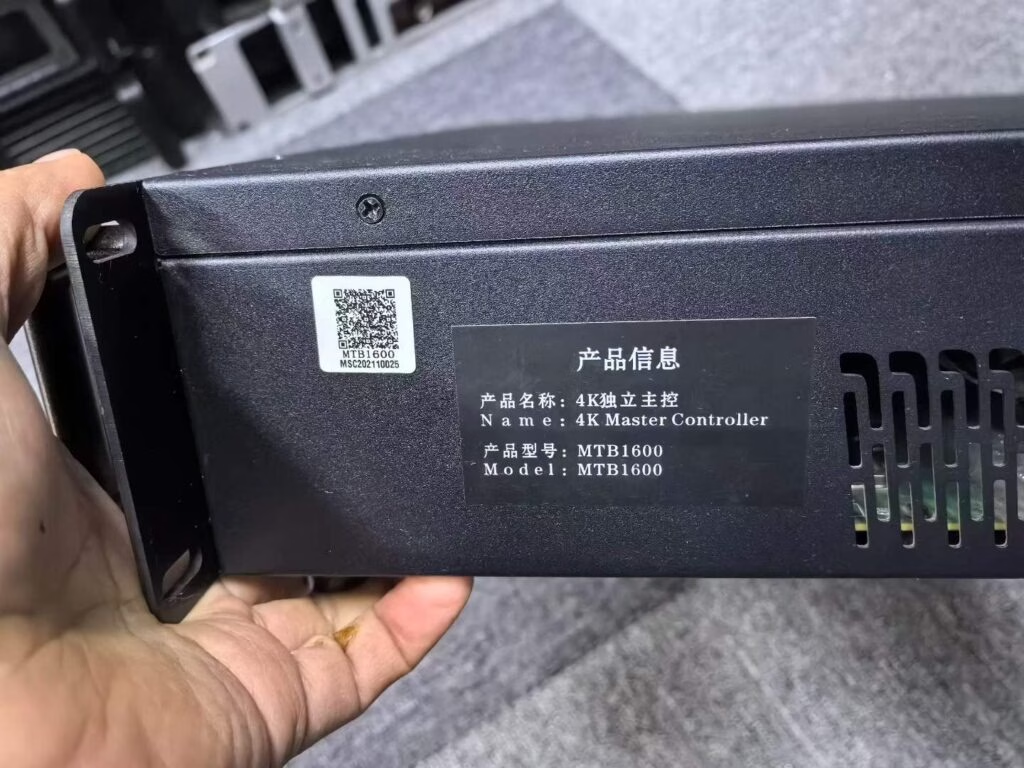
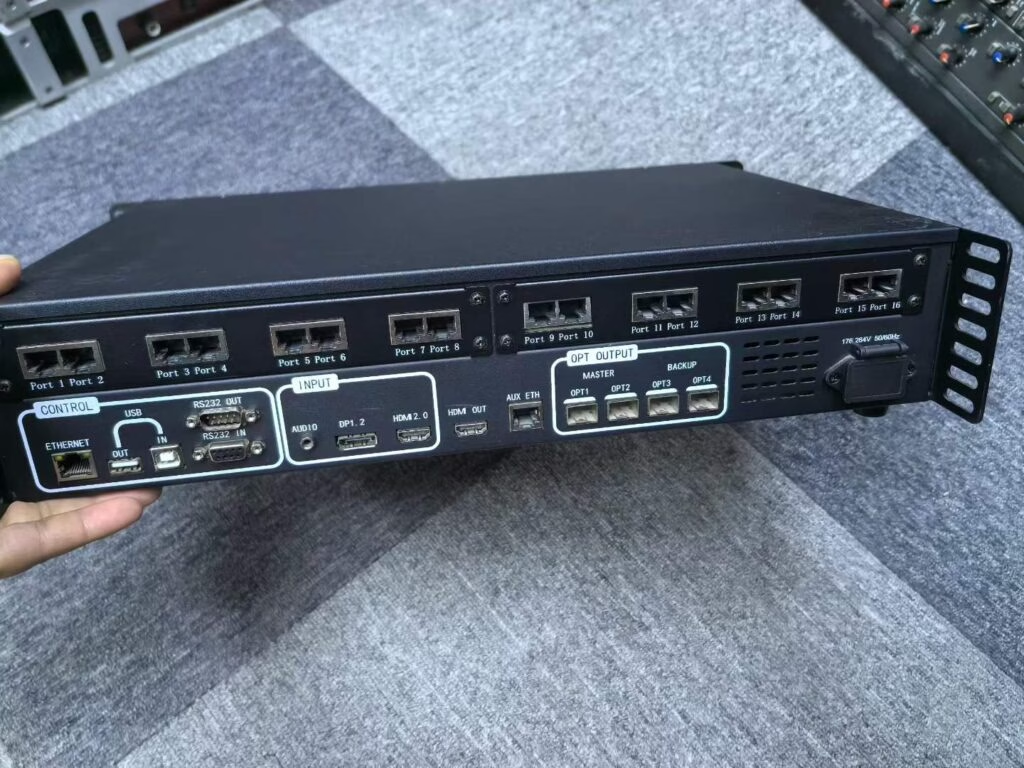
The short answer: this is a Mooncell MTB1600 standalone 4K master controller — the head-end sender for a large LED display wall — in stock, price on request. Sixteen gigabit outputs (Port 1 to Port 16), four optical outputs running a main and a backup link, HDMI 2.0 and DP 1.2 inputs at 4K60, a 3.5 mm audio input, HDMI loop-out, Ethernet and RS232 control, in a standard 2U chassis with an LCD and encoder-knob menu. Excellent used condition; no original packaging, but power and serial cables can be supplied with the order.
What exactly is a standalone LED master controller?
It is the box between your source and the cabinets, and the word that matters is standalone. This unit does not need a PC running a show file to put a picture on the wall: you build the screen layout in Mooncell’s Windows software, send the configuration to the controller over the Ethernet port, and from then on the controller boots and drives the wall on its own.
Three jobs, in order:
- Accept the source. DP 1.2 or HDMI 2.0 at up to 4K60, scaled to the canvas you defined, with the picture split across the outputs.
- Distribute the picture. Each of the 16 gigabit ports carries one slice of the canvas to a chain of LED receiving cards.
- Survive failures. The optical links run as a master and a backup path so a broken cable does not black the wall.
That combination — standalone operation plus optical redundancy — is what separates this unit from a cheap sending card inside a video processor. On a wall that has to stay on during an event, the redundancy is the feature you are paying for.
What is in the input section?
The input block on the MTB1600 is deliberately small, because a master controller only needs one good source:
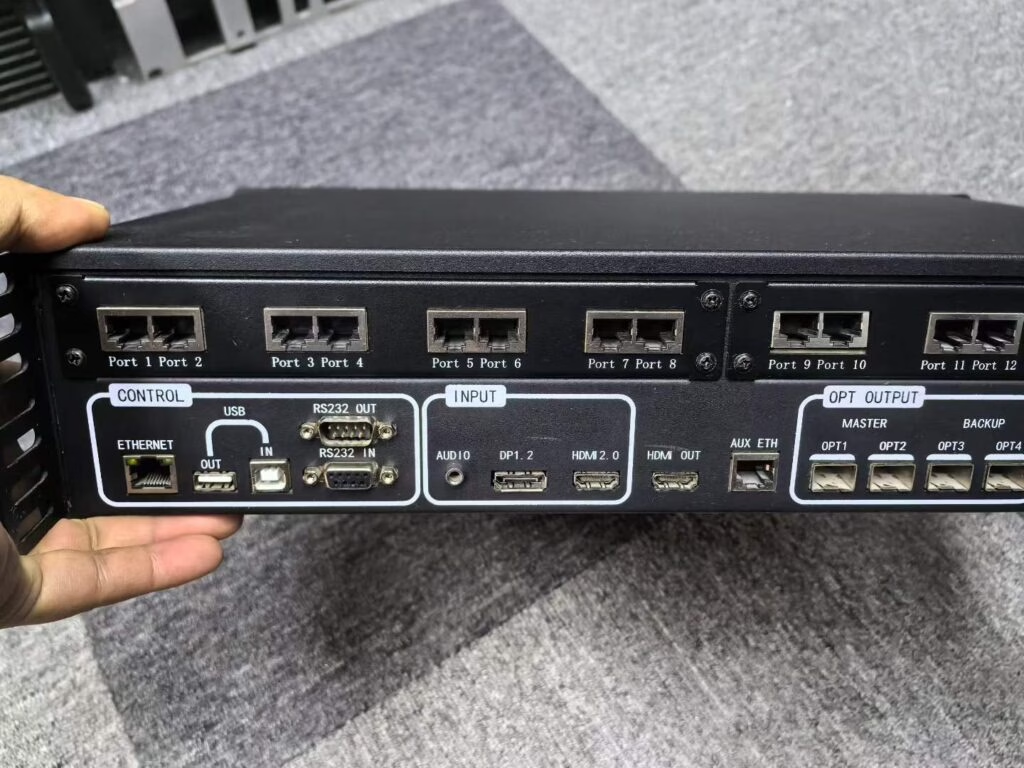
- DP 1.2 — 4K at 60 Hz. This is the cleaner of the two digital inputs on paper.
- HDMI 2.0 — 4K at 60 Hz, and in practice the input you will use most: laptops, media players, USB-C docks and AV-over-IP decoders all present as HDMI.
- HDMI OUT loop-through — a passed-through copy of the incoming signal for a local monitor or confidence feed. Useful when you want to see exactly what the source is sending, not what the wall is showing.
- 3.5 mm audio input — analogue audio in, carried with the video through the system. On LED walls with audio, this is how you avoid a separate audio delay box.
What does the control section give you?
One of the reasons older integrators still like these controllers is that the control options are physical, not cloud-based:
- ETHERNET — the commissioning port. This is where the PC software talks to the controller to push the screen configuration.
- USB IN / USB OUT — service access, and a way to load or export configurations without a network.
- RS232 IN / RS232 OUT — serial control, which is how this unit gets tied into a room control system. Crestron, Extron and AMX panels can all switch sources and recall presets over serial without anyone writing a driver for a proprietary protocol.
- AUX ETH — an auxiliary network port, typically used to keep control traffic separate from the video distribution network.
The RS232 loop is the detail that makes this a fixed-installation product rather than a rental gadget: you can daisy-chain controllers and drive them from one control processor.
How do the 16 ports and 4 optical links work together?
The output stage is where the MTB1600 earns its place in a big installation:
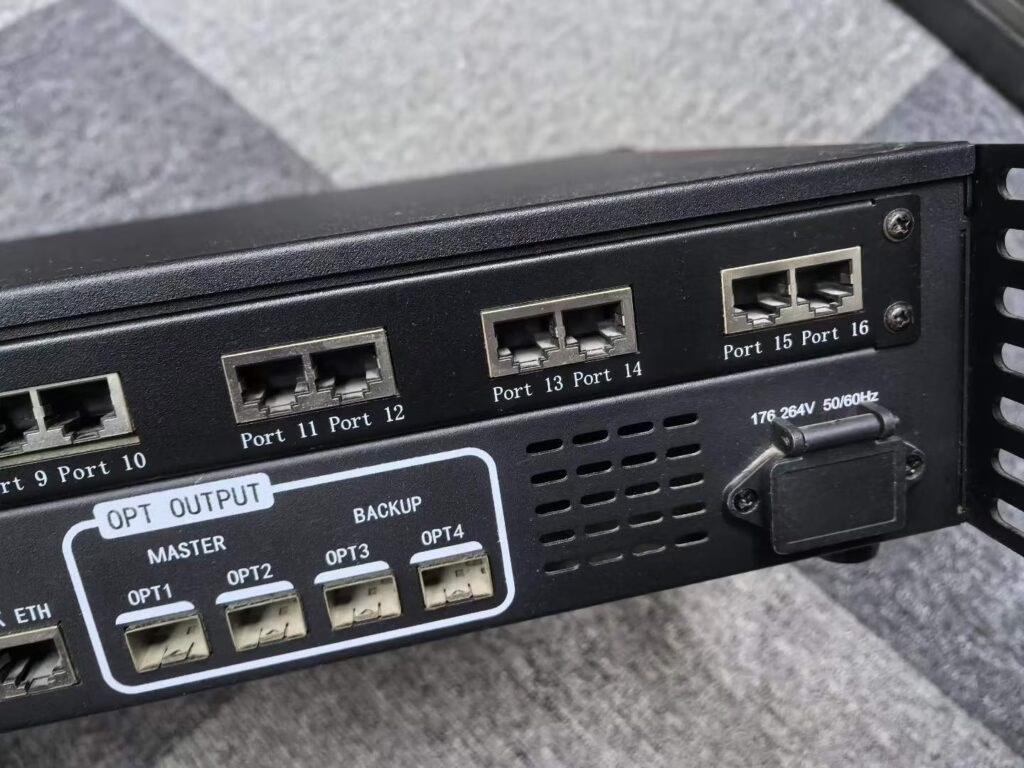
- Port 1 to Port 16 — sixteen gigabit Ethernet outputs, each feeding a receiving-card chain. Sixteen chains is enough for a 4K canvas across a full wall, or a wider wall with denser cabinet packing.
- OPT 1 to OPT 4 — four optical outputs, wired as a master link and a backup link. Fibre is used because it covers long runs between the controller rack and the wall without repeaters, and because it is immune to the earth and interference problems that copper runs pick up in a plant room.
- Hot backup — the backup path carries the same content continuously. If the master link drops, the wall keeps running. On a 16-hour-a-day installation that is not a luxury; it is the difference between a glitch nobody notices and a black screen in front of an audience.
Is this the right controller for your wall in 2026?
It depends on the wall, not on the year. This is a solid choice when:
- Your cabinets are on a receiving-card family the MTB1600 can drive, and you want a head end that runs without a PC.
- You need optical redundancy and long cable runs — a sports hall, a facade, a control room with the rack 60 m from the wall.
- You want RS232 integration with an existing control system instead of an app.
Look elsewhere when your canvas is small (a 1080p wall is over-served by 16 ports), when you need 8K or high frame rates, or when nobody on site can maintain a Windows configuration tool. The last point matters most: the hardware is the cheap part of this purchase.
What condition is this unit in?
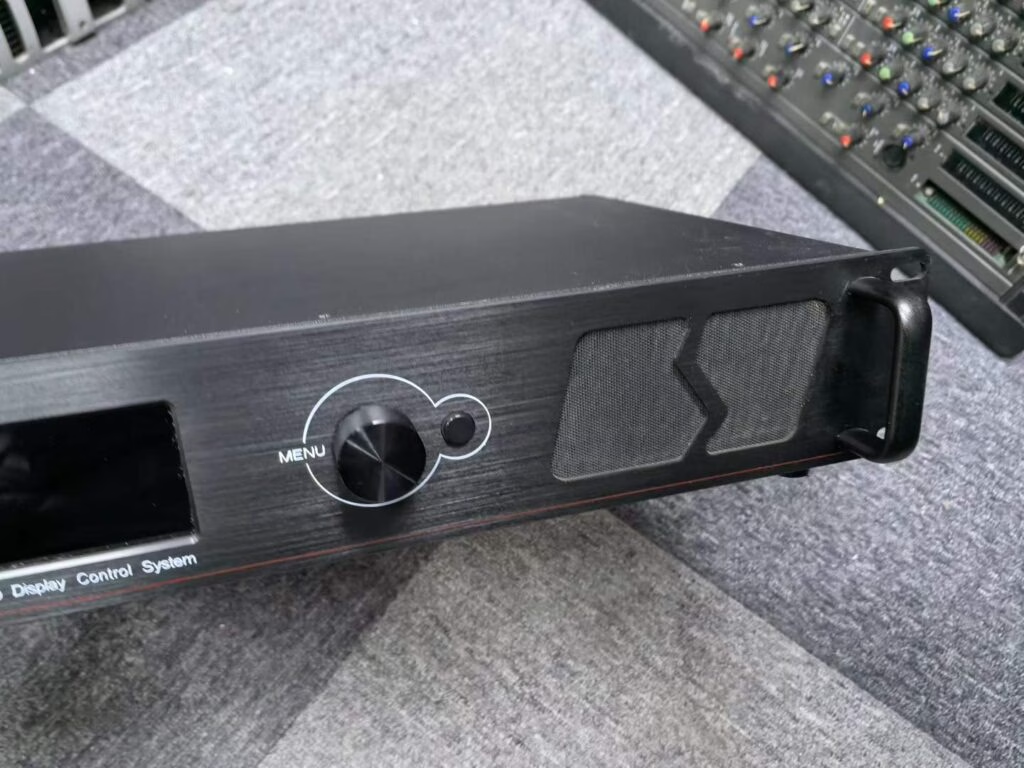
Excellent used condition: rack-mounted in a fixed installation, no chassis damage, front LCD intact, all 16 port indicators and the optical cages present, encoder knob turns cleanly. It powers on and the menu comes up.
What we are not claiming: we have not run a cabinet-chain burn-in, so we cannot quote a port-by-port error rate, and receiving cards or cabinets are not included. On request we will photograph every rear connector and run a power-on report before you pay. The original packaging is gone — the unit ships in a foam-lined double-wall carton with the rack ears protected. Power cable and serial cable can be added at no charge; tell us the plug type for your destination.
What should a used MTB1600 cost?
Used head-end controllers trade in a narrow band because the buyer pool is small: integrators with a Mooncell receiving chain already on the wall, and rental companies holding a spare. Expect a used unit to cost clearly less than a new controller with the same port count, with the configuration file mattering more than the cosmetics.
Comparable Mooncell master controllers in working condition typically ask low four figures in US dollars. Port count, optical option cards, whether the software and configuration transfer, and whether cables are bundled all move the number. Price on this listing is on request — send us your wall size, cabinet type and destination port and we will quote the controller and the freight together.
What do you need besides the controller?
- The Windows configuration software — confirm the version matches the firmware on the unit before you import a saved layout.
- A saved screen configuration — port mapping, cabinet layout, brightness and colour calibration. Without it you rebuild the wall from zero.
- Compatible receiving cards — the controller drives cabinets, not panels.
- Power discipline — AC 176–264 V, 50/60 Hz means it runs on 220–240 V mains directly and tolerates the sag you get on a plant-room circuit.
Can it ship?
Yes, and cheaply: a 2U rack unit at this weight goes by air freight to most Asian, African, European and American ports as a small line item, and consolidates well inside a cabinet order. Dual-wall carton with foam, no flight case, which keeps the billable weight down. If it ships with cabinets, tell us and we will pack it inside the cabinet crate instead.
Key Takeaways
- What it is: Mooncell MTB1600 standalone 4K LED master controller, 2U rack chassis, LCD and encoder-knob menu.
- I/O: DP 1.2 and HDMI 2.0 in at 4K60, HDMI loop-out, 3.5 mm audio in; 16 gigabit outputs plus 4 optical links with master and backup.
- Control: ETHERNET, USB IN/OUT, RS232 IN/OUT, AUX ETH.
- Condition and price: excellent used, no original packaging, power and serial cables available — price on request, in stock in China.
- Best fit: fixed LED walls that need standalone operation and optical redundancy.
Want rear-panel photos, a power-on report or a freight quote to your port? Send us your wall size and destination and we will come back with a landed figure. More AV and control hardware is filed under PA and AV systems.