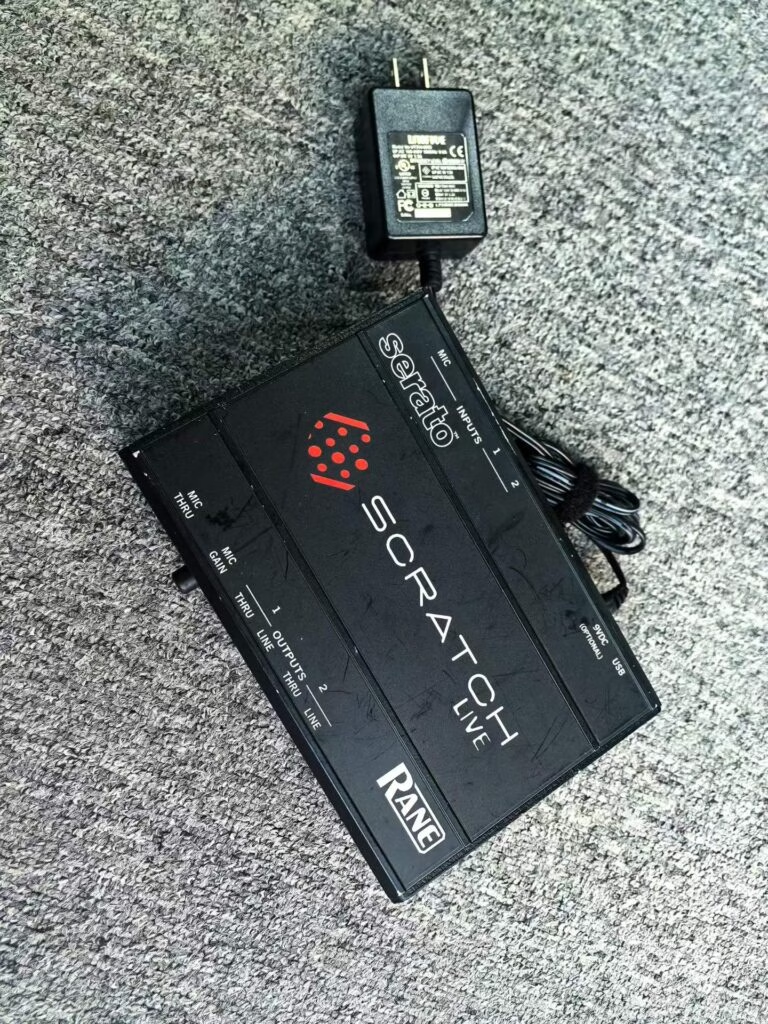
Run every fader full travel and listen before you look at lights, effects or screen. A scratchy crossfader on a used Pioneer DJM-800 is a $60 part plus 40 minutes of work. Fader wear is the most common fault on used DJ gear, and it is the one thing sellers never photograph.
Fader wear explains most of the price gap between a used DJ mixer and a fresh one. Two mixers of the same model from the same year can differ by $300 purely on how many hours the crossfader has been through.
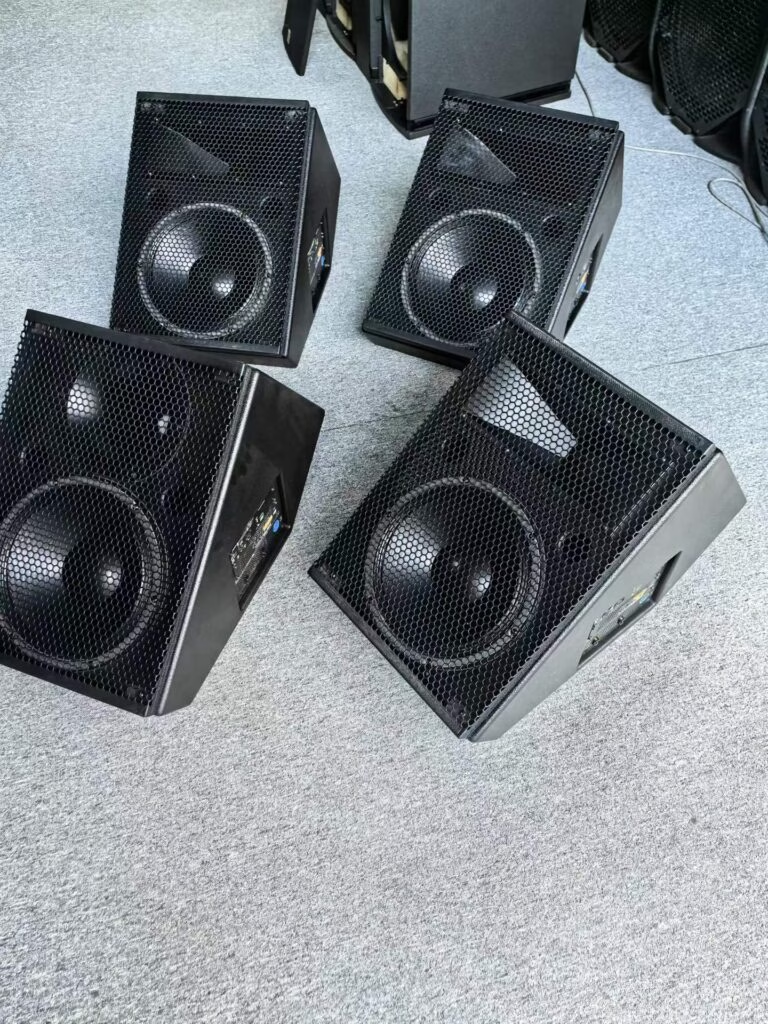
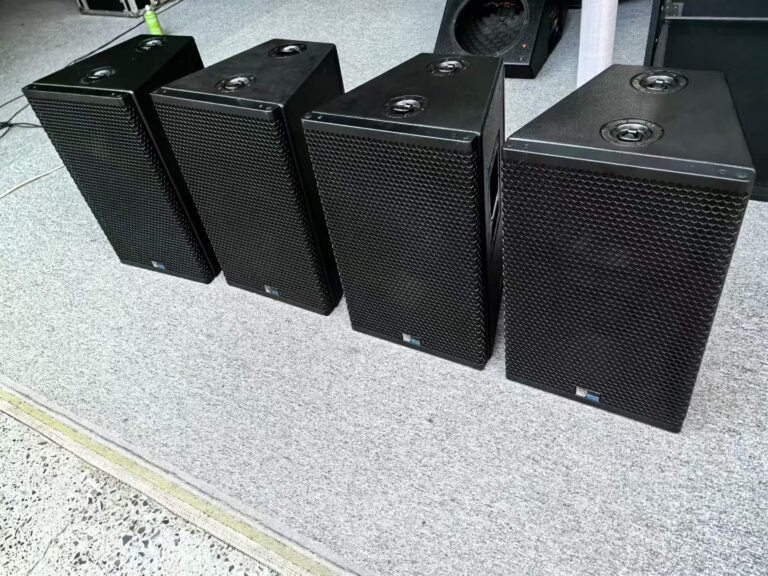
Our JBL CMX6403 two-way pair gets tested on the bench before every DJ gear shipment leaves for a club install, because speakers and DJ mixers fail in completely different ways and both need a real signal to show it.
What should you test in the first five minutes?
- Every channel fader and the crossfader, full travel, through headphones
- All cue and headphone outputs, both sides of the split cue
- Phono and line inputs separately — phono stages fail earlier
- Master out at both XLR and RCA, listening for hum
A hum that appears only on RCA master output is usually a dried capacitor, not a cable. That is a $15 part and a $90 bench fee if you pay someone else to find it.
How do you test a used turntable?
Mechanically, not with a record. With the platter stopped, the tonearm should fall freely with anti-skate at zero and drop slowly near 3. Grit in the bearings means a full rebuild, which is $150–250 in parts. Then check platter torque: press your palm flat and feel for hesitation on start. A Technics SL-1200MK2 in real Excellent condition runs $900–1,200 in 2026.
What about CDJs and controllers?
Load a USB stick with tracks you know and play through every jog wheel, hot cue and loop button. Jog wheel encoders wear out on heavily gigged units and repairs require the whole transport assembly. Check the display for dead pixels in the waveform area, which is the first place they appear.
How much should you pay in 2026?
Two-channel battle mixers: $200–450 used against $700–1,000 new. Four-channel club mixers: $600–1,200 used against $1,800–3,000 new. DJ controllers: $300–850 used against $900–2,200 new. If a deal is more than 30% below those bands, assume a worn fader or a missing power supply.
Where do DJ setups quietly fail?
Power supplies and internal ribbon cables. Club gear lives in hot booths with spilled drinks, and ribbon connectors oxidise until channels drop intermittently. Test each channel for 20 seconds rather than 2 — intermittent faults need time to show up. Also ask whether the booth had a smoke machine; glycerin residue coats faders and makes them sticky within months.
Key Takeaways
- Faders first: full travel on every one, listening for scratch.
- Turntable test is mechanical — tonearm free fall and platter torque.
- Club mixers run $600–1,200 used; controllers $300–850.
- Intermittent faults need 20 second tests per channel, not 2.