Description
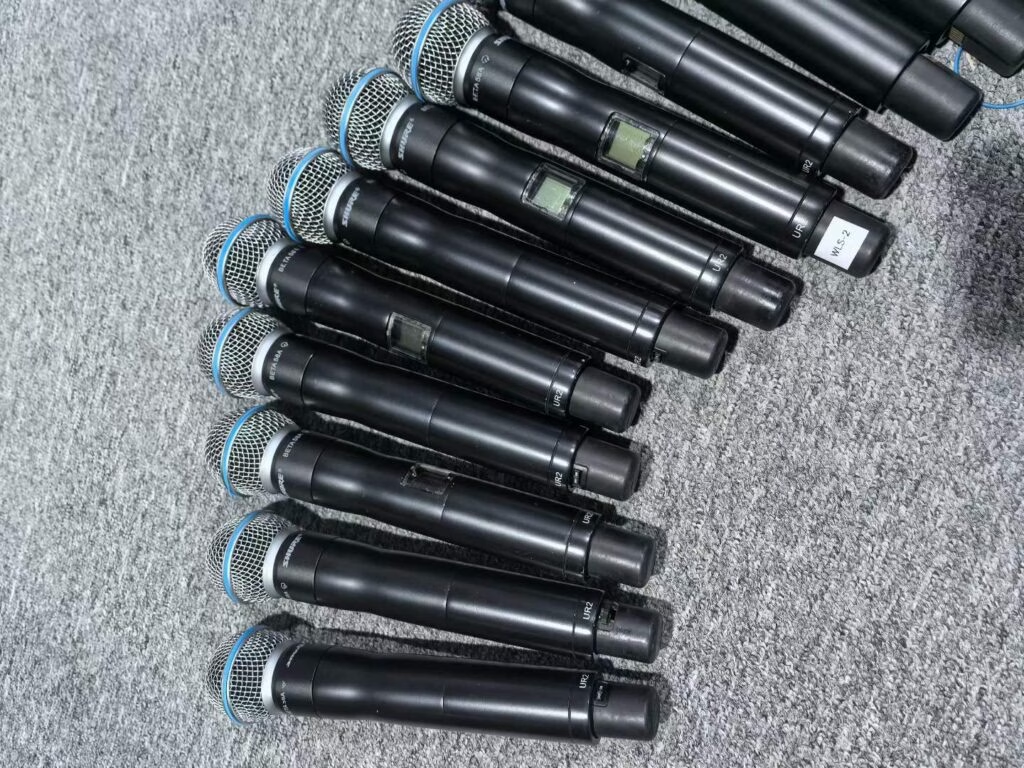
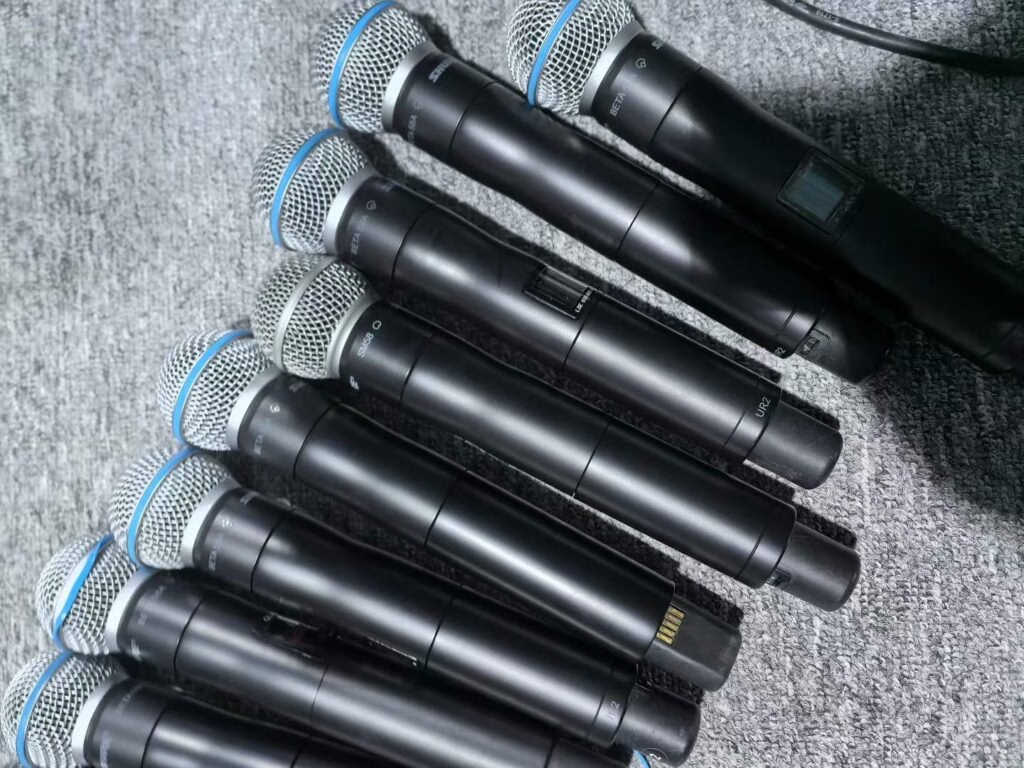
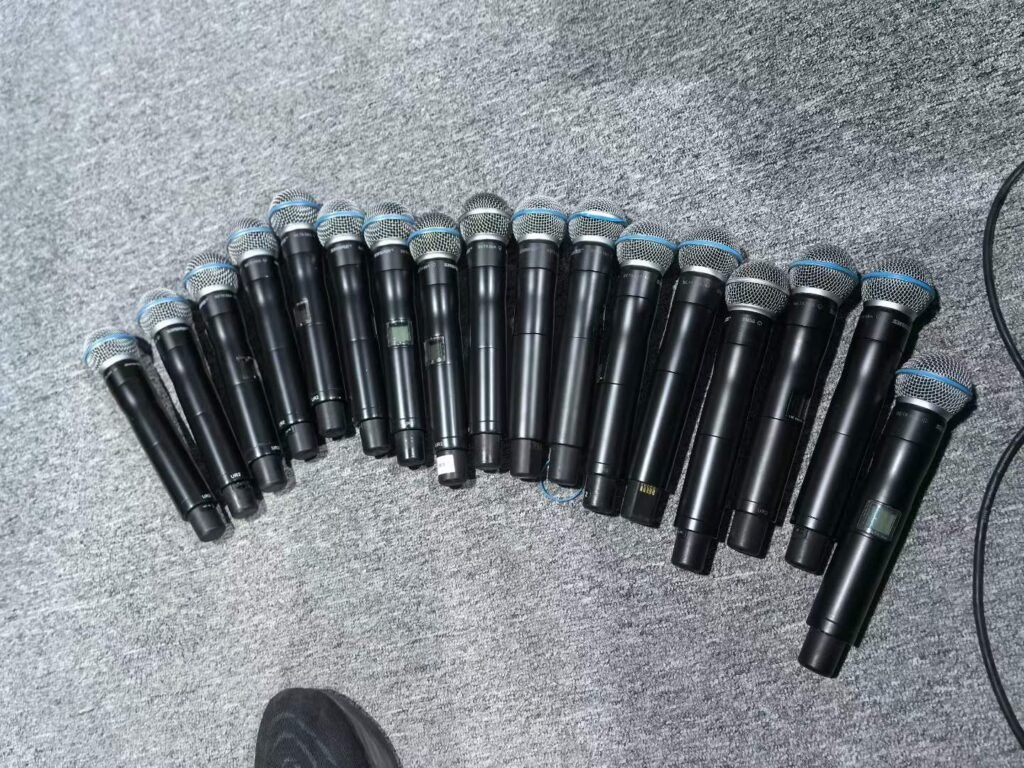
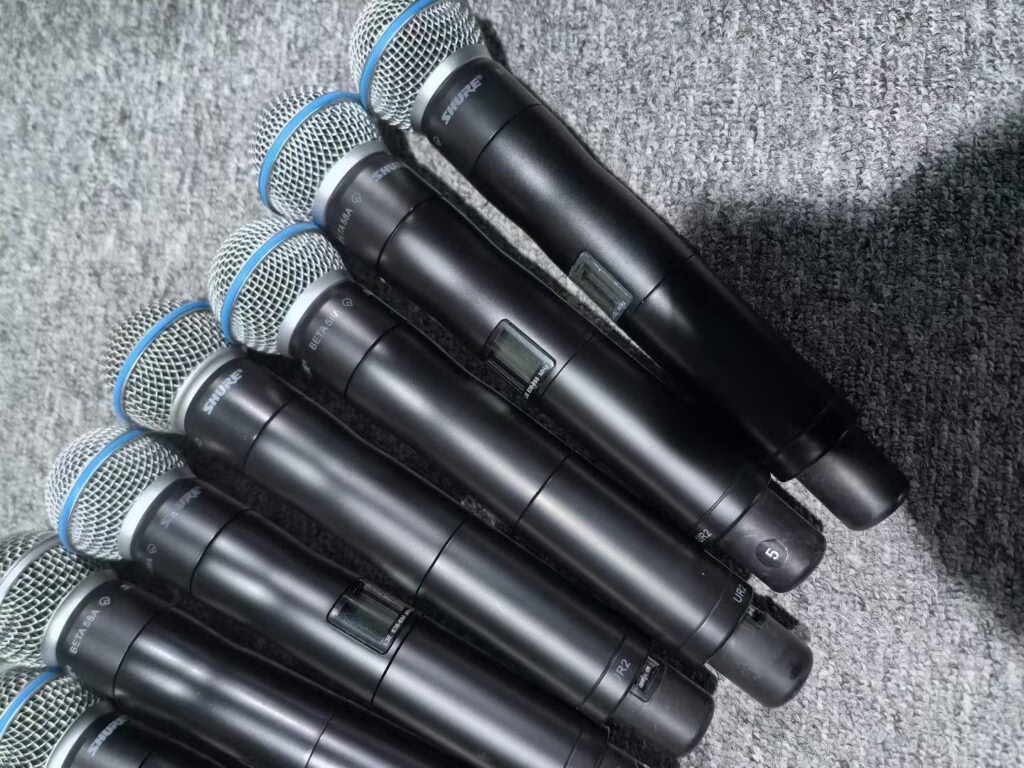
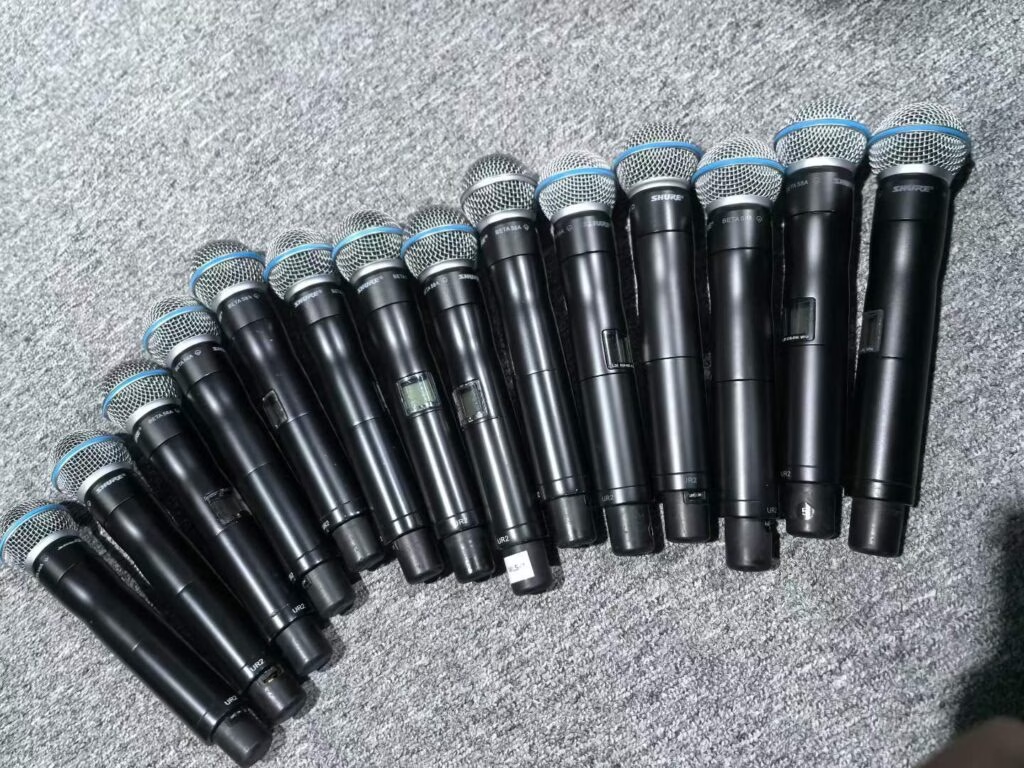
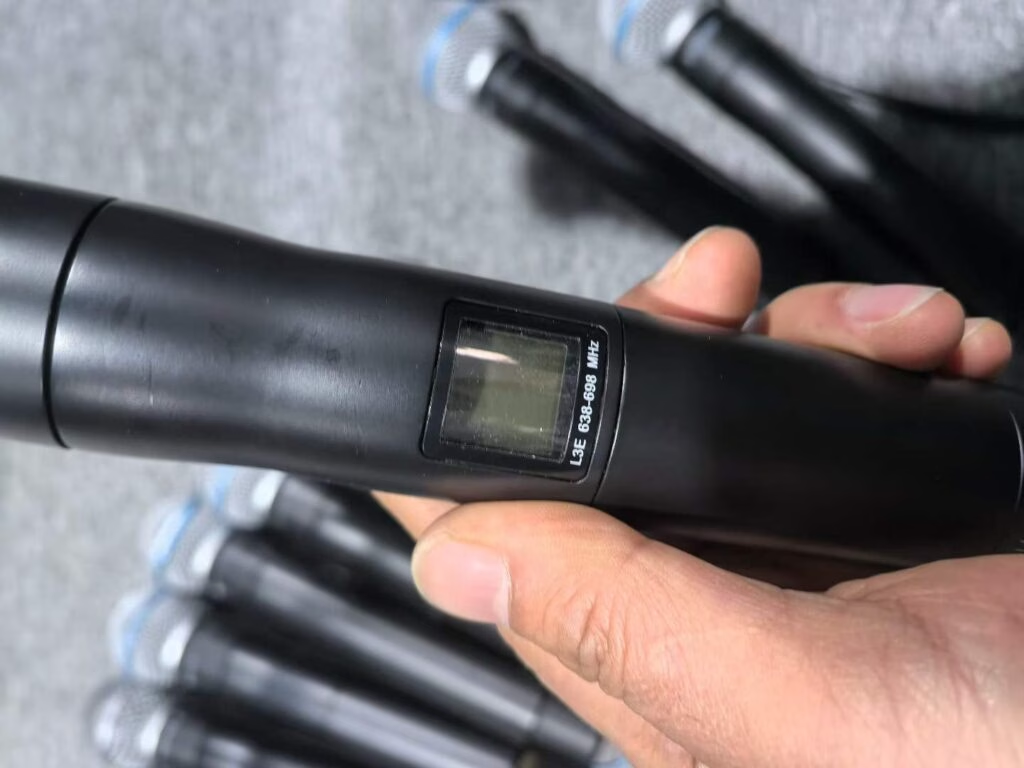
What these are: a batch of Shure UR2 handheld transmitters — the handheld half of Shure’s UHF-R wireless system, the series that sat at the top of Shure’s touring range for roughly a decade before Axient Digital replaced it. Most of the ones in the photographs carry Beta 58A capsules, with a couple of plain SM58 heads mixed in. They are used, they are in stock, and the photographs show the actual units you will receive rather than a library shot.
Why UR2s are still worth buying in 2026: UHF-R is the last fully analogue, fully mechanical Shure touring system. There is no firmware to brick, no network to configure, no subscription and no app. Turn the knob, set the frequency, press the IR window against the receiver, done. Engineers keep buying second-hand UR2s and UR4 receivers for exactly this reason: they can be handed to a volunteer, a student or a sub and they will still work on Saturday night.
The build is the other half of the argument. The UR2 body is a solid metal tube with a machined battery chassis, and the capsules unscrew and swap in seconds — a Beta 58A for a singer, an SM58 for a speaker, a Beta 87A if you want a condenser. That modularity is why a twenty-year-old transmitter is still a working tool rather than landfill.
What you get
- Shure UR2 handheld transmitters, black metal bodies with the silver grille and blue ring of the Beta 58A capsule
- Most units fitted with Beta 58A dynamic supercardioid capsules; at least one fitted with an SM58 head
- Integrated LCD screen on each transmitter showing group / channel, frequency and battery state
- Metal battery chassis taking a standard 9V battery — no proprietary packs, no chargers to lose
- IR sync window for one-touch frequency transfer from a UR4 receiver
- One unit carries a white asset label with a channel marking, and one body is printed L3E 638–698 MHz, so we know at least part of the batch sits in the 638–698 MHz band
Condition, honestly stated
These are working used units with the usual signs of life in a touring rack: scuffs and polished edges on the black finish, small marks around the battery cap where it has been unscrewed a few hundred times, and factory and asset labels on the bodies. The capsules are intact and the grilles are not crushed. The LCD screens are working — several are lit in the photographs.
What we are not claiming: we have not measured RF output or deviation on a service bench, and we have not done a walk test. If you need certified results, ask before you buy and we will put a unit on our analyser and send you the readings.
Batteries, bands and the honest caveats
UR2s run on ordinary 9V batteries, which is a genuine advantage on tour — every venue on earth has them — but it also means these are not the rechargeable systems some productions now standardise on. Budget for batteries, or plan to move to a newer system if a client contract specifies rechargeable packs.
The band matters more than anything else here. One body in the photographs is marked L3E, 638–698 MHz. That band is legal in most of Europe where the upper part of the UHF television range is being vacated, but it is not legal in the United States, where 617–652 and 663–698 MHz were sold off to mobile operators and 600 MHz wireless operation is prohibited. If you are in the US, tell us before you order and we will check the actual band of each unit against the frequencies you are allowed to use. We would rather turn down a sale than ship you a transmitter your regulator will fine you for.
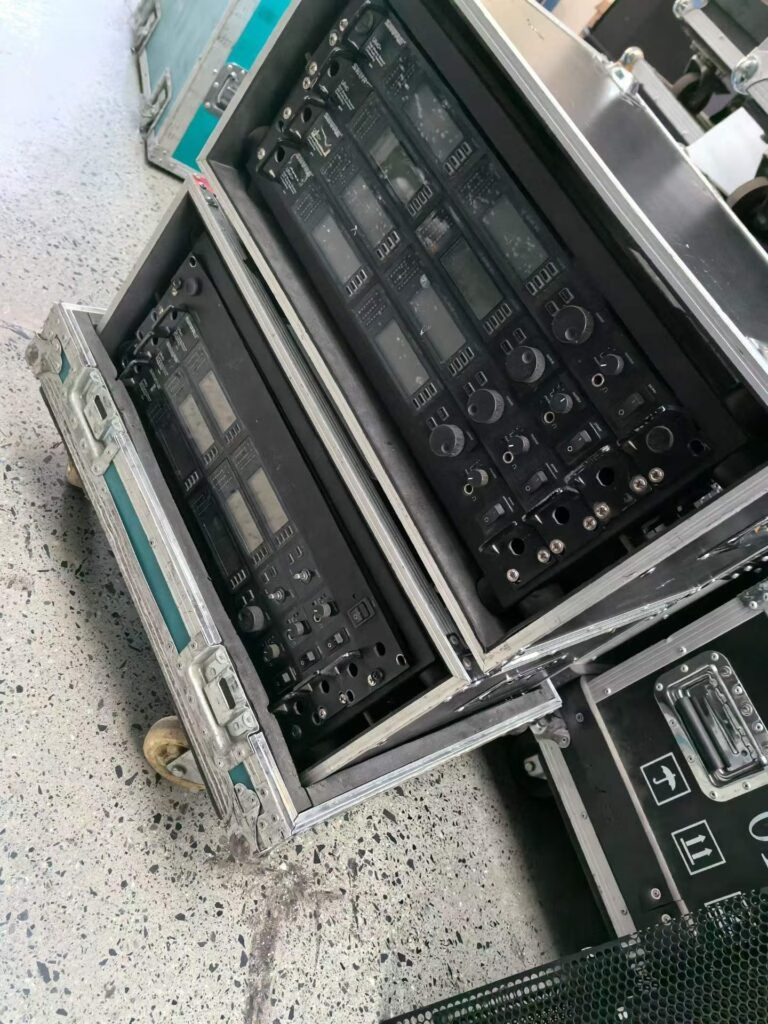
Every unit also needs to be paired with a matching UR4S or UR4D receiver — none is included in this listing. The transmitters sync to the receiver over infrared, so as long as the two share a band, setting them up takes about ten seconds per channel.
Specifications we can confirm from the units
- System: Shure UHF-R series, analogue UHF wireless (discontinued; superseded by Axient Digital)
- Transmitter type: handheld, integrated antenna, metal body
- Capsule: interchangeable Shure screw-on heads — Beta 58A supercardioid dynamic standard here, SM58 on at least one
- Battery: single 9V (PP3), accessible via the base cap
- Display: backlit LCD, group / channel / frequency / battery
- Band seen on one unit: L3E, 638–698 MHz
- Sync: infrared, to Shure UR4 receivers
- Price: on request
We have not printed RF output power, frequency response or battery life figures here because Shure has retired the UHF-R datasheet and the numbers floating around resale sites differ between the UR2 and the later UR2+/UR2D revisions. What is printed above we read off the units themselves. Ask and we will photograph the model plate of any individual transmitter before you commit.
Who should buy these
- Rental houses with a UR4D rack — spare handhelds are the thing that goes missing, and these keep an existing system in service instead of forcing a whole-platform replacement.
- Houses of worship running UHF-R — cheap spares that match the receivers already in the cabinet.
- Corporate AV and conference work — Beta 58A capsules handle a lectern and a panel discussion with the same body.
- Small touring and club rigs in the EU — a legal 638–698 MHz band, and no network configuration to break at load-in.
Shipping and questions
These are light and they ship by courier. We can send a single transmitter or the whole lot, and we will photograph the exact units going into your box so you know what is arriving. If you need a specific band, a specific capsule, or a quantity that matches your receiver count, tell us and we will confirm from stock rather than guess.
Browse the rest of our used microphones for handheld, gooseneck and instrument mics, look at the BBS U-798D wireless system if you want receivers included, or start from the full used inventory for mixers, amps and PA. Exporting outside the region? Our shipping and export page covers documentation and bands by country.