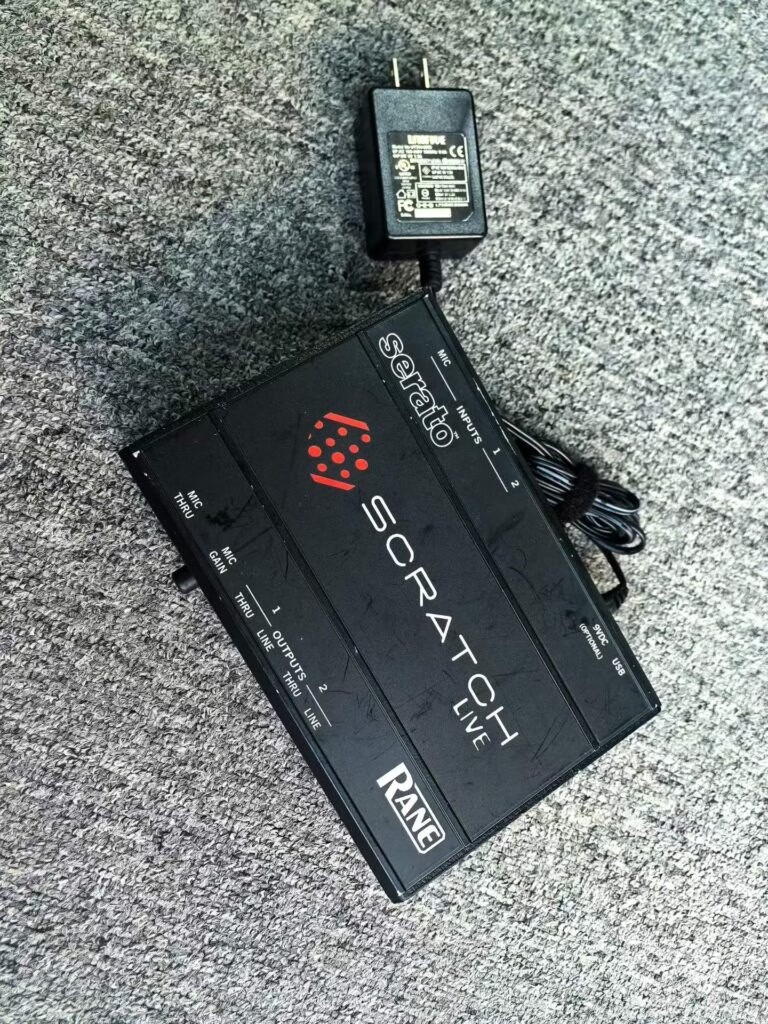
Jog wheels first, crossfader second, headphone output third. Those three carry 80% of the wear on any DJ controller, and a replacement crossfader module alone runs $40-120 on most 2-channel units. Body scratches are irrelevant; moving parts are everything.
Why do jog wheels fail first?
Touch-sensitive jog wheels use a capacitive platter with a ribbon connector that flexes every time the wheel is nudged. Over 200-300 gigs, that ribbon cracks and the jog starts dropping touch response mid-set. Test by holding a finger on the outer rim: the display should say “touch” instantly and the audio should stop dead. If there is a delay or it drops out when the wheel is spun, the platter is done.
Mechanical jogs are more forgiving. Spin them and listen for a rumble; worn bearings make a low grinding sound you can feel through the case.
How do you test a crossfader?
Move it slowly from full left to full right while playing both decks. Listen for dropouts, crackle, or a channel that does not fully cut. Then do 20 fast cuts and listen for stickiness. A fader that has been hammered cuts into the audio as a small click at the zero point, and that click is unmissable in a small venue.
Check the fader’s replacement availability before you buy. A modular fader that pulls out with two screws is a $50 fix. A fader soldered to the main board on a discontinued model is a dead controller.
What else is worth five minutes?
- Headphone output. Plug in and swing the jack. Crackle means a worn socket, which needs board-level work on many units.
- USB port. Test with your own laptop and cable, not the seller’s. USB sockets take a beating.
- Master and booth outputs. Both XLR and RCA. Test them, every one, at real level.
- Screen. Look for dead pixels and cloudy edges; LCD delamination on 6-8 year old units is common.
Is the price fair?
| Type | New | Used fair price |
|---|---|---|
| 2-channel controller | $700-1,100 | $250-420 |
| 4-channel controller | $1,300-2,200 | $500-900 |
| Club CDJ pair | $4,000-6,000 | $1,400-2,600 |
| Club mixer | $1,800-3,500 | $700-1,500 |
Above those ranges you are mostly buying the case, the cables and the seller’s optimism. Below them, assume something failed the tests above.
What about buying DJ gear as part of a lot?
Lots are where the real savings sit, and where the real risk does too. When a club closes, the DJ booth goes as one bundle: two decks, a mixer, a laptop stand, cable, sometimes a pair of monitors. The bundle is normally priced at 60-70% of what the pieces would fetch separately, because the seller wants it gone in one afternoon.
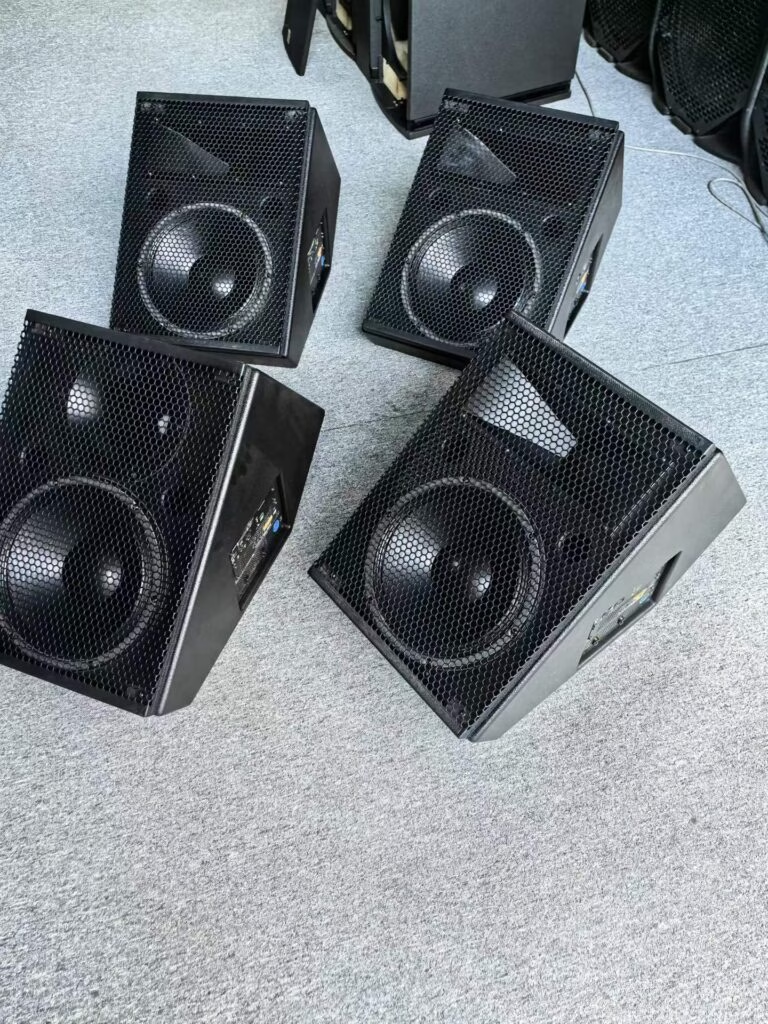
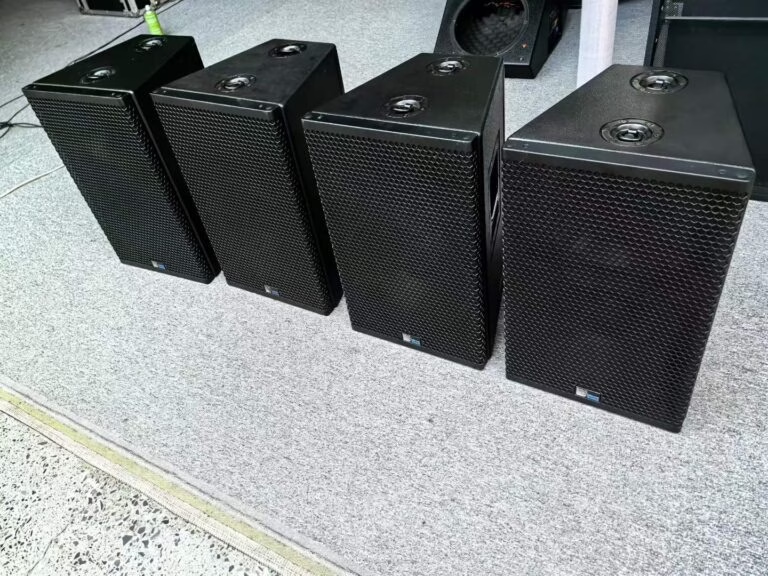
If your booth needs speakers too, buying the whole radio-rack worth in one go saves the shipping overhead. Our JBL CMX6403 two-way pair is the kind of speaker that ends up in those lots, and it is worth asking whether a seller has the full booth before you price the decks alone.
Which used DJ gear should you avoid?
- Anything with a built-in battery. The cells are usually sealed and unobtainable after 4-5 years.
- Discontinued all-in-one controllers. No firmware, no mapped software updates, no repair parts.
- Gear from a bar residency. Front panels look fine; faders and jogs are destroyed.
The cleanest used DJ purchases are club-standard gear still in production. It costs more, but parts and firmware are still available, and the resale value holds because the next buyer has the same reasoning.
Key Takeaways
- Test jog wheel touch response first; a dropped touch signal mid-set is the classic failure.
- Crossfader dropouts and zero-point clicks are cheap fixes only on modular faders.
- Use your own laptop and cable on the USB port.
- Used 2-channel controllers trade at $250-420; a club CDJ pair at $1,400-2,600.
- Buy in lots to save freight, but budget for one failed unit in every four.