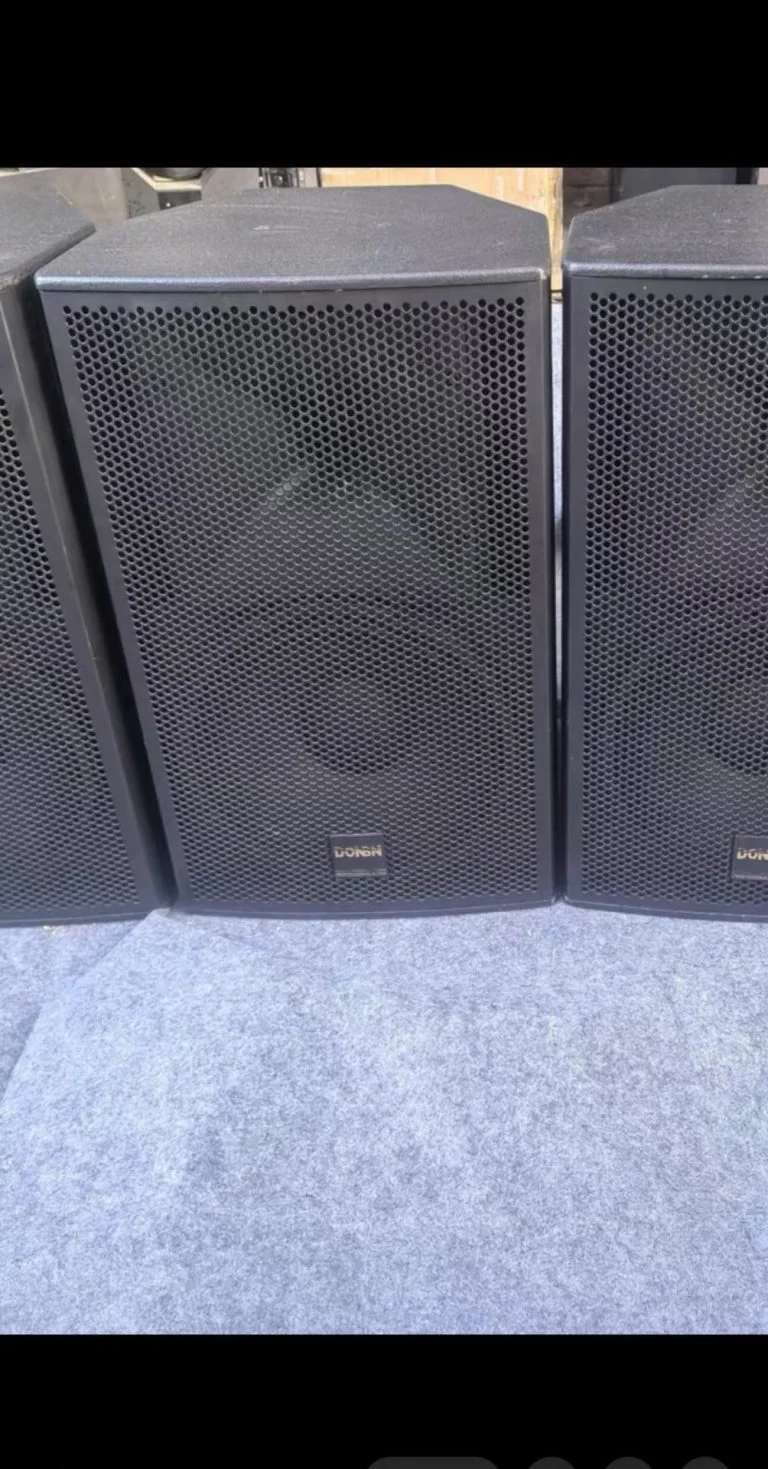
Yes, you can mix used speakers from different brands, but only if they carry different jobs. Two different models as left and right mains is a mistake you will hear on the first song. Different models covering different zones, or one pair as mains plus another as monitors, works fine and saves real money.
What actually goes wrong when you mismatch a stereo pair?
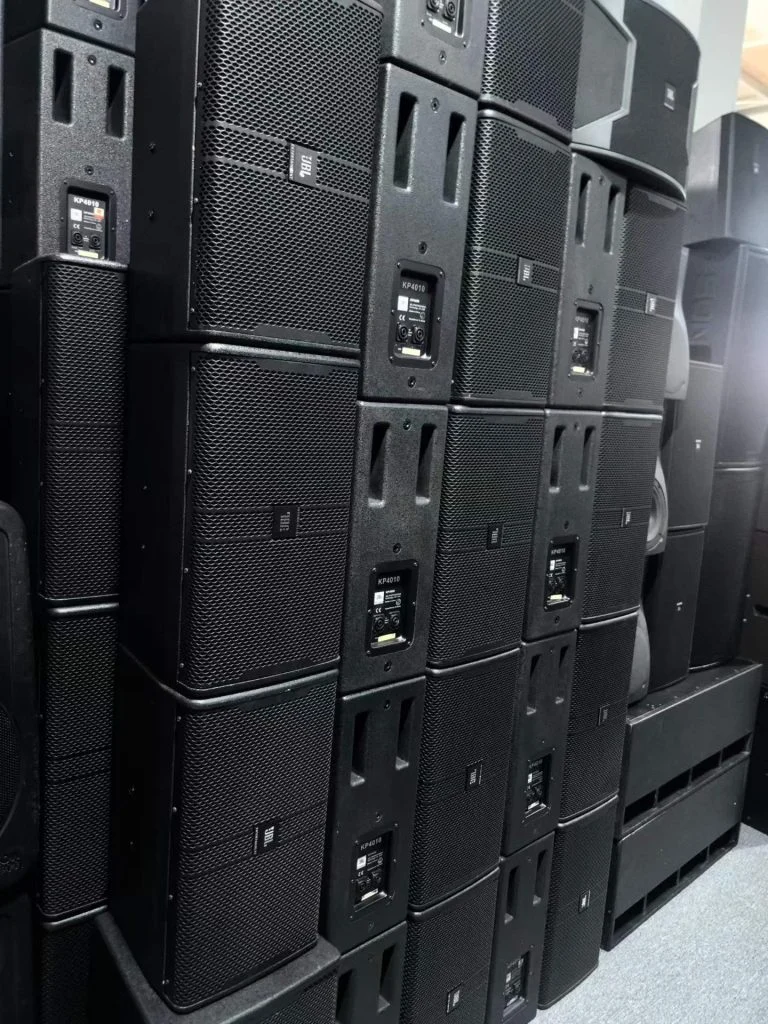
Sensitivity is the killer. A JBL KP4010 is rated around 96 dB, a cheap generic 12-inch box may sit at 92 dB. Feed them the same 100 watts and one side is 4 dB louder. That is not subtle; it pulls the image to one side of the room and the client asks why the left stack sounds weak.
Impedance and phase come next. A 4-ohm box on one channel and an 8-ohm on the other means the amp delivers roughly double the power to the 4-ohm side. Now your loud side is also the side the amp is working hardest on, which is how you cook a channel mid-show.
Where mixing brands is completely fine
- Delays and fills. A balcony delay does not need to match the mains by brand, only by level and roughly by voicing.
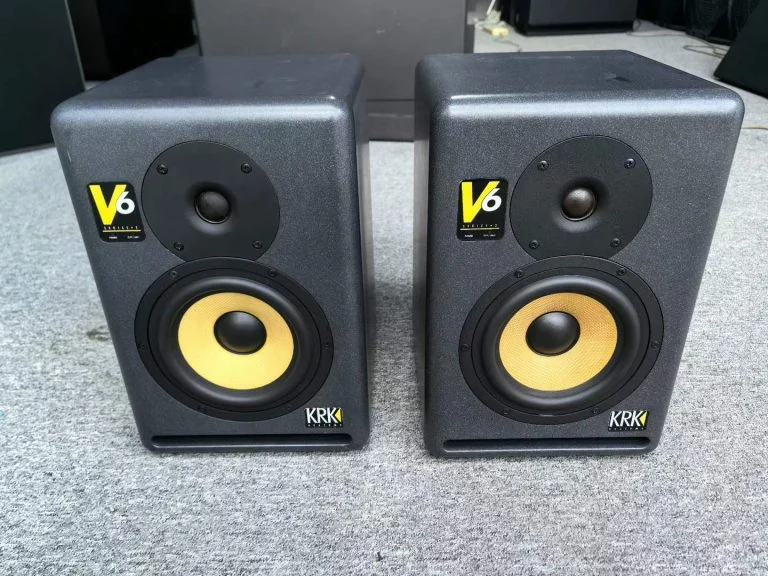
- Monitors. Nobody hears a monitor mix moving across a stereo field. Whatever is on the floor and works is fine.
- Separate rooms. Bar upstairs, function room downstairs, two different rigs, no interaction.
- Subs on an aux. A single sub brand crossed over at 100 Hz with a different top brand is standard practice.
How much does a sensitivity difference matter in practice?
Rough guide: 1 dB is barely audible, 3 dB is clearly louder, 6 dB sounds twice as loud to most listeners. In a 200-capacity room, a 3 dB mismatch on one side is enough that the person on the quiet side will notice before the soundcheck ends.
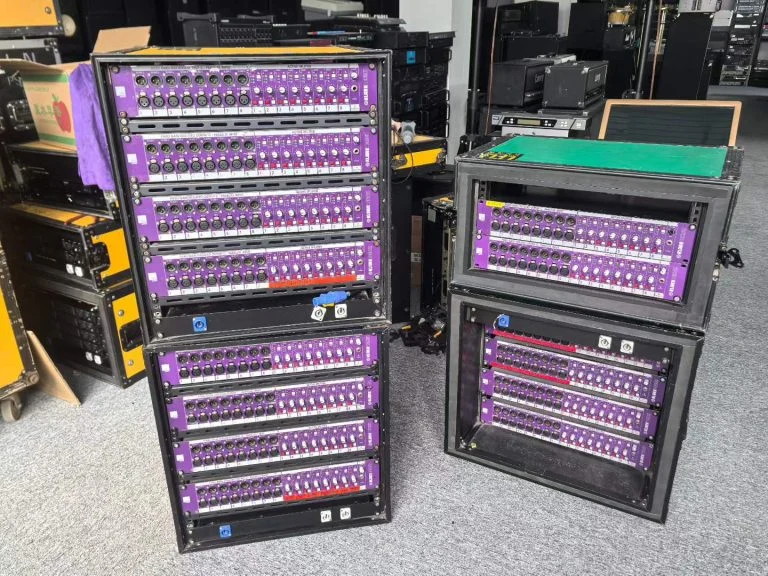
Fix it with a channel gain trim if your console has per-output delay and gain. Most digital consoles do, which is one reason a used Yamaha DM1000 is useful in a mixed-brand rig: you can trim 3 dB on the loud side and delay the near stack, and the mismatch mostly disappears.
What should you check before buying mismatched boxes?
Get these numbers from the seller in writing. If a seller cannot supply sensitivity and impedance, they either do not know the gear or do not want you to know.
| Spec | Acceptable gap | Deal-breaker |
|---|---|---|
| Sensitivity | within 2 dB | 3 dB or more for a stereo pair |
| Impedance | same nominal value | 4 ohm vs 8 ohm on one amp |
| LF driver size | one size apart | 10-inch vs 15-inch as a pair |
| Horn pattern | similar coverage angle | 60×40 next to 90×60 |
| Condition | both tested | one untested box in the pair |
What is the real cost of going mismatched?
If you save $400 buying two different used pairs instead of one matched pair, you will spend some of it back on a console with per-output processing and a few hours of tuning. You also inherit a rig that nobody else wants to buy second-hand, because buyers ask the same question you did. For one-off events that trade is fine. For a rig you plan to resell, buy matched.
Key Takeaways
- Mixing brands is safe for zones, fills, monitors, and subs. Not for a stereo main pair.
- A 3 dB sensitivity gap is audible; 6 dB sounds twice as loud.
- Check sensitivity, impedance, driver size, and horn pattern before paying.
- A console with per-output gain and delay makes mismatches survivable.
- Resale value drops when your rig is a patchwork. Buy matched if you plan to sell it on.