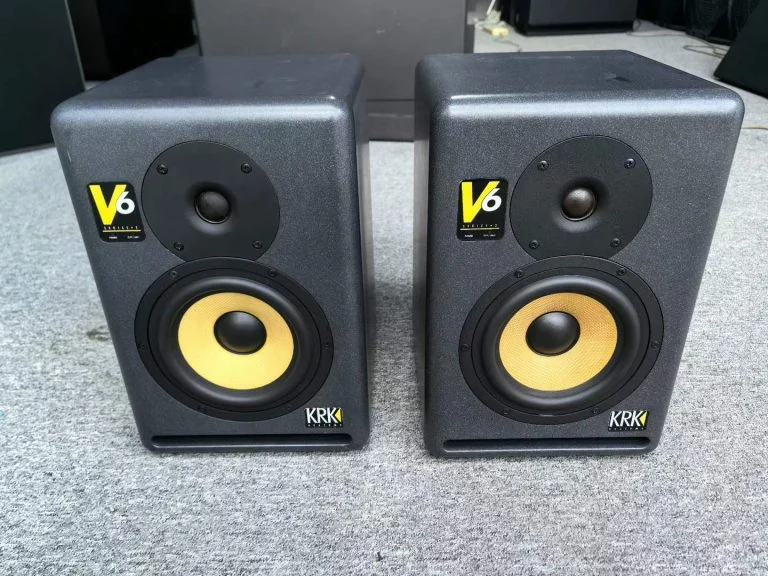
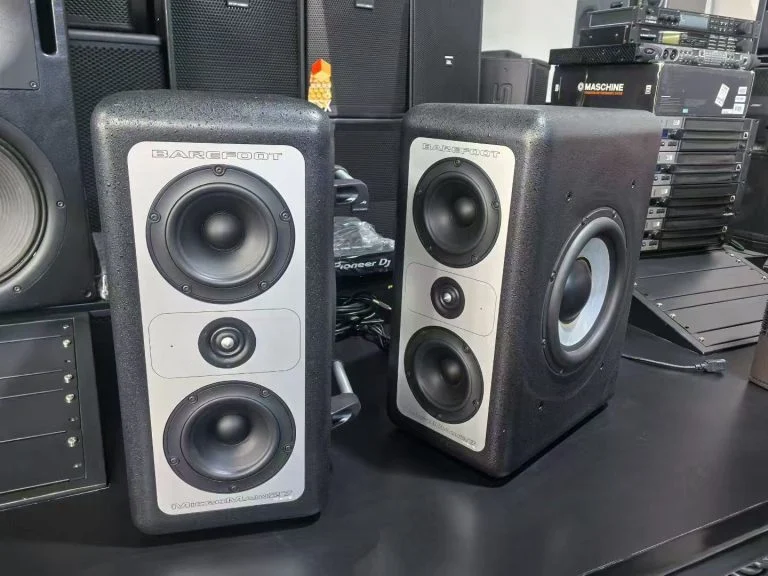
Used nearfield monitors at 40-55% of new are usually the better buy, provided the drivers are original and your room is treated. The speaker is the least important variable in a bad room. Buy used, then spend the difference on bass traps and a measurement mic — that combination beats new monitors in an untreated room every time.
What do used studio monitors cost in 2026?
| Class | New pair | Used pair | Notes |
|---|---|---|---|
| 5-inch active nearfield | $400-700 | $170-380 | most common used buy |
| 7-8-inch active nearfield | $700-1,400 | $300-750 | watch foam surrounds |
| Passive + separate amp | $900-2,000 | $350-900 | longest service life |
| Midfield, 10-inch | $2,000-5,000 | $800-2,200 | freight is heavy |
Why does driver age matter more than model?
Foam surrounds rot. On 10-15 year old monitors the surround can look fine and crumble when you push the cone gently. A recone on a 5-inch midwoofer runs $80-150 plus shipping, and matching a single driver is often impossible once the model is discontinued.
Ask for a close-up photo of each driver with the grille off. If the seller will not pull the grille, assume the worst. Rubber surrounds last 20+ years; foam lasts 8-12 in warm climates.
What is the capacitor cliff on active monitors?
Electrolytic capacitors in the amp board dry out. Around year 8-12 you get hum, a soft hiss at idle, or one cabinet quieter than the other. Repair is $100-300 per cabinet if a tech will touch it. Many manufacturers will not service boards older than 10 years.
Test with nothing playing: turn the volume up with no input and listen. Idle hiss that you can hear from a metre away is a warning. Both cabinets should be equally quiet.
Does the room beat the monitor choice?
Yes, by a wide margin. An untreated 3×4 m room has a 40 Hz mode that no monitor fixes. $200 of DIY bass traps plus a $99 measurement mic and 30 minutes of moving speakers will change your mixes more than doubling the monitor budget.
This is the argument for buying used: a $340 used pair plus $300 of treatment beats a $700 new pair with bare walls. Spend on the room, buy the speaker second-hand.
When is new actually the right call?
Three cases. If you need DSP room correction that only newer models have. If the model you want is a current reference that holds value — some monitors sell used at 80% of new, which makes new the rational choice. And if you need a warranty for client-facing work where downtime is billable.
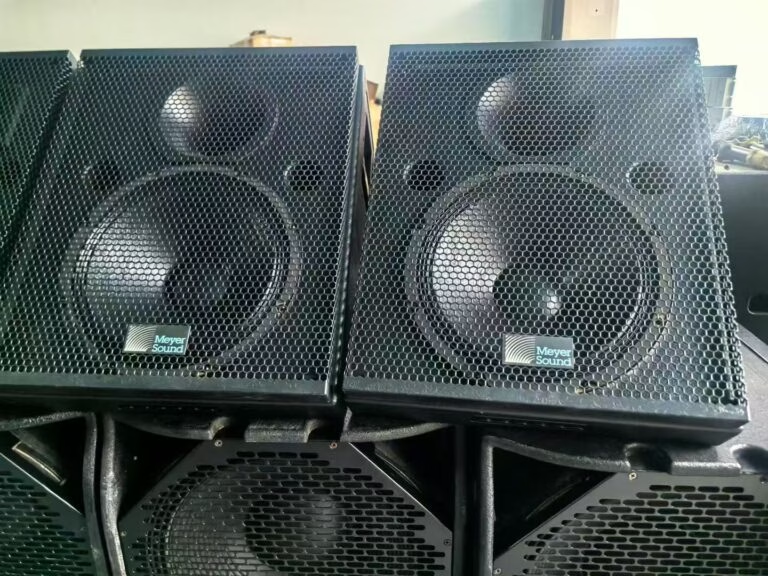
For everything else, buy used and treat the room. If your monitoring needs are actually PA rather than studio — for rehearsal space or small venue playback — the KF12 self-powered speaker covers that job better than nearfields, and it stays in the studio gear category price bracket when bought used.
Key Takeaways
- Used nearfields at 40-55% of new are the rational buy in most home studios.
- Foam surrounds rot in 8-12 years; rubber lasts 20+. Ask for driver photos.
- Capacitor failures hit active monitors at year 8-12; idle hiss is the early sign.
- $200 of bass traps beats $400 of extra monitor budget in a small room.
- Buy new only for DSP correction, warranty, or models that hold 80% of value.