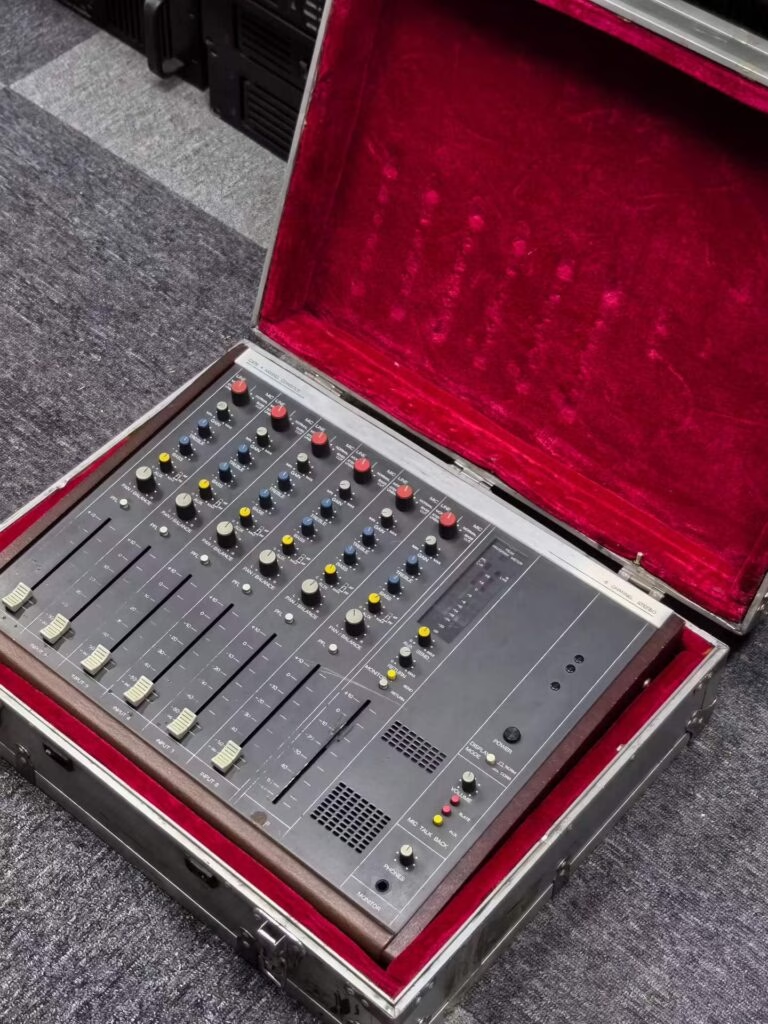
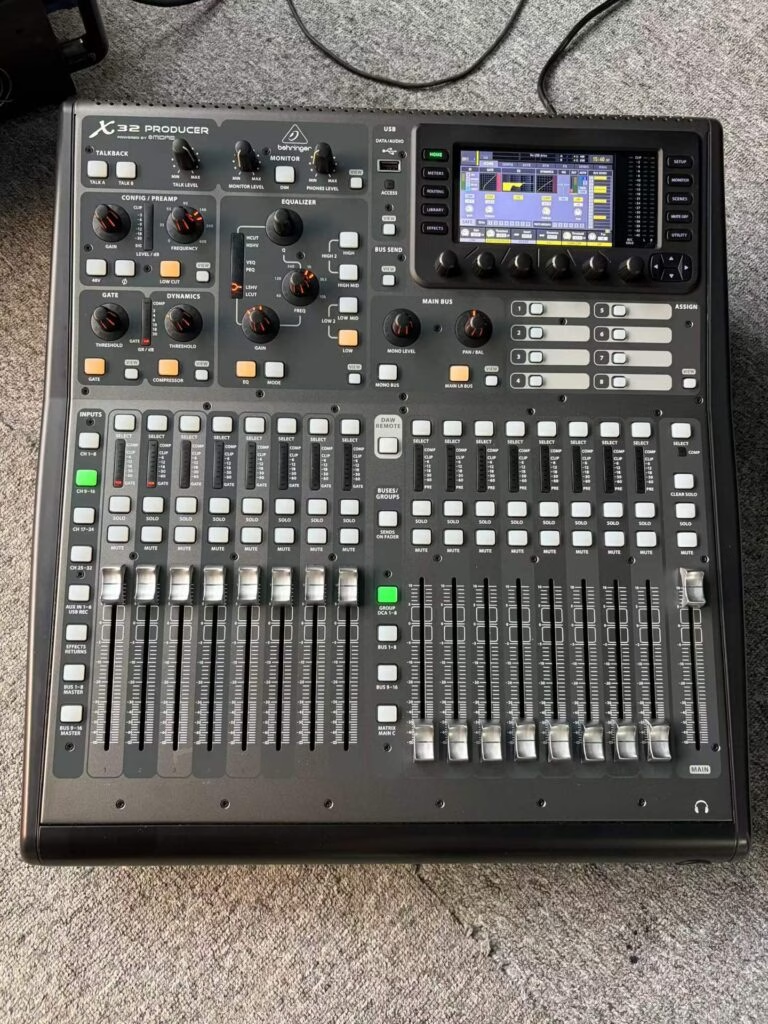
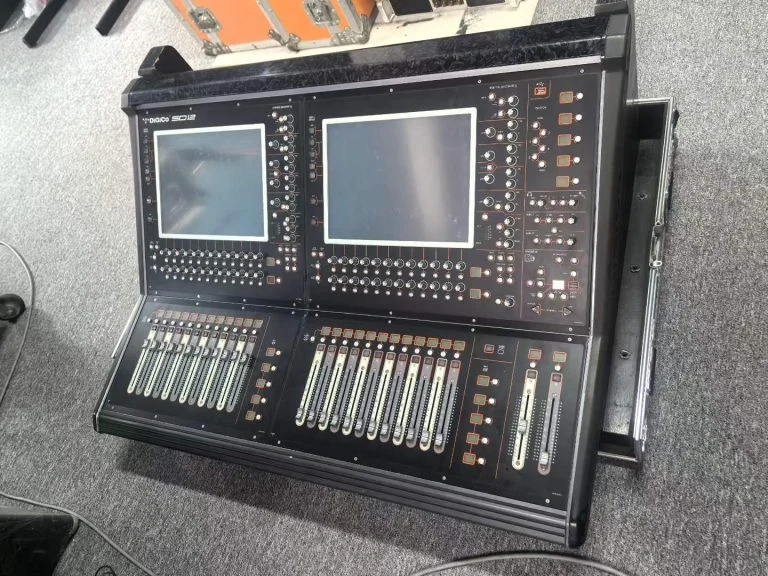
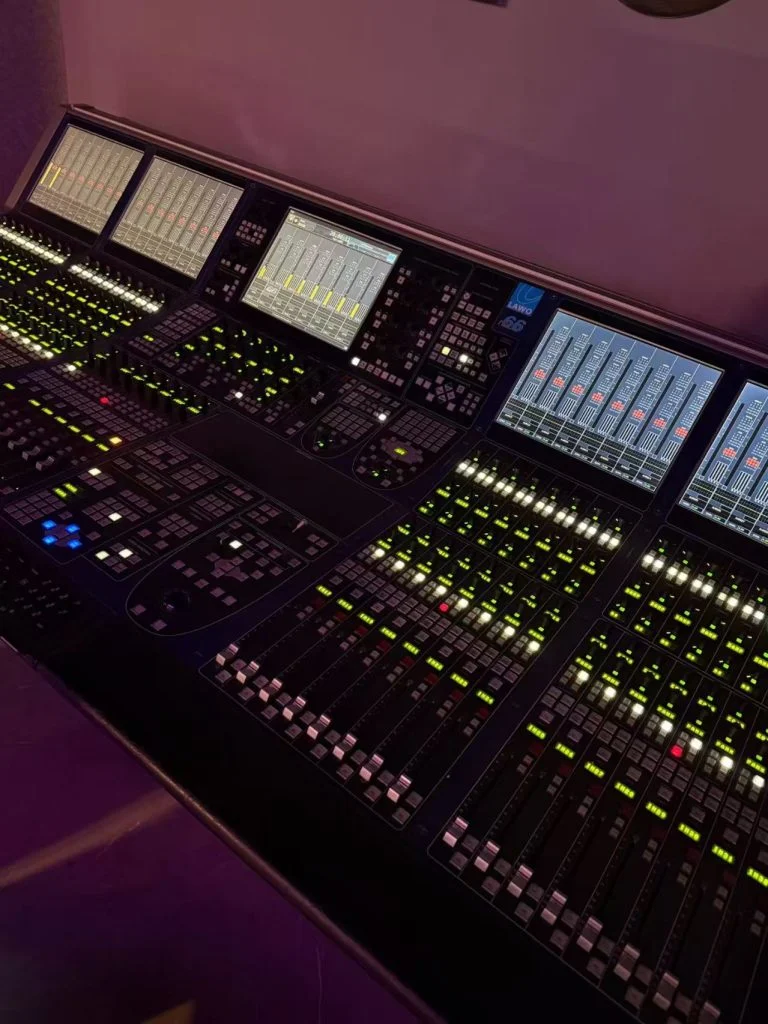
Repair it if the fader is a motorised type with an available part, which usually costs $40 to $120 plus two hours of labour. Walk away if the console is out of production with no parts channel, because a dead fader is then a permanent dead channel. One dead fader is a repair. Five dead faders on a discontinued console is a donor unit.
What kinds of fader fail, and how badly?
Three types, three outcomes. Manual faders with a carbon track wear out and get noisy or drop signal; a replacement is $15 to $40 and a competent tech fits one in 30 minutes. Motorised faders add a motor and belt, so they fail in two ways: the motor dies, or the belt slips. Parts run $40 to $120.
The third type is the killer: faders bonded to a control surface board where the whole board is the part. That is a $400 to $900 assembly, if you can find one. This is where a $500 used console becomes an expensive lesson.
How do you test faders before you pay?
- Move every fader slowly through its full travel. Listen for crackle and watch the level meter for dropouts.
- Press and hold each fader in the middle, then wiggle sideways. A fader that cuts out under lateral pressure is worn.
- In automation mode, send every fader to 0 dB and watch for one that lags, overshoots, or stalls.
- Check that all faders sit at exactly the same height. A sagging fader means a stretched belt.
When does a console repair make sense?
When three things are true: the part exists, the tech exists, and the console is worth more working than broken. A used Yamaha DM1000 console is a good example of a console that passes all three. It is 48-channel, it has a large installed base, and fader and board parts circulate on the used market because so many were built. Repair economics work.
A no-name digital console from 2013 with a proprietary surface board fails the first test and there is no way around it.
What does the maths look like?
| Scenario | Purchase | Repair | Total | Verdict |
|---|---|---|---|---|
| DM1000, 2 motorised faders dead | $900 | $220 | $1,120 | Good buy |
| DM1000, all 16 faders dead | $400 | $1,600 | $2,000 | Buy as donor only |
| Generic 2013 console, 1 fader dead | $600 | No part | $600 | Walk away |
What else usually fails with the faders?
Faders rarely fail alone. If a console has been in a dusty bar, expect scratchy pots on the EQ section and dirty contacts on the insert jacks. Budget for a full strip-down clean: $150 to $350 in labour. If the seller will not let a tech open it, treat every fader as dead and price it at donor value.
One more honest point: a console with a few dead faders still works if you never touch those channels. If you only use 16 inputs, a 48-channel console with 32 working faders is a perfectly good purchase at the right price. The question is not “is it perfect” but “does it cover my shows”.
Key Takeaways
- Manual fader replacement: $15-$40 in parts. Motorised: $40-$120. Board assembly: $400-$900.
- Test every fader through full travel and under lateral pressure before paying.
- Repair only makes sense when the part, the tech, and the resale value all exist.
- Count working faders against your actual channel needs, not the spec sheet.
- If the seller blocks a tech inspection, price it as a donor unit.