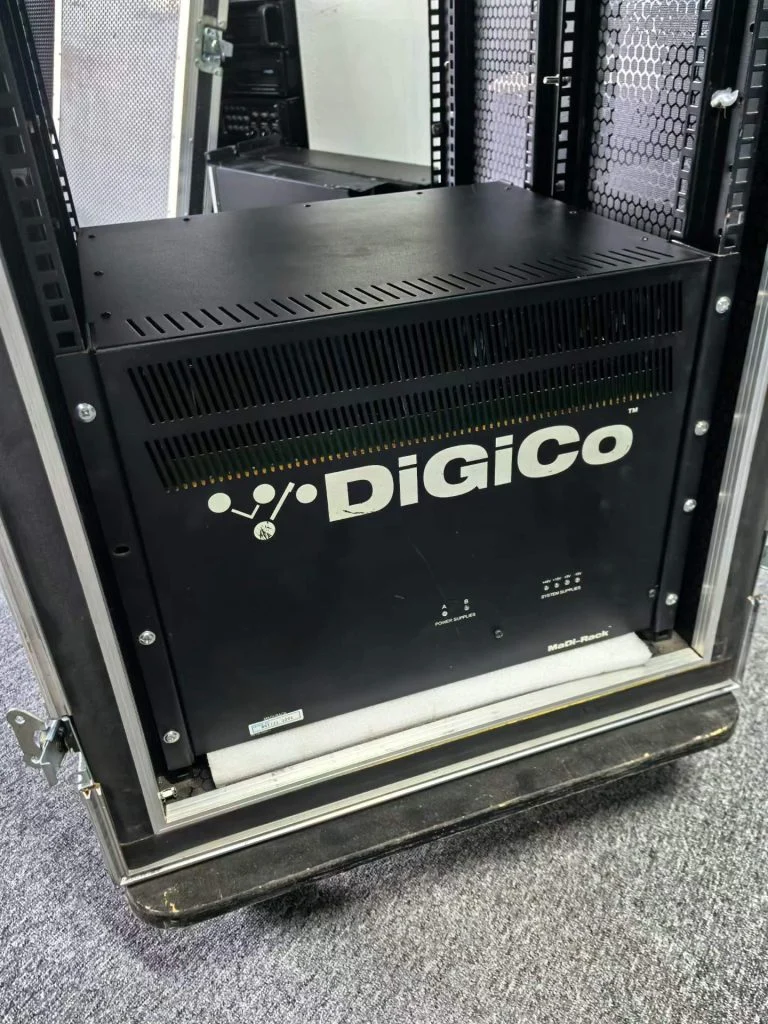
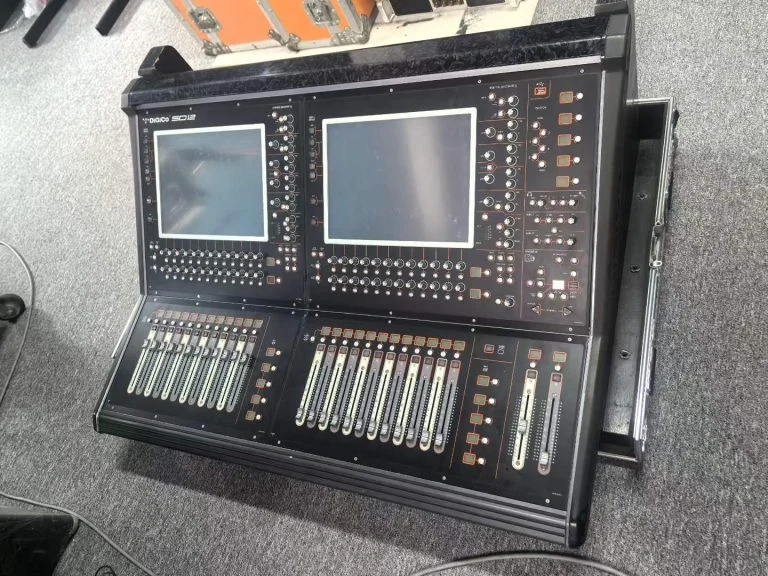
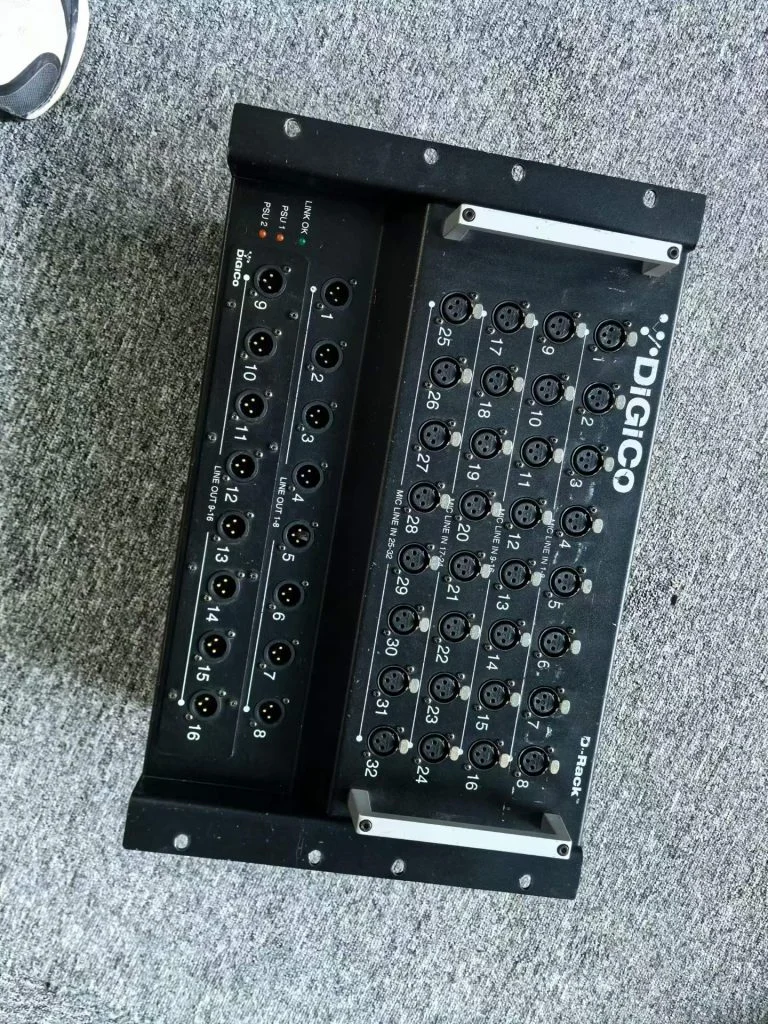
Buy a used 48-channel Digico MADI stage rack if you already run a DiGiCo console that speaks MADI, and you are paying 30-40% of new. Do not buy one as your first digital stage box. MADI is a legacy transport now, and the ecosystem around it is shrinking even though the hardware keeps working perfectly.
What does a MADI rack actually do?
It puts 48 analog inputs and outputs on stage, digitises them, and ships them to the console over one MADI stream, which carries 64 channels at 48 kHz down a single coax or optical pair. One thin cable instead of 48 mic lines. That is still the core value proposition and it has not changed since 2010.
The Digico MADI rack, 48 channels is a preamp bank in a road case: gain, phantom power and a lot of metal. What it is not is smart. No Dante, no per-channel processing, no remote redundancy beyond a second MADI stream.
Is MADI still a problem in 2026?
Not a performance problem. A 64-channel MADI link at 48 kHz is completely fine, and Digico’s racks have been on tours for over a decade. The problem is supply chain. BNC coax cable, MADI cards and optical converters are getting scarcer on shelves, and a rental company that standardised on Dante will look at your MADI rig the way you look at a MiniDisc player.
What should I pay, and what does it cost to run?
| Item | Used (USD) |
|---|---|
| 48ch MADI stage rack | 1,800-3,200 |
| Spare MADI card | 400-700 |
| 200m tactical coax pair | 300-600 |
| Optical converter pair | 400-900 |
Add 15-20% for spares. On a MADI system you need at least one spare card and one spare cable, because a single failed coax takes down all 48 channels. That redundancy math is what makes people move to Dante, where a redundant switch costs less than a spare card.
Where does a used MADI rack still win?
- Fixed installs that already have one. Extending an existing system is cheap.
- Rental houses with DiGiCo inventory. Same desk family, same workflow.
- Church and theatre rigs. Static cable runs, no frequent repatching, MADI is stable.
Where it loses: any rig that needs to interface with a modern recording setup, multitrack virtual soundcheck over network, or a broadcast feed. If your plan involves “we will add Dante later”, buy Dante now.
What do you check before buying?
Ask for a channel-by-channel test report. All 48 preamps, gain sweep on each, phantom power measured not just switched. Then the MADI output tested with a lock light at 200 m of cable, not a 3 m lab cable. And the fan health, since these racks run hot in a case and a dead fan is a slow death for the power supply.
Can you convert MADI to Dante?
Yes, with a bridge, and it costs USD 800-1,500 for a reliable one. That price is the argument against the whole plan. Once you add a bridge to a used rack, you have spent close to the cost of a used Dante stage box that needs no conversion. Bridging makes sense only for extending an existing system, not for starting one.
Key Takeaways
- MADI works fine. The ecosystem around it is what is shrinking.
- Only buy if you already own a MADI-speaking console.
- Budget 15-20% extra for a spare card and cable.
- Demand a 48-channel test report, not a photo of a lock light.
- If you plan to “add Dante later”, buy Dante now.