Short answer: in-wall is the right call for a permanent, finished install where you want speakers to vanish and you know the layout will not change. Freestanding wins everywhere else, rentals, venues that reconfigure, and any buyer who wants the option to resell. For used gear, freestanding is almost always the safer money.
What does in-wall actually buy you?
Clean sightlines and no floor clutter. In a restaurant or a retail space, a speaker you cannot see disappears into the decor. Placement is decided once, during construction, and it stays put. That is the whole value, integration and neatness.
The cost is commitment. Once the wall is cut, moving the speaker means patching drywall. And in-wall boxes generally give up some low-end extension because the cavity size is fixed.
Why do freestanding boxes stay flexible?
- You can reposition them in minutes if the coverage is wrong
- They go on a shelf, a stand, or a pole, no construction needed
- Used units hold resale value, in-wall speakers mostly do not
- You can upgrade or swap one box without touching the room
If the venue changes use from dining to live music to a private event, freestanding adapts. A wall does not.
How do they compare head to head?
| Factor | In-wall | Freestanding |
|---|---|---|
| Looks | Invisible, integrated | Visible, needs stands |
| Flexibility | Fixed once installed | Move anytime |
| Install cost | High, labour and drywall | Low, plug and play |
| Resale value | Low | Strong |
| Low-end output | Limited by cavity | Full, sized to the box |
What about sound quality?
Good in-wall speakers can sound excellent, do not let anyone tell you otherwise. The problem is that the wall becomes part of the enclosure, and every wall is different. You cannot easily tune the box to suit. Freestanding speakers are a known quantity, what you hear in the demo is close to what you get at the venue.
For a controlled install with an acoustician involved, in-wall is fine. For a venue winging it on a budget, freestanding removes a whole class of acoustic surprises.
What should most venues do?
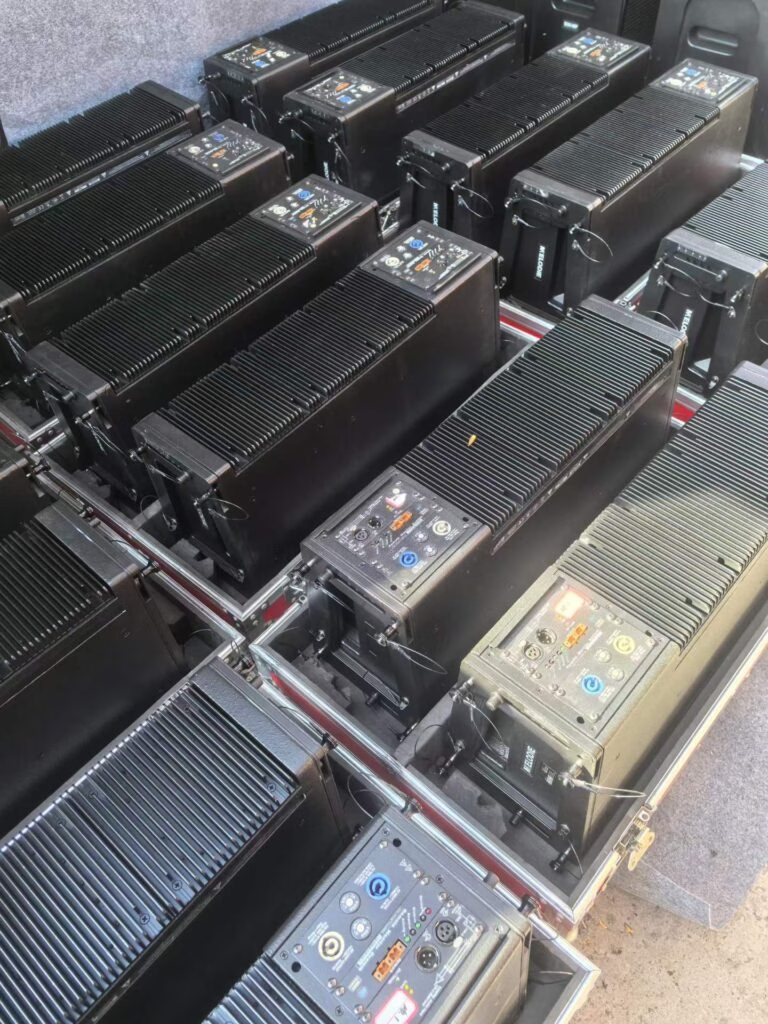
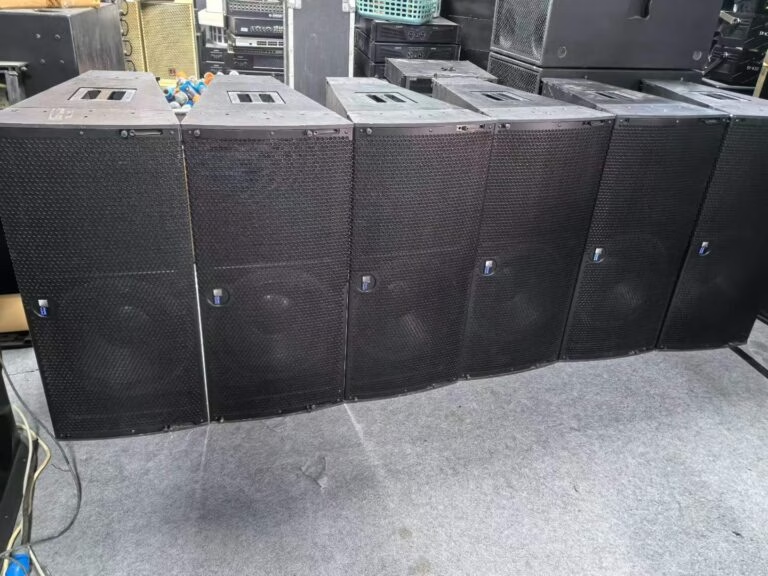
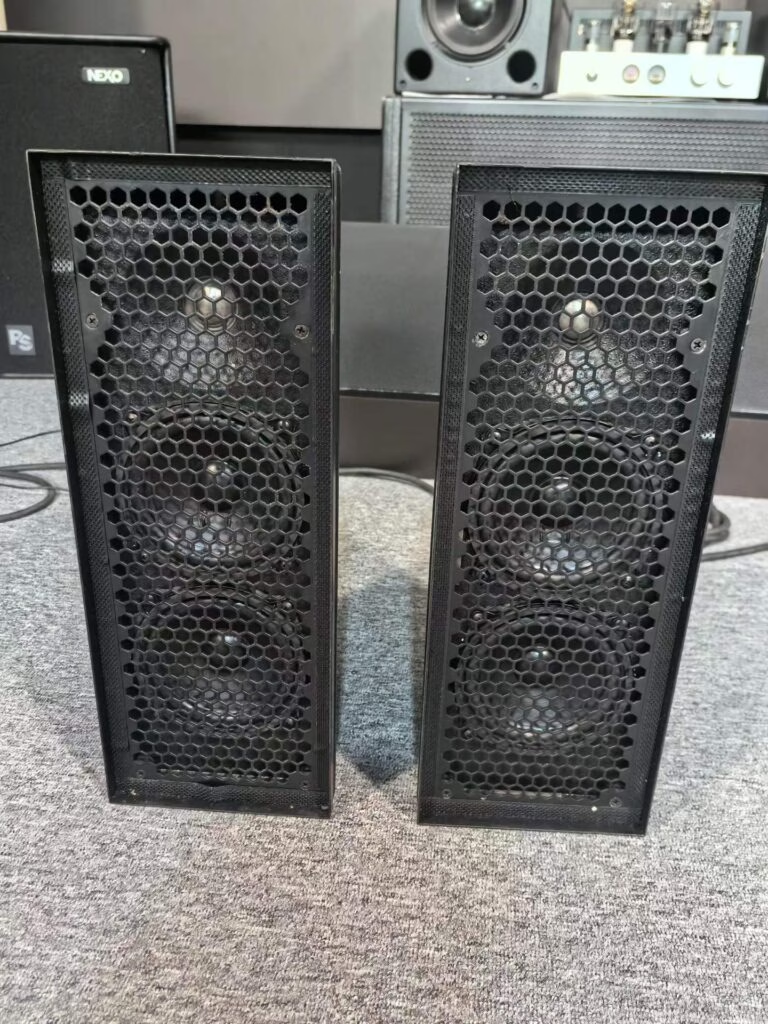
Most venues should buy freestanding self-powered boxes and mount them properly on brackets or poles. You get full-range performance, easy service, and resale value. A self-powered box like the K-array KF12 needs only a power cable and a signal cable, so mounting is simple and routing is flexible. Browse more in the speakers category.
Reserve in-wall for new-build projects where the design is locked and the budget allows for proper install labour. It solves a cosmetic problem, not a sound problem.
Key Takeaways
- In-wall wins on looks and integration, and loses on flexibility and resale.
- The cavity fixes your low end, and every wall sounds different.
- Freestanding boxes move, upgrade, and resell with ease.
- Most venues are better served by freestanding self-powered speakers on brackets.
- Choose in-wall only for new builds with a locked layout and an install budget.