Short answer: digital wins if you mix the same room every week, because scene recall saves 20-30 minutes per show. Analog wins if your operator changes every night, because a fader you can grab beats a menu you have to learn. On the used market the price gap has narrowed enough that this is now a workflow question, not a budget question.
What does used digital actually cost in 2026?
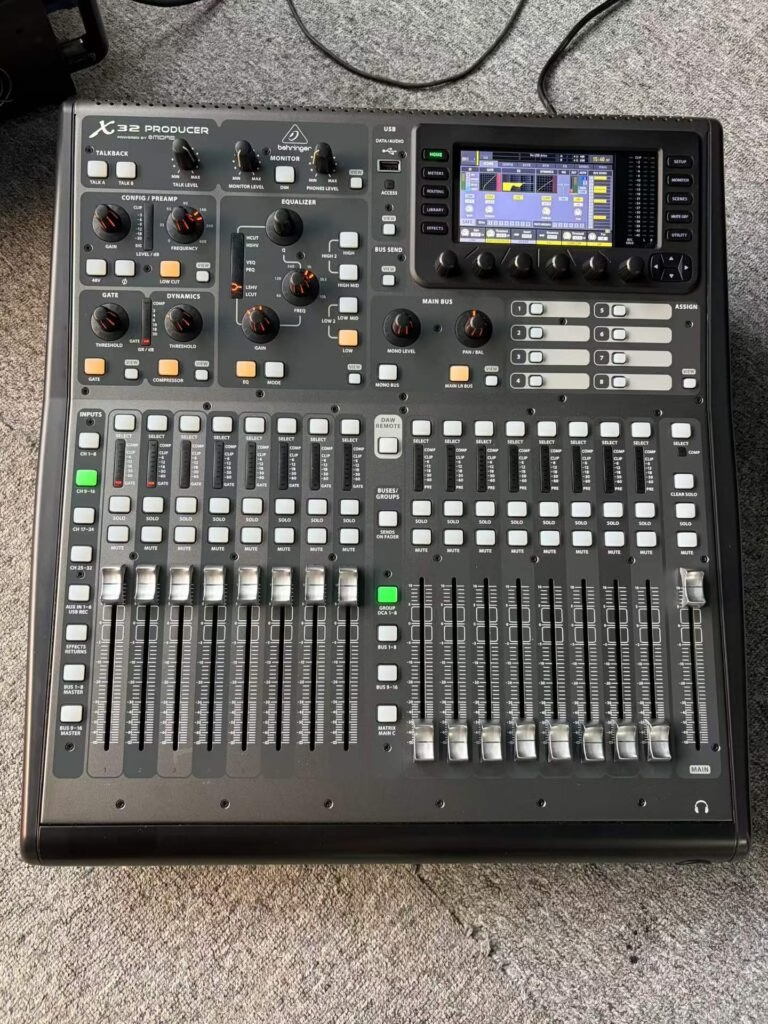
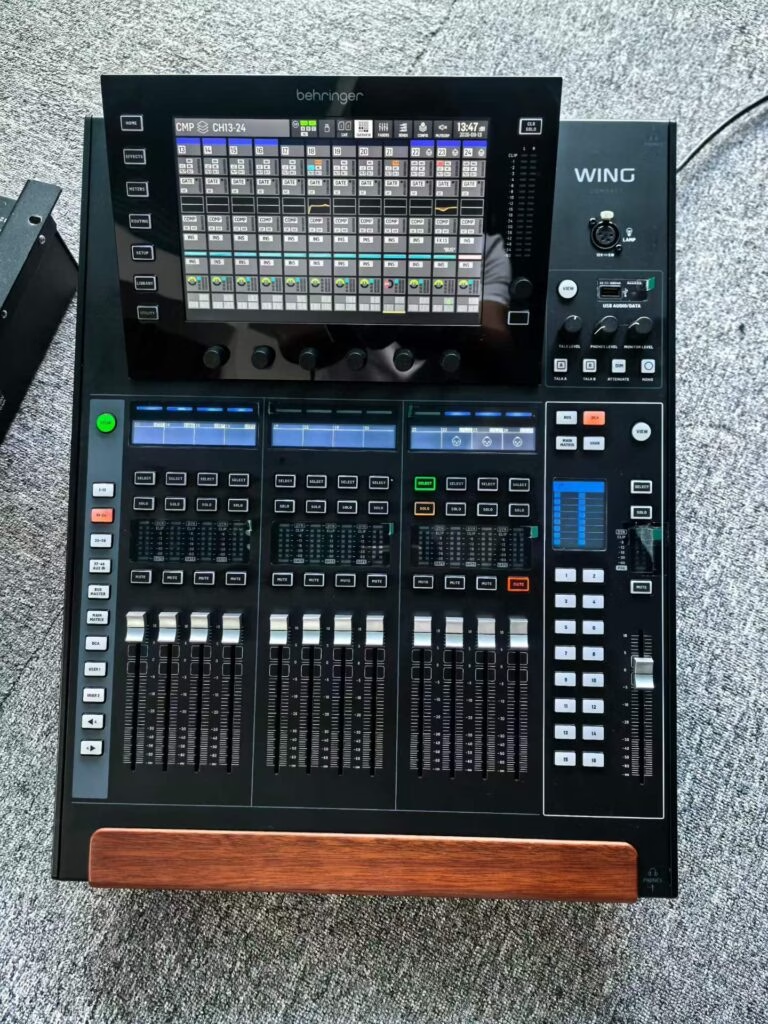
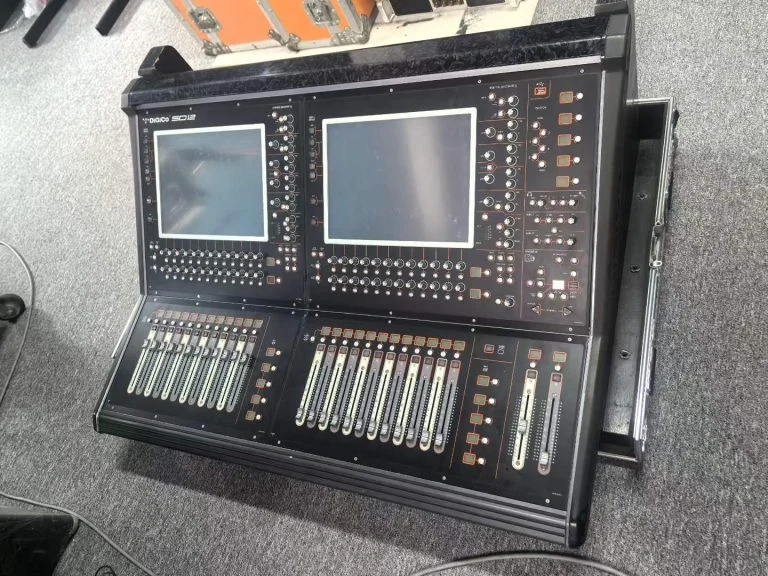
Roughly $1,400-$3,200 for a 32-channel desk with a stage box. A used Yamaha DM1000 with a flight case sits near $2,000, which is about 30% of its original list. Analog desks of the same channel count run $400-$900, so digital still carries a 2-3x premium on the used side even though new prices have closed the gap.
Where does digital win outright?
- Recall. Load a scene and the EQ, dynamics and aux sends are back in two seconds.
- Multi-track recording over USB, which turns your console into a 32-track interface.
- Matrix outputs: routing to lobby, backstage and stream from the same desk.
- Size and weight — a 32-channel digital desk fits in one case a person can lift.
For a fixed venue this is not close. The same operator, same mic positions, same room. Recall alone pays back the price difference within a season.
Where does analog still win?
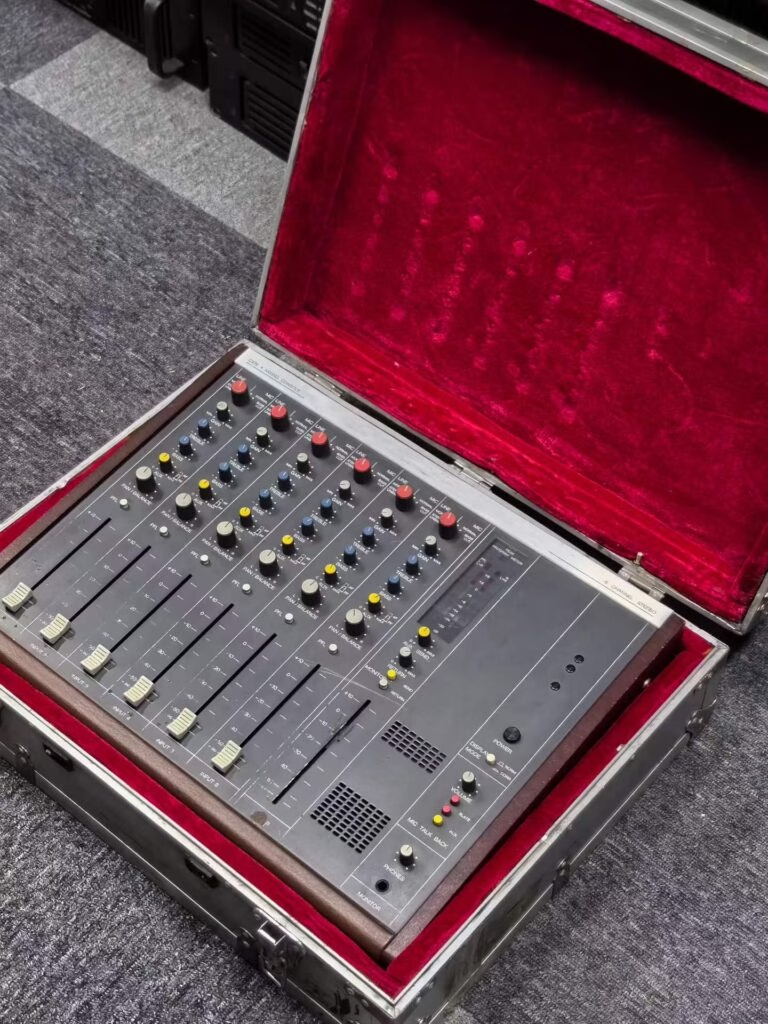
Repair speed and operator trust. A dead channel strip on an analog desk can be swapped by any tech with a screwdriver and a $60 module. A digital desk with a failed DSP board may need a factory service centre, and if the model is discontinued, it can be a paperweight.
Bands also trust analog more. A guest engineer who has never seen your desk can find the gain knob in five seconds. On a digital desk they will hunt for it, and that costs you the first two songs.
What are the hidden costs on each side?
| Cost | Digital | Analog | Repair skill needed | Factory or specialist |
|---|---|---|---|---|
| Any competent tech | Typical repair bill | $200-$900 | $40-$200 | Cable cost (32ch) |
| 2 cables (Cat5/USB) | 33+ cables, heavier snake | Failure mode | Dead DSP board, no workaround | One dead channel, keep mixing |
| Learning curve | 2-4 shows for a new operator | Under 1 hour |
The digital column hides one more cost: if your stage box dies, you are dead. Carry a spare, or buy a console that also takes analog inputs directly as a fallback. Also worth knowing: firmware support on discontinued digital desks dries up around year eight, and a driver that no longer works on a new laptop OS can lock you out of recording entirely.
Which is better for a touring band?
Digital, for most touring acts under 500 capacity. The desk rides in one case, mixes are recalled per venue, and you can record every show for $0. The exception is a band with a rotating cast of local engineers, where analog wins purely on familiarity.
If you are touring internationally and buying gear in China, a digital desk has one practical advantage: it is one box to ship. A 32-channel analog desk plus a 40 m snake is three times the volume and about 60 kg more freight.
How should you decide in ten minutes?
- Count how many different operators will touch the desk in a month.
- Check whether your venue needs matrix or multitrack recording.
- Check whether local repair can service the brand you are considering.
- Compare the landed price including freight, not the sticker.
If you score analog on three of four, buy analog and spend the difference on a better amp rack. Digital only pays off when the same person runs the desk night after night. Current stock of both types is on our used sound equipment shop page.
Key Takeaways
- Used 32-channel digital costs $1,400-$3,200; analog of the same size $400-$900.
- Digital pays off through scene recall and multitrack, not sound quality.
- Analog is repairable anywhere, which matters for touring in regions with limited service.
- A failed DSP board on a discontinued digital desk can total the console.
- Decide on operator count and matrix needs, not on price alone.