Buy digital if you run different bands or venues each week. Buy analog if the same room and the same hands run the same show. That single question settles 80% of this decision, and the rest is budget and repair access.
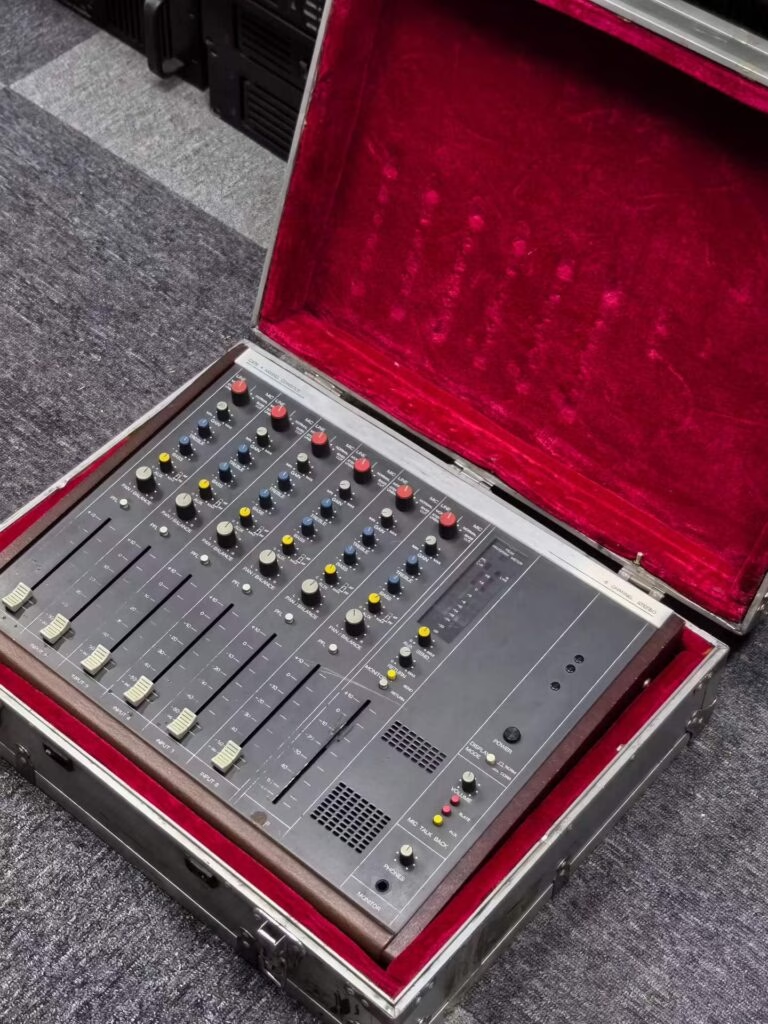
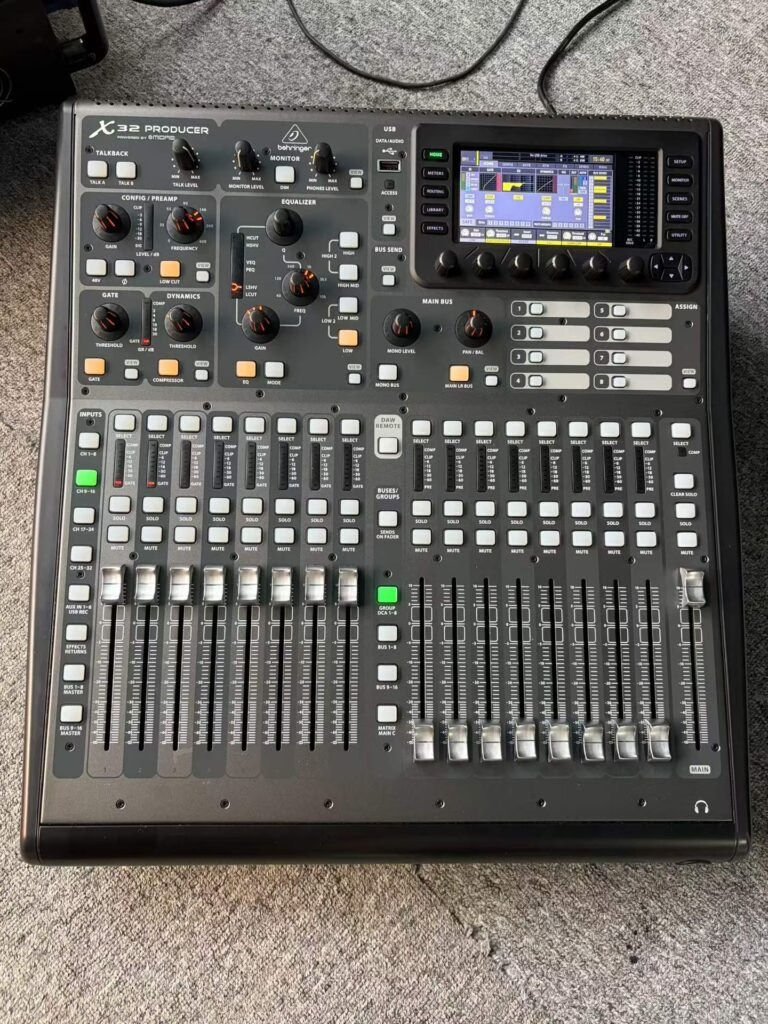
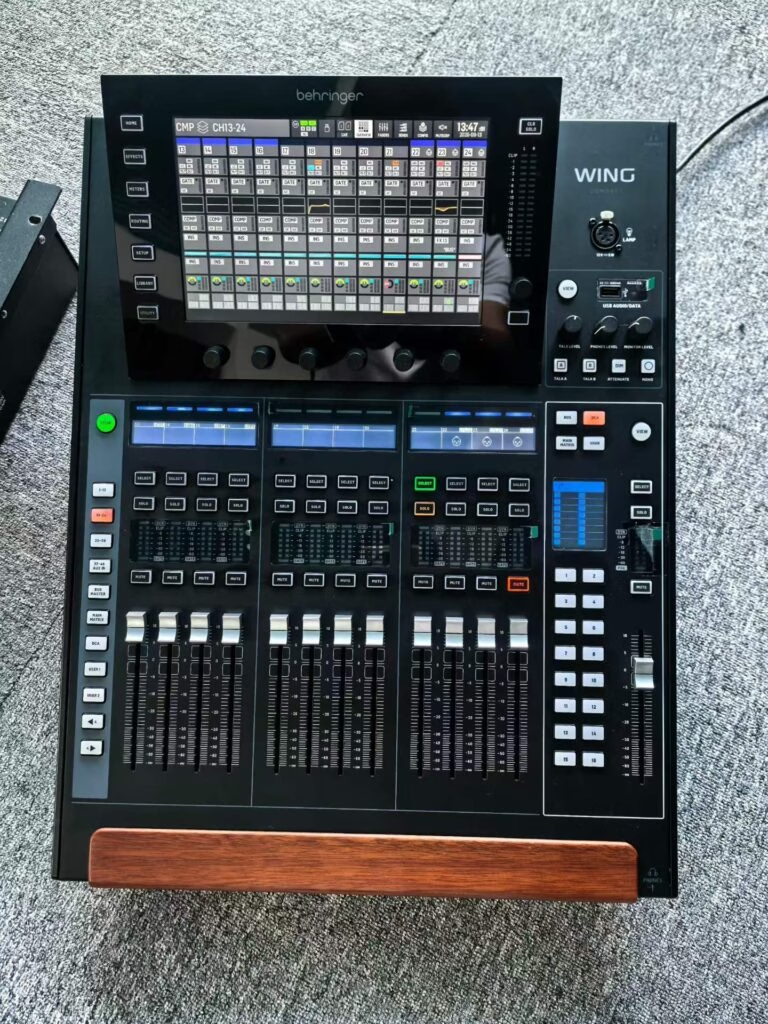
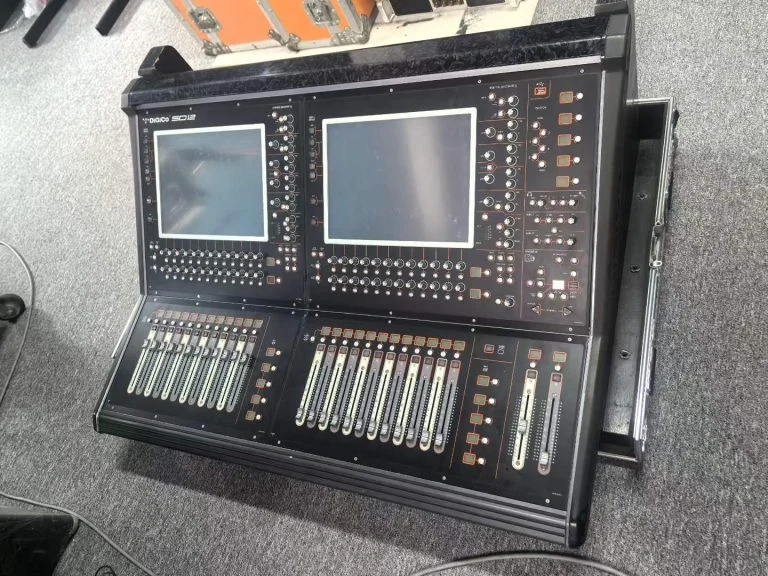
Used digital consoles now start at $450 for a 16-channel board and run to $1,800 for a 32-channel model with a stagebox included. Analog boards sit lower: $250-900 depending on channel count and brand pedigree.
What does each format cost used?
| Console type | Used price | Channels | Repair cost risk |
|---|---|---|---|
| Analog 16ch | $250-550 | 16 in / 4 aux | Low, $5-25 per part |
| Analog 24-32ch | $450-900 | 24-32 in | Moderate |
| Digital 16ch | $450-900 | 16 in / 8 out | High if board fails |
| Digital 32ch + stagebox | $1,200-1,800 | 32 in / 16 out | High, proprietary |
Why do digital consoles win for touring?
Scene recall. Load the show file, all 32 channels reset to the last soundcheck, and you are done in 90 seconds. On an analog desk that same reset takes 20-40 minutes and never comes back exactly the same.
Digital also saves physical space. A 32-channel digital desk with stagebox replaces a 24-channel analog board plus a rack of 8 compressors, 4 effect units and a 31-band EQ per output. That rack alone weighs 40-60kg and costs $600-1,200 used.
The catch is dependency. If the firmware corrupts or the LCD dies, you cannot mix. On an analog board a dead channel is a dead channel, the other 23 still work.
Why do analog boards still make money?
Repair simplicity and resale certainty. A fader is $12 and takes 20 minutes to swap. A dusty potentiometer cleans up with contact spray. Any competent tech can service a 20-year-old analog desk, which matters in markets where factory support is a shipping problem, not a phone call.
Analog boards also tolerate abuse. No boot time, no firmware, no screen to crack. For a bar, church or rehearsal room running the same 12 inputs every night, that reliability is worth more than scene memory.
Which used models are worth hunting?
On the digital side, the Yamaha DM1000 digital mixing console remains a solid pick: 48 input channels, 96kHz capable, and a repair ecosystem that still exists. It suits installation and broadcast work better than heavy touring because the fader count is small.
On the analog side, look for desks with individual channel boards rather than one big main PCB. Individual boards mean a channel fault is a $40 fix instead of a $400 workshop job.
What breaks on each, and what does it cost?
- Analog: faders $8-25 each, pots $5-15, channel strip $40-120.
- Digital: fader bank $60-200, LCD panel $80-300, main board $300-900.
- Both: power supply capacitors after 10-15 years, $50-150.
- Digital only: firmware and USB/network ports, often unrepairable in the field.
One more practical note: digital consoles with motorised faders store wear physically. A board that has done 500 shows has 500 shows of fader motor wear, and replacement banks get expensive fast.
What about training and crew?
Digital decks have layers and menus. A volunteer who mixes twice a month will take weeks to get comfortable, and small mistakes become invisible until the show starts. Analog has one knob per function, and anyone who has seen a mixing desk can operate it.
If your crew turns over, analog is the lower-risk choice. If your crew is professional and stable, digital gives you more capability per kilogram.
Which console holds its resale value better?
Analog desks from recognised brands hold a floor price because there is always a small venue that wants one. Digital desks fall off a cliff once the manufacturer stops firmware updates, because the value is in the software, not the metal.
Practical outcome: buy analog if you might sell in three years, buy digital if you will run it into the ground. A digital desk kept for eight years costs less per year than an analog desk resold at 60%.
How does channel count change the maths?
Below 16 channels, analog is almost always cheaper per input. Above 24 channels, digital wins because the cost of analog scales with physical strips, wiring and rack gear, while digital channel count is mostly a software limit.
A 32-channel analog desk needs 32 preamps, 32 faders, 32 EQ sections and a metre of board width. A digital desk with 32 channels may use 16 faders and layers, cutting size, weight and shipping cost roughly in half.
Key Takeaways
- Used digital consoles run $450-1,800; analog runs $250-900.
- Scene recall makes digital the right pick for varied shows and touring.
- Analog wins on repair cost and hands-on simplicity for fixed rooms.
- Individual channel boards on analog desks turn a $400 repair into a $40 one.
- Motorfader wear is the hidden cost of a heavily gigged digital desk.