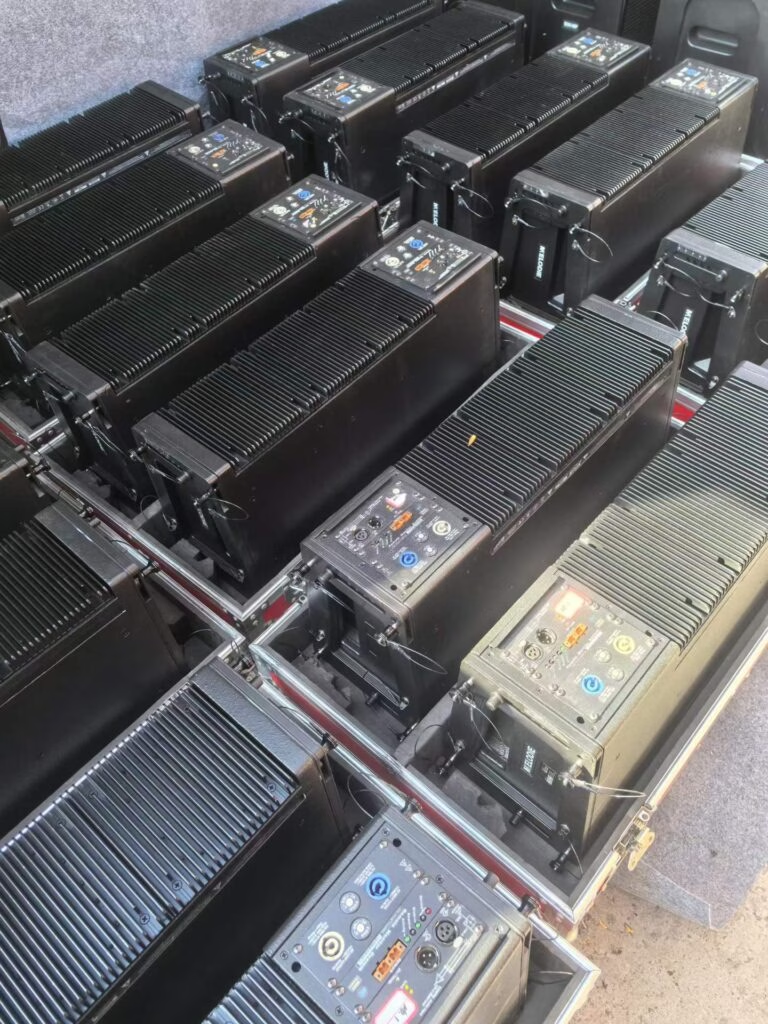
Short answer: the amp module is the single most likely failure on a used powered speaker, and a replacement runs $250–500. That does not make powered speakers a bad used buy — it means you check the module first, and you only buy models whose parts are still obtainable.
What actually fails inside a powered speaker?
| Component | Failure rate | Repair cost |
|---|---|---|
| Electrolytic capacitors in PSU | High after 8–10 yrs | $40–120 |
| Class-D output stage | Medium | $150–350 |
| DSP board | Low but fatal | $200–500 |
| Speaker drivers | Medium | $80–250 |
| Power switch / IEC inlet | Occasional | $15–40 |
Capacitor aging is the big one. A 2013-era powered speaker has had 12 years of heat cycling in a rack, and the smoothing caps dry out. That shows up as hum, low output, or a unit that shuts down after 20 minutes at volume.
How do you test a used powered speaker?
- Run it at 80% for 30 minutes and listen for the fan cycling up or a thermal shutdown.
- Listen for mains hum with nothing connected — dried caps show up immediately.
- Check the cabinet vents for dust matting; heat is what kills modules.
- Ask the age of the module. Anything over 10 years old will need a recap soon.
When do passive plus amp rack win?
When you need long service life and repairability. A passive used speaker cabinet has one failure point — the drivers — and a separate amp can be swapped in minutes. The trade-off is cable runs, one more rack to carry, and more setup time. For a fixed install, passive usually wins. For mobile work, powered wins on speed.
Which powered speakers age well?
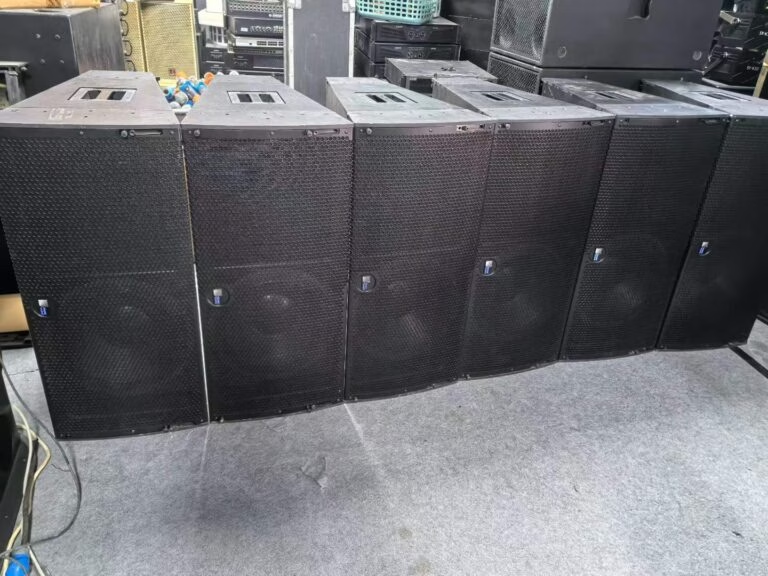
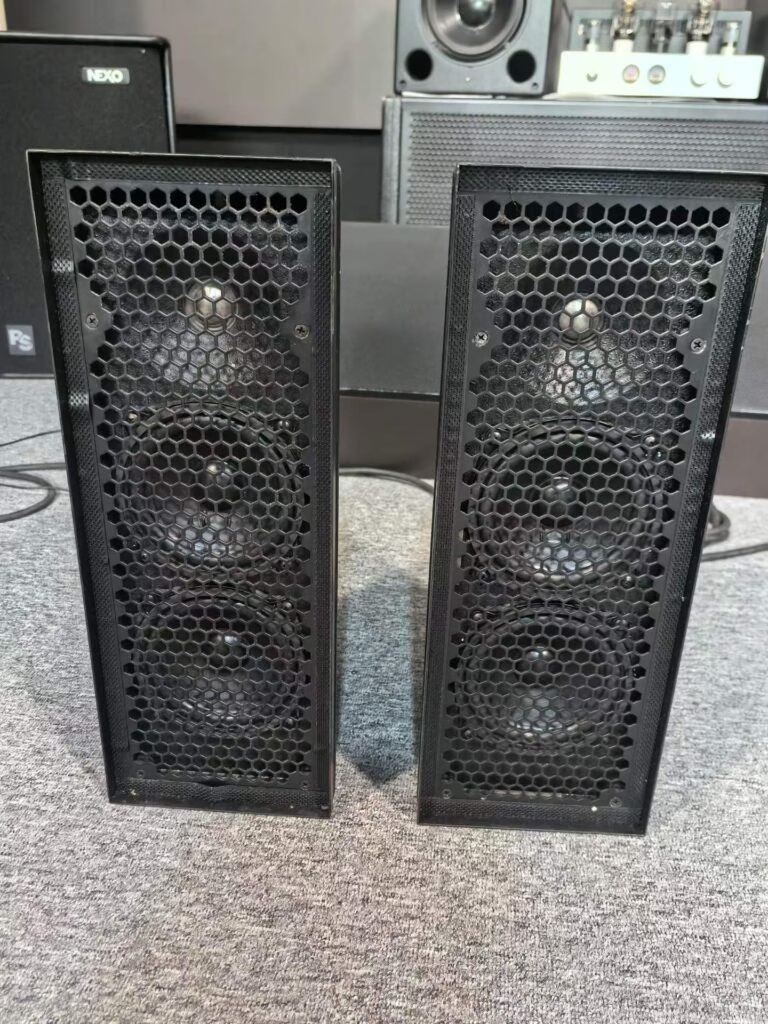
Ones with generous heatsinking and conservative ratings. The K-array KF12 self-powered cabinet we stock runs 2-way with onboard DSP and a metal-backed module, and the 12 units in stock are tested for thermal cutoff before listing. Thin plastic boxes pushed to their peak rating age badly — heat has nowhere to go.
Is a used powered speaker ever a steal?
Yes, when it is a high-sensitivity design being sold cheap because the seller cannot test it. A 104 dB cabinet at half price is worth a $400 module risk, because the cabinet itself is worth more than the module. A 92 dB budget box at half price is not — you are buying a plastic shell and a pending repair.
Key Takeaways
- Amp modules are the weak point on used powered speakers; replacements cost $250–500.
- Capacitor aging after 8–10 years causes hum, output loss, and thermal shutdowns.
- Test at 80% for 30 minutes and listen for hum before buying.
- High-sensitivity designs justify the module risk; budget boxes do not.