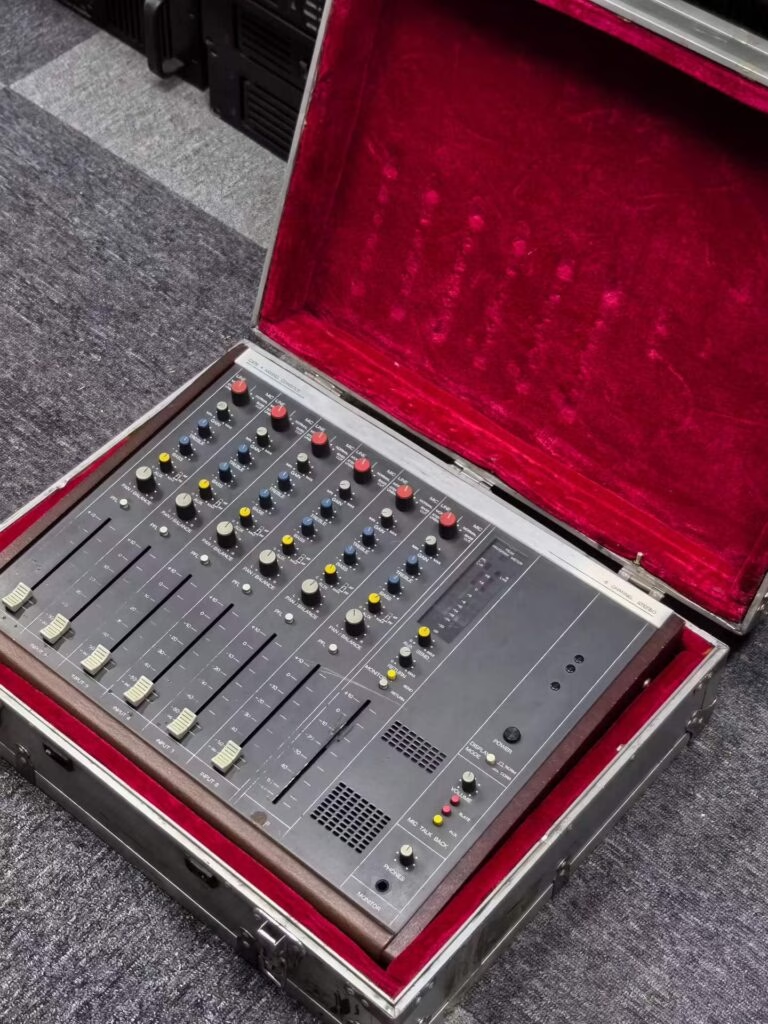
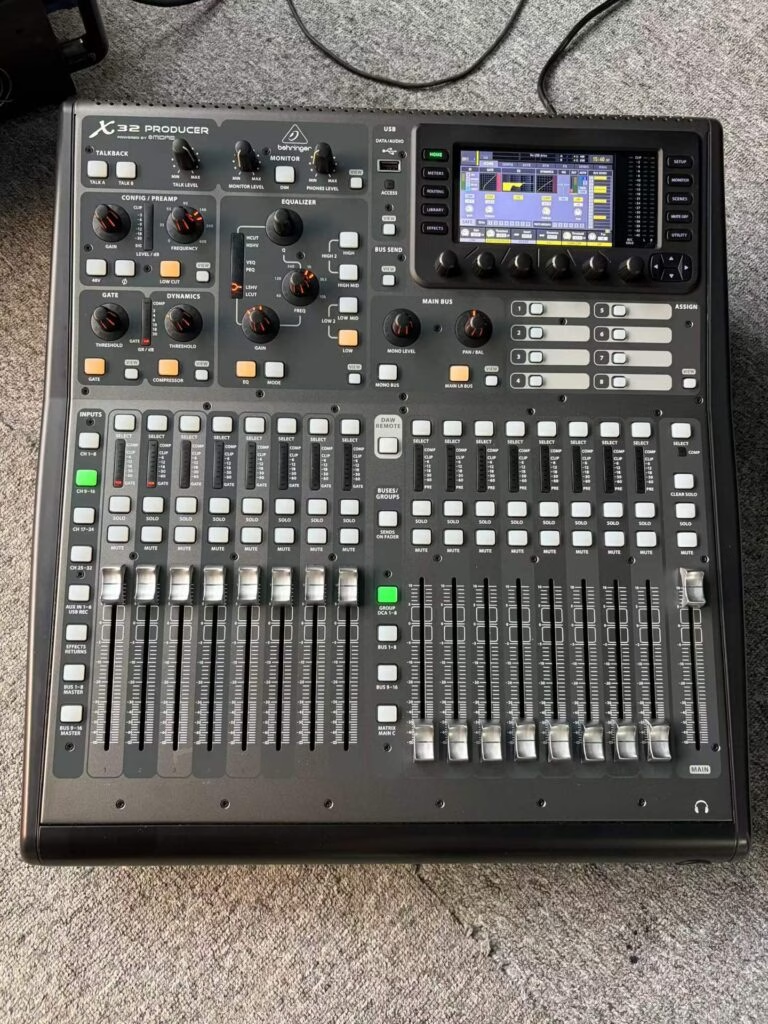
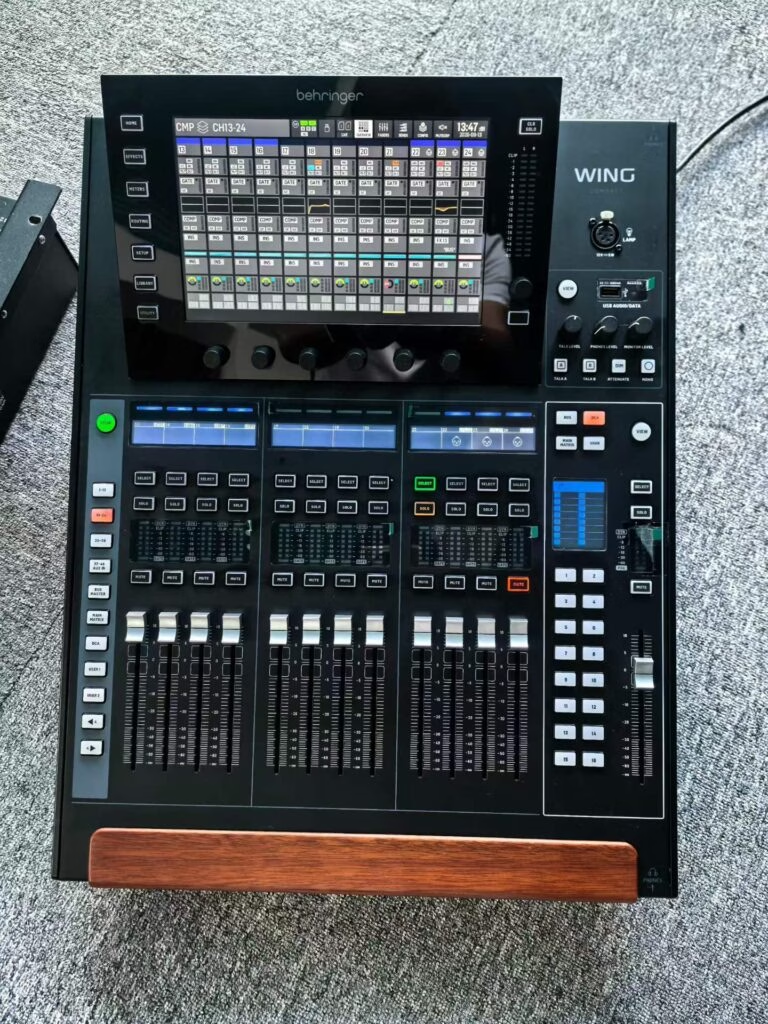
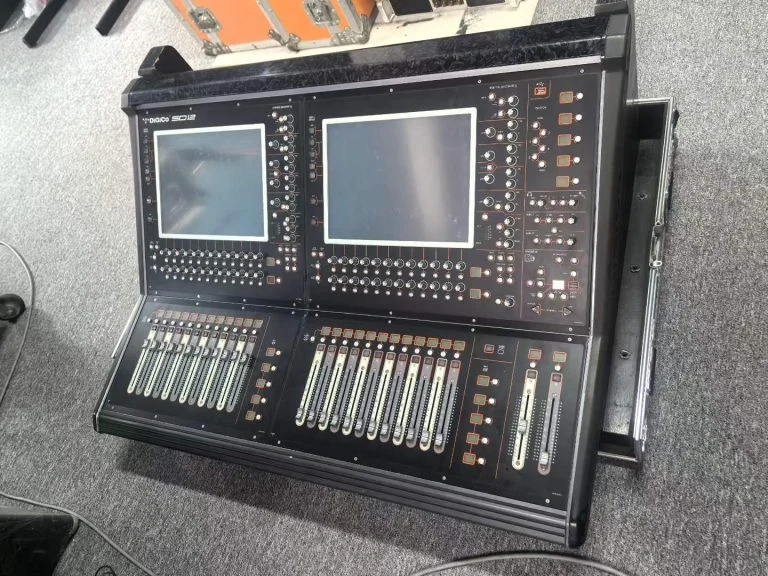
Digital, unless you mix the same band every night. A used digital console at $700-2,400 gives scene recall, built-in EQ and dynamics on every channel, and recording over USB. Analog at $250-800 gives you instant power-on, no menus, and a fader that never needs a firmware update.
The deciding question is not sound quality. It is how many different acts you handle in a month. Above four, digital pays for itself in saved setup time. Below that, analog is faster to teach and cheaper to keep alive.
What does a used digital console actually cost in 2026?
A 16-channel desk starts near $700. A 32-fader console with scene recall and card expansion lands at $1,200-2,400 for a well-known model, and $3,000-4,500 for something with Dante built in. The Yamaha DM1000 digital mixing console sits in the middle of that range and is a common starting point for small venues moving off analog.
When does analog still win?
- Teaching rooms. A student can see the whole signal path on an analog desk. On digital, half of it is two menu pages away.
- Fixed house bands. If the settings never change, recall is a solution to a problem you do not have.
- Old buildings with dirty power. Analog consoles tolerate voltage sag better than a digital desk that reboots mid-show.
- Budget under $400. Nothing digital at that price is worth carrying.
What breaks first on a used digital console?
Faders, then encoders, then the screen backlight. Motorised faders are mechanical parts that wear with every scene recall, so a desk used for theatre with 40 scene changes a night ages faster than one used for a weekly rock show. Expect $40-90 per fader to replace, more if the part is discontinued.
Backlights are the sneaky one. A 2010 console with a dim screen looks fine in photos and unreadable under stage light. Ask for a photo in a dark room with the screen at full brightness before you commit.
How do the two compare side by side?
| Used digital | Used analog | |
|---|---|---|
| Price | $700-4,500 | $250-800 |
| Setup for a new act | 2-5 min with recall | 15-30 min by hand |
| Failure modes | Faders, screen, firmware | Dirty pots, dead channels |
| Repair skill needed | Medium to high | Low |
| Resale | Drops fast after 8 years | Stable for classic models |
Which should a first-time buyer pick?
If you are running sound for other people’s bands, buy digital. You will need recall within a month of your first festival slot. If you are outfitting a rehearsal room or a small club with one regular engineer, a used analog desk at $400 will outlive three digital desks at the same price.
One caveat nobody mentions: analog desks are heavy. A 24-channel frame with a road case is 60-75 kg and needs two people and a van with a ramp. Digital 16-channel desks often fit in a car boot. If you work alone, that difference matters more than any feature list.
How does a used analog desk hold up financially?
Better than most people assume. A used 24-channel analog frame bought at $600 in 2026 will still be worth roughly $400-500 in 2031, because there are only so many left and someone always needs a teaching desk. A digital console bought at $1,400 in the same year will likely be worth $400, because firmware support ends and the market moves on.
That changes the maths if you resell gear every few years. The analog desk costs you $100-200 in depreciation over five years. The digital desk costs $1,000. If you are renting out consoles rather than using them yourself, that gap is the whole business case.
What should you check on the power supply?
Both types fail here, and it is the least inspected part. Ask whether the desk runs on internal or external supply, then ask for a photo of the supply with the cover off if you are buying above $1,000. Swollen capacitors on the main board are visible, and replacing them on an older analog frame is a $150-300 bench job.
On touring desks, also check the mains inlet socket for wobble. A rocking IEC inlet means someone dragged the desk by the cable, which usually means other hidden rough handling.
Key Takeaways
- Used digital consoles run $700-4,500; analog runs $250-800.
- If you mix four or more different acts monthly, buy digital.
- Check screen brightness in a dark room before buying any digital desk.
- Motorised faders cost $40-90 each to replace, and wear with every recall.
- Analog remains better for teaching rooms and one-engineer clubs.