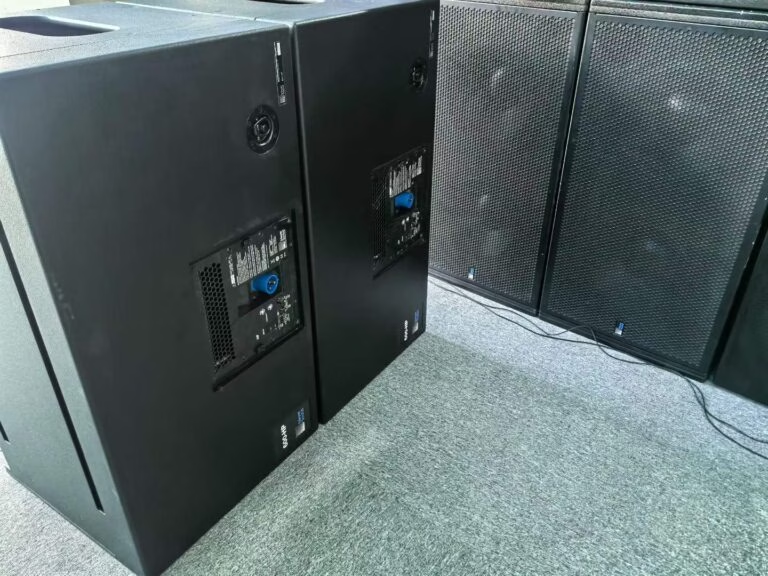
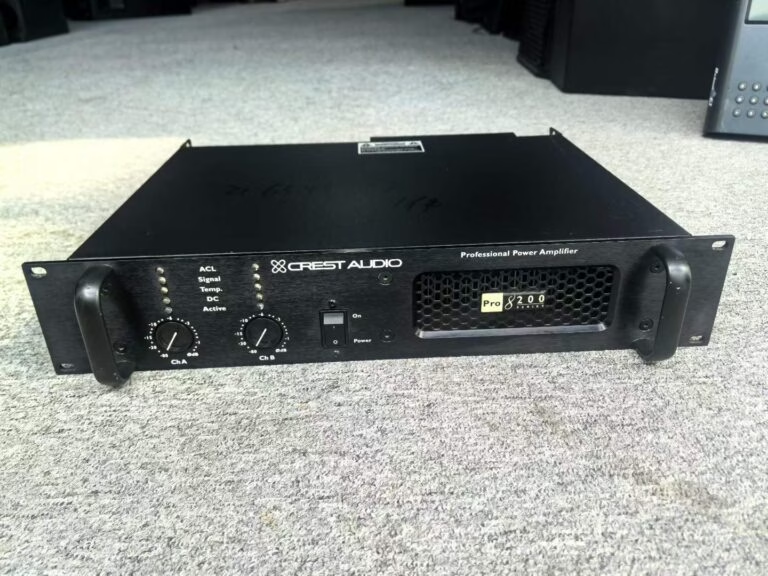
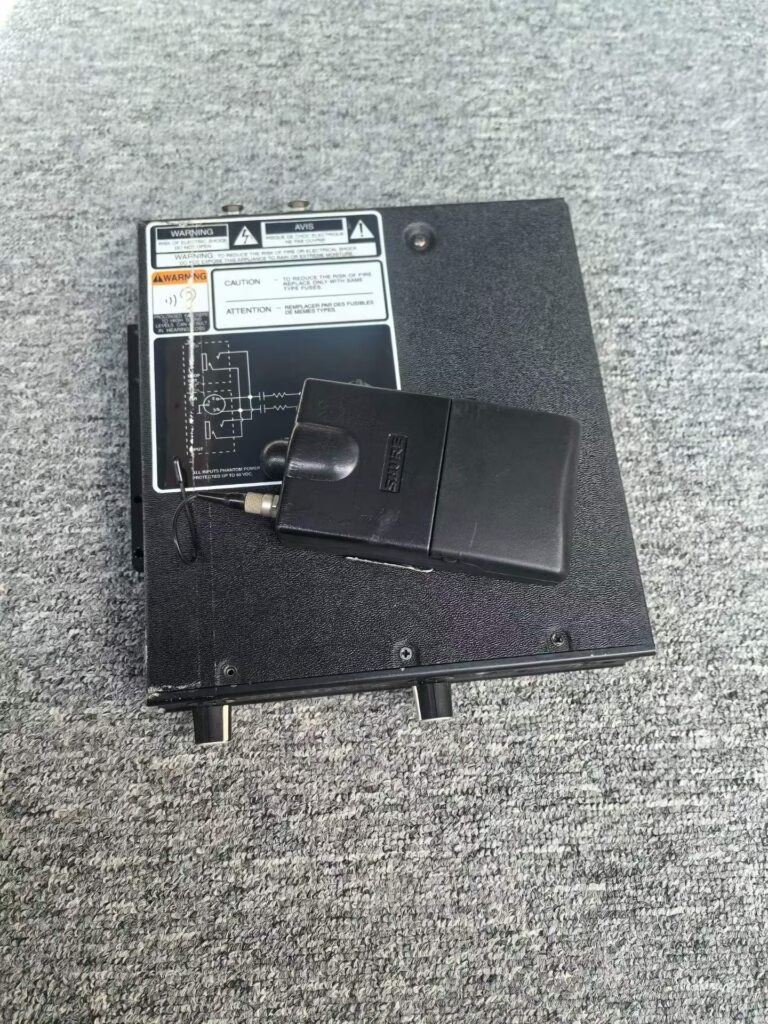
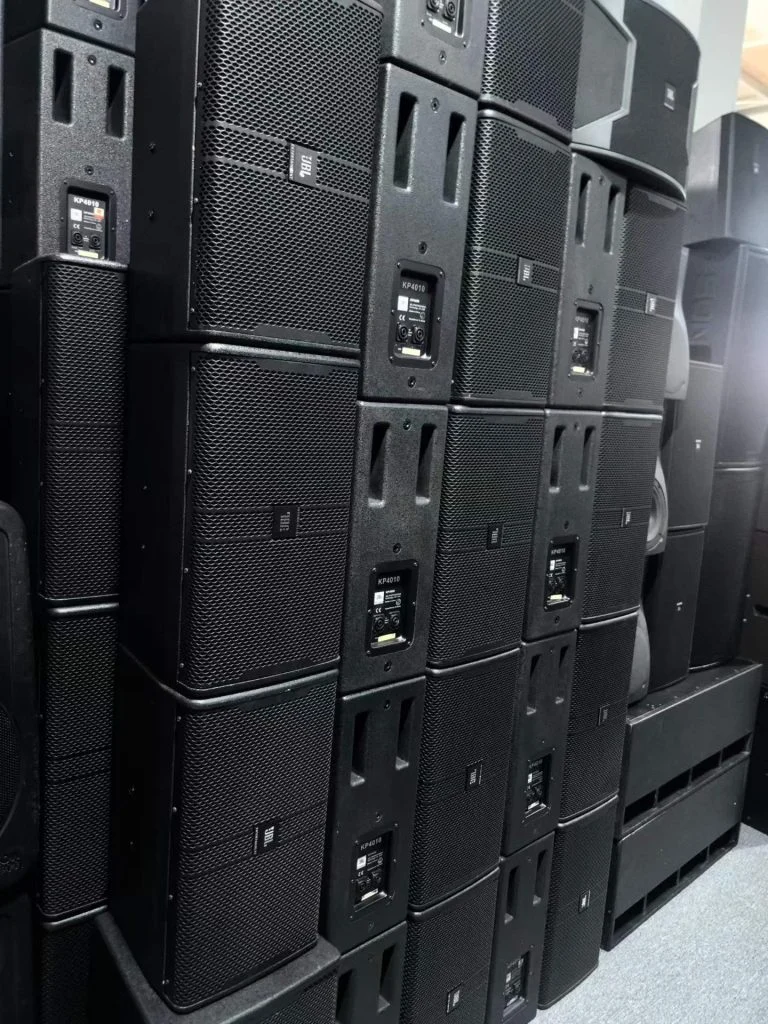
A used pair of powered 12-inch PA tops is worth $600-1,400 in 2026, with clean working examples from known brands typically selling around $900. Under $500 a pair, assume one amplifier module is failing or one driver has been swapped. Above $1,200, you are buying reputation as much as condition.
Why does the same spec cost twice as much from one seller to another?
Because power ratings are the least useful number on the box. A “1,000W” powered top from an unknown Chinese brand and a 1,000W QSC are not the same product. One has a 1-inch compression driver that crosses at 2.5kHz, the other crosses at 1.8kHz with a better horn, and that difference decides how the box sounds at 105dB.
Price tracks three things: driver quality, whether the amp module is serviceable, and whether the brand still exists. Everything else is marketing.
What moves the price up or down?
| Factor | Price effect |
|---|---|
| Both amp modules pass a load test | +$200 to +$400 |
| Original drivers, no re-cone | +$150 |
| Original flight case or padded covers | +$80 to +$150 |
| Discontinued model, no parts support | -$250 |
| One module confirmed dead | -$300 to -$500 |
| Scuffed corner and dented grille | -$50 (cosmetic only) |
| 12 units available as a lot | -$100 to -$150 per pair |
Is $500 a pair a bargain or a warning?
Warning, usually. At $500 for two powered 12-inch boxes you are buying either a no-name brand with no parts channel, or a known brand with a fault. Ask which. If the seller cannot tell you what the fault is, the fault is worse than they think.
There is a legitimate case: a venue clearing ten units after a renovation. Bulk moves go cheap because the seller wants the floor space back. That is where $500 pairs actually exist with nothing wrong. The tell is quantity — one pair at $500 is suspicious, ten pairs at $500 is a liquidation.
What does upkeep add per year?
Budget 5-8% of the purchase price per year for a working pair. That covers a module repair every few years, a re-cone around year seven, and new covers. A $900 pair costs roughly $50-70 a year to keep road-ready, which is a fair number and worth saying out loud to anyone deciding between new and used.
The calculation changes if you tour hard. Boxes that travel weekly will need a module inside five years. If your schedule is 120 dates a year, buy newer used gear and pay the premium.
What should you check before agreeing to the price?
- A load test on both boxes at 80% for 30 seconds.
- Whether the DSP presets are factory or someone’s custom EQ.
- If the drivers match — mismatched woofers halve the value.
- Fan noise at idle. A loud fan means blocked vents.
- Serial numbers close together, meaning a matched batch.
Compare against something you can actually inspect. Our K-array KF12 self-powered 2-way speaker is a useful benchmark: Italian drivers, a serviceable module, and 12 units available so you can buy a matched set rather than an orphan pair. That is what the top of the used range buys.
Should you buy one good pair or two cheap pairs?
One good pair, every time. Two cheap pairs means four potential failures, four sets of spare parts you cannot source, and a rig that sounds different left to right. Reliability per dollar is a real metric, and it favours fewer, better boxes.
Does a powered sub change the value of the tops?
It changes who buys them. A pair of tops alone appeals to DJs and small bands. The same pair plus a matching powered sub, sold as a three-box system, moves faster and for more money, because the buyer no longer has to match a sub to a top. If you are selling, split or bundle deliberately; if you are buying, a bundle usually saves 10-15% over buying the pieces separately.
Matching matters more than brand. A sub that crosses at 120Hz with a top that only reaches 110Hz will leave a hole in the low mids that no EQ fixes. Check the crossover point of both boxes before you agree the bundle is a good deal.
See the current range of Peavey NC 110 passive pair for real prices and stated condition before you commit.
Key Takeaways
- A working used pair of powered 12-inch tops is worth $600-1,400; most clean pairs land near $900.
- Under $500 a pair usually means a failing module or a brand with no parts.
- Multiple matched units at a low price is liquidation, not a red flag.
- Budget 5-8% of purchase price per year for maintenance.
- Buy one good pair, not two cheap ones.