Test a used wireless microphone with a walk test: speak continuously while walking to 15 m, then 30 m, then behind a wall. If audio is clean at 30 m with no dropouts, the RF path is sound. Then check RF and audio meters on the receiver, confirm the squelch setting, and inspect the transmitter’s battery door and antenna thread.
Ten minutes of testing separates a $120 bargain from a $120 paperweight. I have bought roughly 300 wireless systems for resale and the failure pattern has barely changed in a decade.
What should you check before switching it on?
Physical first. Four things, two minutes:
- Battery door: open and close it ten times. The latch spring is the number one failure on handheld transmitters. A door that pops open mid-show ends the set.
- Antenna thread: unscrew and refit the antenna. Stripped SMA threads are common on beltpacks that get thrown in bags. A replacement connector needs soldering inside the board.
- Battery contacts: look for corrosion and green residue. Alkaline leakage is terminal — the acid climbs the PCB.
- Body and grille: dents in a handheld mic body mean a drop, and drops bend the capsule mounting.
If the battery contacts are corroded, stop. No amount of cleaning fixes a leaked alkaline that has climbed the board for months.
How do you run a walk test?
Set the receiver output to a mixer or an interface and monitor on headphones. Speak normally, not into a pillow. Walk away in a straight line.
| Distance | What should happen | Red flag |
|---|---|---|
| 3 m | Full audio, RF meter 80–100% | Any hiss at 3 m |
| 15 m | Clean, RF meter 60–80% | RF below 50% |
| 30 m | Clean through one wall, RF 40–60% | Dropouts or crackle |
| Line of sight, 50 m | Usable if RF above 30% | Total silence |
VHF systems will fail at 30 m through a wall — that is physics, not a fault. UHF systems should hold. If you are buying VHF for anything beyond a single room, reconsider; most countries are phasing VHF out anyway.
What RF and audio checks matter on the receiver?
Watch both meters while someone speaks. The RF meter should move with the transmitter, and the audio meter should track the voice. Three failure modes show up here:
- RF meter steady but audio silent — audio path fault, often a failed op-amp.
- Audio present but RF fluctuating wildly — antenna or connector issue.
- Both meters drop together at the same distance — normal range limit, not a fault.
Check the squelch setting. Set it too high and you get dropouts 2 m early; set too low and the system picks up interference when the transmitter is off. A sensible squelch shows no noise with the transmitter switched off and full range with it on.
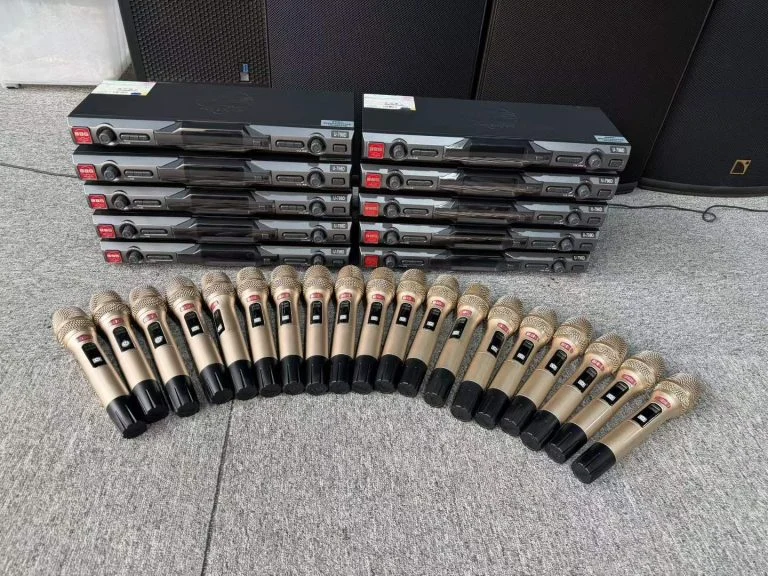
Also test two systems at once if you are buying a dual system. Intermodulation between two transmitters can cause dropouts that a single-unit test never reveals.
Which used wireless systems are worth buying?
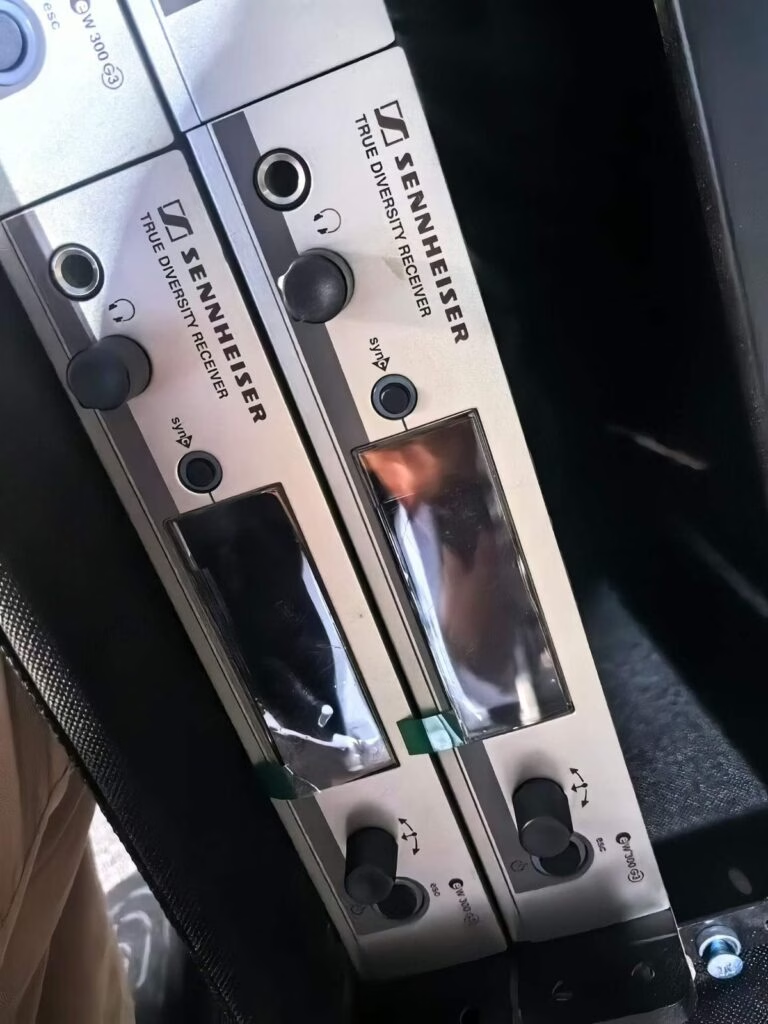
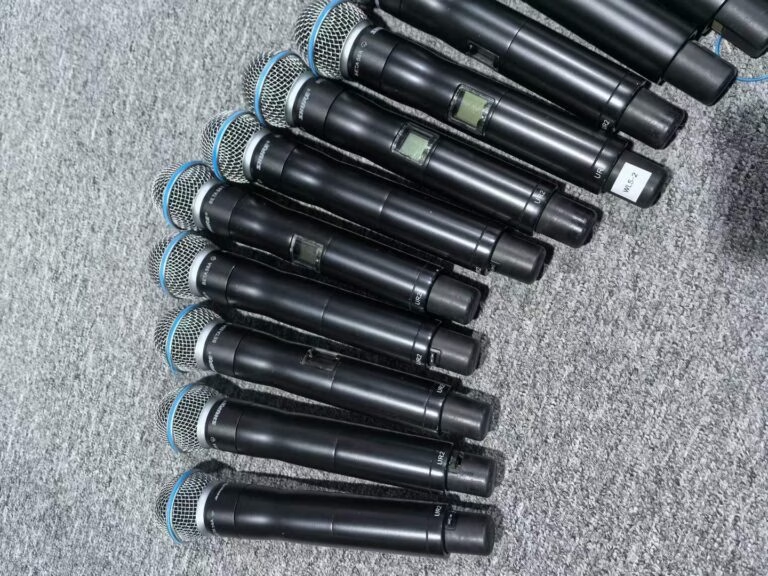
Buy systems with standard, available parts. A Shure UR2 transmitter pairs with UR4 receivers and replacement antennas are $12–$25. Sennheiser ew series parts are similarly available. Off-brand UHF systems from 2012 with custom RF modules are a gamble.
Check the frequency band against your country’s allocation before you pay. A system tuned to 470–530 MHz that lands in a licensed TV band in your country is unusable. This is the single most common expensive mistake on imports.
Key Takeaways
- Walk test to 30 m through one wall; clean audio at 30 m means good RF.
- Battery door and antenna thread are the two most common physical failures.
- Corroded battery contacts mean leaked alkaline — walk away.
- Watch RF and audio meters move together; mismatch points to the audio path.
- Verify the frequency band is legal in your country before importing.
Pair wireless receivers with a console that has clean preamps. Our Yamaha DM1000 has 24 mic inputs and per-channel dynamics, and the microphone category lists current wireless stock.