Buy analog if you mix 12 to 16 channels in a fixed room and want knobs that never boot. Buy digital if you mix more than 16 inputs, need scene recall, or record. In 2026 the used price gap has closed — a working 16-channel digital console starts near $900, close to what a used 24-channel analog board costs.
The old advice was “analog is cheaper and more reliable”. Half of that is still true. The cheaper half stopped being true around 2018, when Behringer and Allen & Heath flooded the market with sub-$2,000 digital desks and the analog resale market fell through the floor.
What does a used analog console actually get you in 2026?
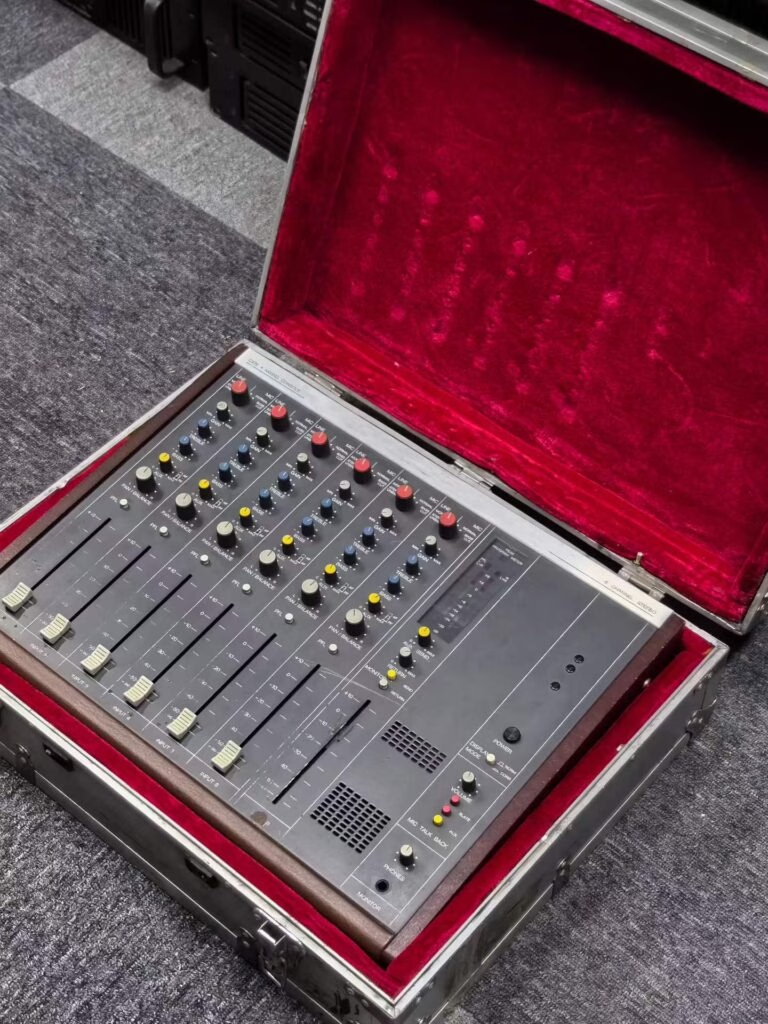
Immediate access to every function. No layers, no submenus, no firmware. A 24-channel Allen & Heath GL2600 that cost $4,000 in 2005 sells used for $600 to $900 today. That is a lot of preamps for the money.
The downside is weight and maintenance. A 24-channel analog frame weighs 25 to 40 kg and every pot, fader and switch is a mechanical failure point. After 15 years, scratchy pots are normal and rebuilding them is slow work.
Where does a used digital console win outright?
- Channel count per kilogram. A 32-input digital desk weighs 12 to 18 kg. Analog at 32 channels is 45 kg.
- Scene recall. Save a full show and load it in 2 seconds at the next gig.
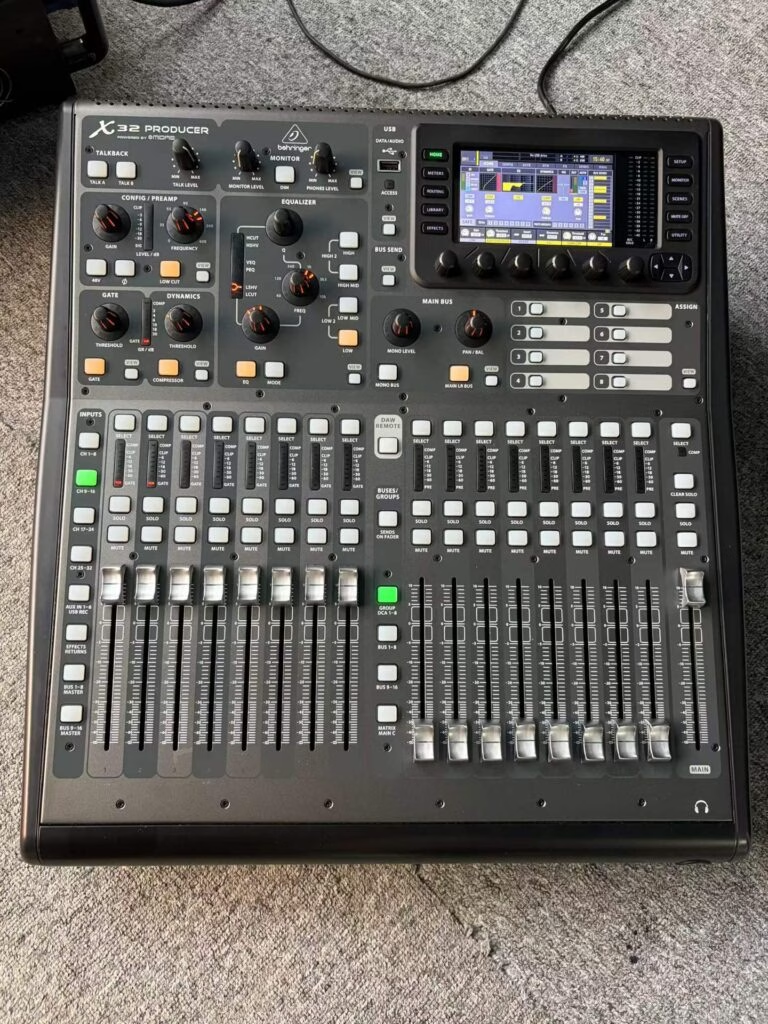
- Built-in processing. Compressors, gates and 4-band EQ on every channel, plus 4 to 8 FX engines.
- Recording. Most digital desks send 32 channels over USB at no extra cost.
- Snake replacement. One Cat5 run instead of a 40 kg multicore.
What is the hidden cost of buying used digital?
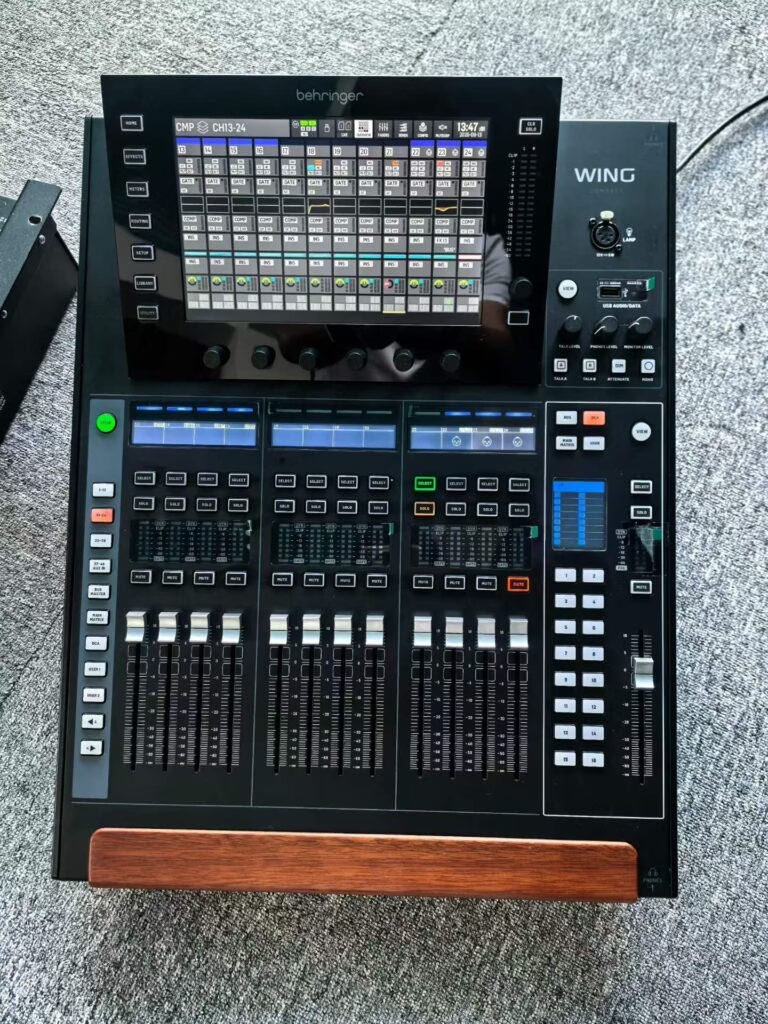
Firmware and apps. A digital console is only as good as its stable firmware and its control app. If the manufacturer stopped updating the tablet app three years ago, the desk still mixes audio, but the workflow degrades. That matters more than any spec sheet.
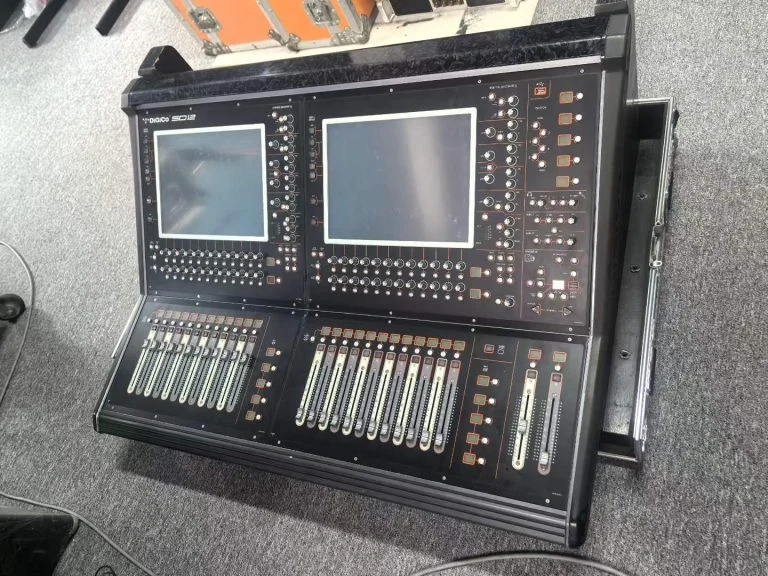
Faders are the second cost. Motorised faders wear out on touring desks. Replacing a fader bank on a used digital console runs $150 to $400 in parts, and needs a tech who knows the model.
| Factor | Used analog | Used digital |
|---|---|---|
| Typical price, 16-24 ch | $600 – $1,400 | $900 – $2,200 |
| Weight, 24 ch | 25 – 40 kg | 10 – 16 kg |
| Scene recall | None | Yes |
| Multi-track record | Needs interface | Usually built in |
| Maintenance risk | Pots, faders, switches | Faders, DSP board, PSU |
| Learning curve | Zero | 2 – 5 shows |
Which one suits a band, a venue or a rental company?
A working band that plays 40 shows a year should buy digital. The weight and recall pay for themselves in one tour. A small club with a house engineer who never changes setup is fine on analog — and will save $500 doing it.
A rental company should buy digital for the same reason airlines buy new planes: clients ask for it by name. Walk into a rider that says “X32 or equivalent” and an analog board ends the conversation.
What should you check on a used console before paying?
Every fader, every pot, every phantom power channel, and the PSU. On digital, also test USB or Dante, headphone amps, and confirm the firmware version is not a dead-end beta. Check the Yamaha DM1000 and the Allen & Heath GL2600 listings for how each type is described in practice.
Key Takeaways
- Over 16 inputs, need for recall or recording: buy digital, without hesitation.
- Under 16 channels in a fixed room: used analog is still the cheapest working option.
- The used price gap is small in 2026 — digital starts near $900 for 16 channels.
- On digital, firmware and app support matter more than channel count.
- On analog, budget for a pot and fader rebuild on anything past 15 years.