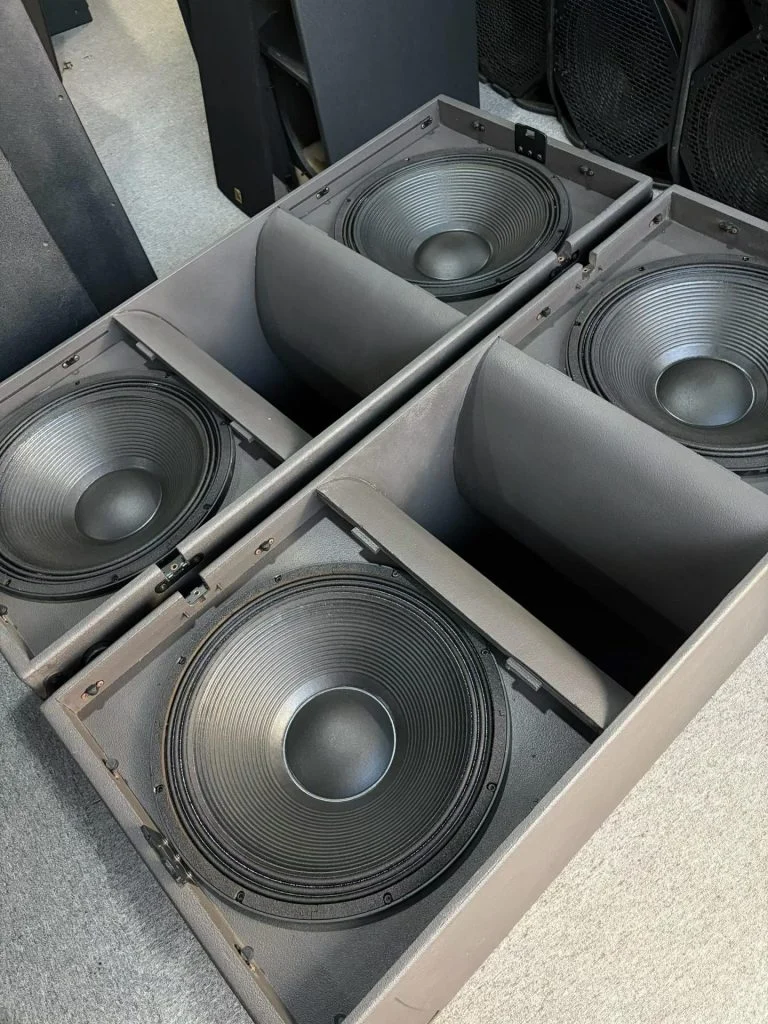
A used set of four 18-inch neodymium subwoofer drivers costs $600 to $1,200 in 2026. Ferrite-magnet sets go for less, around $400 to $700. The deciding factor is not brand — it is whether a recone kit still exists for that model.
This matters for anyone building or repairing subs. A cabinet is a box; the driver is the expensive part. Twelve used drivers at $150 each is a $1,800 decision, and if two of them need cones that no longer exist, the maths collapses.
What should a used driver set cost?
| Type | Per driver | Set of 4 |
|---|---|---|
| Ferrite 18″, generic brand | $90 – $150 | $400 – $700 |
| Neodymium 18″, known brand | $150 – $300 | $600 – $1,200 |
| Neodymium, with recone kit available | $250 – $380 | $1,000 – $1,500 |
A neodymium 18 weighs around 6 to 8 kg versus 11 to 13 kg for ferrite. If the subs fly, that difference is not cosmetic — it changes what rigging you need.
How do I check a driver without a test bench?
- Push the cone gently at four points around the edge. It should move smoothly with no scraping.
- Look at the surround — cracked foam or split rubber means recone.
- Smell the voice coil area after playing. A burnt smell means it has been overdriven.
- Measure DC resistance with a meter. An 8-ohm driver should read 5.5 to 7.5 ohms cold.
- Ask for a sine sweep video at low level; a rubbing coil shows up as a buzz around 40 Hz.
Why does recone availability decide the price?
A recone kit for a current 18-inch driver runs $120 to $220 plus labour. For a discontinued model, you either pay a specialist $300 or throw the driver away. That difference of $200 per unit is bigger than the brand premium most sellers ask for.
So before agreeing a price, search for the recone kit. If none exists, treat the set as a one-shot purchase: you are buying the life left in the current cones, nothing more.
Where do these sets come from?
Most come out of decommissioned rental cabinets or factory overstock. Sets from one production run are worth more than mixed lots because the cone mass matches and they will sound the same. Ask for the serial range and take units from a single batch.
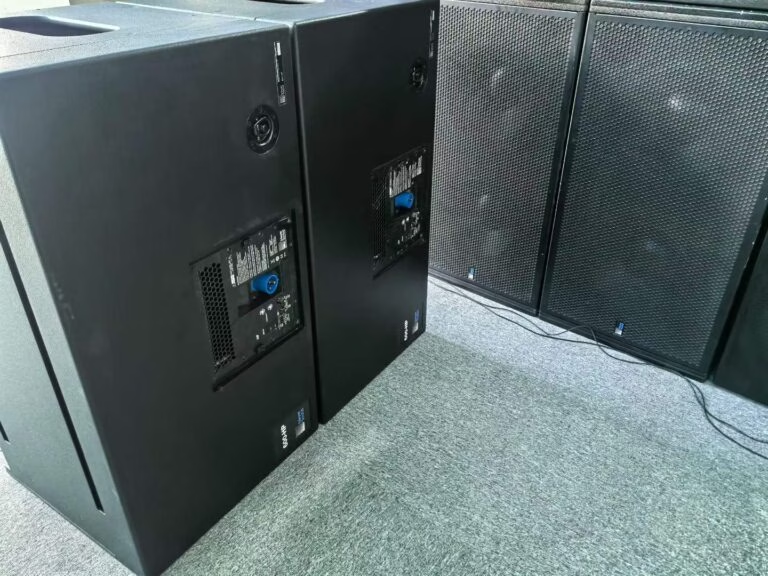
To see what a matched batch looks like, the BCS KS28 18-inch neodymium driver set of four shows condition and quantity. If you need complete cabinets instead of bare drivers, the HH dual 18-inch subwoofer saves you building the box.
What is the difference between a driver set and a cabinet?
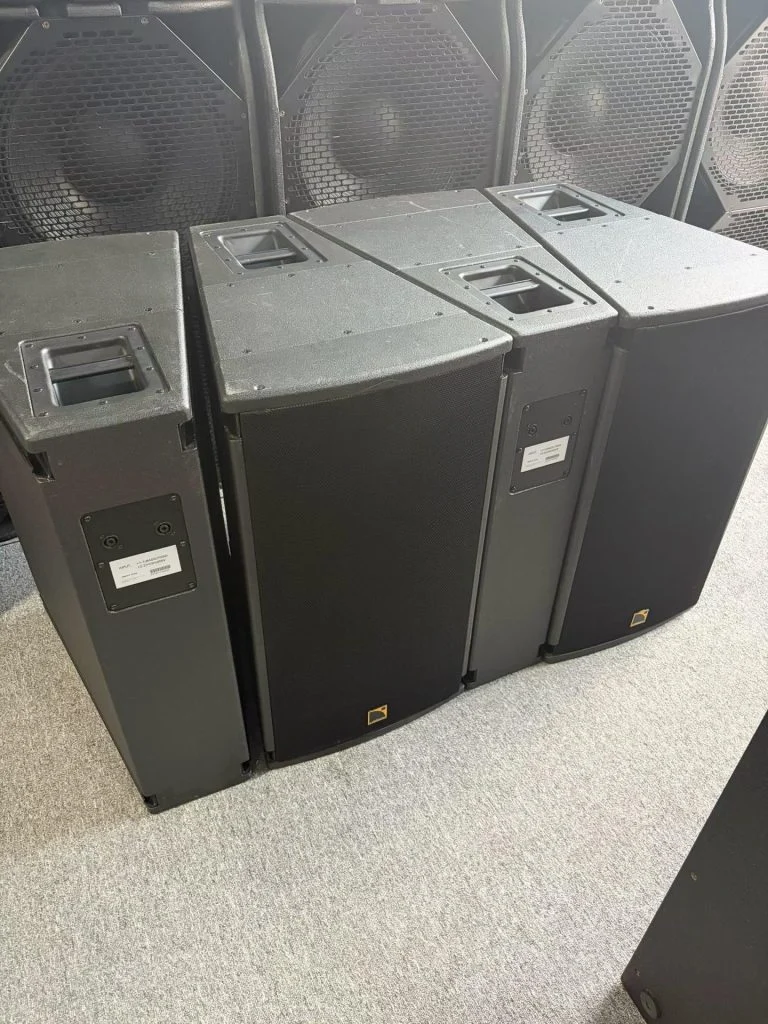
Bare drivers need a box, a port design and a crossover or DSP preset. If you have none of those, buying drivers is the hard way. A complete subwoofer cabinet at $600 to $1,200 does the same job with the engineering already done.
Drivers make sense when you already own cabinets and want to refresh them, or when a model’s cabinet design is published and you are building from plans. Any other case, buy cabinets.
How do I store a set of drivers without ruining them?
Face down, on a soft surface, in a dry room. Storing an 18-inch driver face up lets dust settle into the gap between coil and magnet, and that dust is what makes a driver rub months later. Keep them out of a cold container — rubber surrounds stiffen and crack in freezing storage.
If they ship by sea, expect the cartons to sit in a container for four to six weeks. Inspect on arrival before signing, and photograph every driver face before you touch it.
Are cheap generic drivers ever worth it?
Rarely. A generic 18-inch driver at $60 is fine for a workshop test box and poor for a working venue. The magnet is smaller, the coil former is thinner, and it will fail sooner than the branded set you were trying to avoid paying for.
Key Takeaways
- Set of four used 18-inch neodymium drivers: $600–$1,200 in 2026.
- Recone kit availability matters more than brand name.
- Neodymium saves 5 kg per driver versus ferrite.
- An 8-ohm driver reads 5.5–7.5 ohms DC when healthy.
- Buy a matched batch, not a mixed lot.