Analog if you mix monitors, rent the desk out, or need it working in ten years. Digital if you need 32 channels of recall and a small footprint. Used analog desks hold value better, used digital desks lose capability faster.
What is the honest difference in 2026?
An analog desk is a set of circuits. A digital desk is a computer with faders glued to it. That one sentence explains almost every practical difference you will hit: repair cost, lifespan, resale, and how it fails at 11pm.
There is a third pattern nobody mentions. Analog desks are repairable by anyone with a meter and a soldering iron. Digital desks are repairable by anyone with a schematic, a hot air station and a spare board. Ask yourself which one you are in the room with when something dies at soundcheck.
Analog fails progressively. A channel goes noisy, a fader scratches, one aux dies. You finish the show. Digital consoles fail absolutely. A firmware corruption or a dead DSP board is a black screen, and the whole rig is down.
That is the single most useful thing to know when you choose. Everything else is budget.
When should you buy used analog?
Monitors. If you mix wedges from the side of a stage, you want your hand on 16 aux sends at once. Touchscreen layers are slower than a row of knobs when a singer is staring at you and the wedge is feeding back.
Rental fleets. Hand an analog desk to a stranger and it usually survives. Hand them a digital desk with scenes and user accounts and you inherit a support call at midnight.
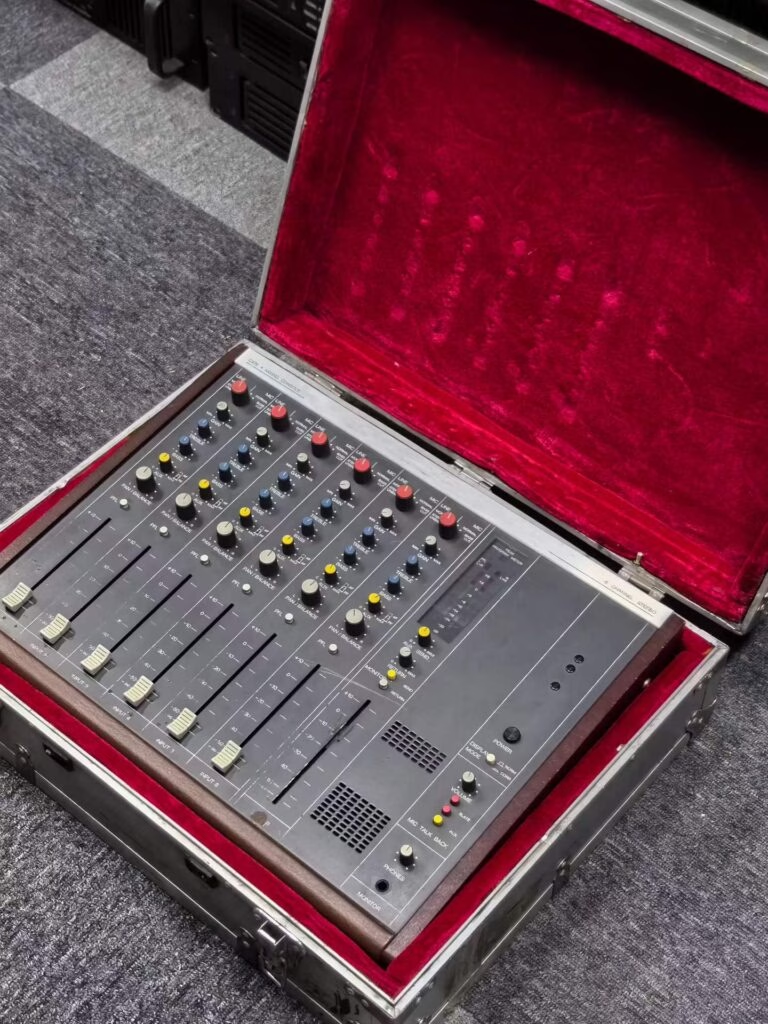
Long horizons. A 2003 Allen & Heath GL2600 has discrete circuits you can measure with a multimeter. Its 700-1,100 USD used price will not collapse, because somebody will still be fixing them in 2035.
The trade-off is weight and channels. Forty inputs of analog is a 90 kg desk and 12 metres of copper snake.
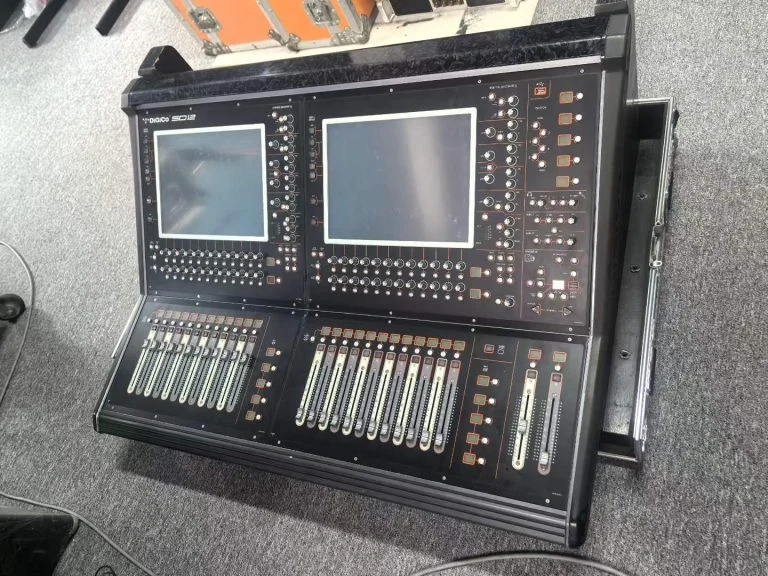
Prices reflect all of this. A used 24-channel analog desk sits at 700-1,100 USD and barely moves year to year. A used 40-input digital console from 2014 is 2,000-2,800 USD and drops about 15% annually.
When should you buy used digital?
Touring with scene changes. Ten bands, six scenes each, one operator. Recall beats any amount of knob muscle memory.
Small rooms. A 40-input digital console at 8 kg that fits in a van solves a problem analog cannot: it goes up a flight of stairs alone.
Recording and streaming. Anything with a USB card or Dante turns a live desk into a multitrack rig for the price of the card.
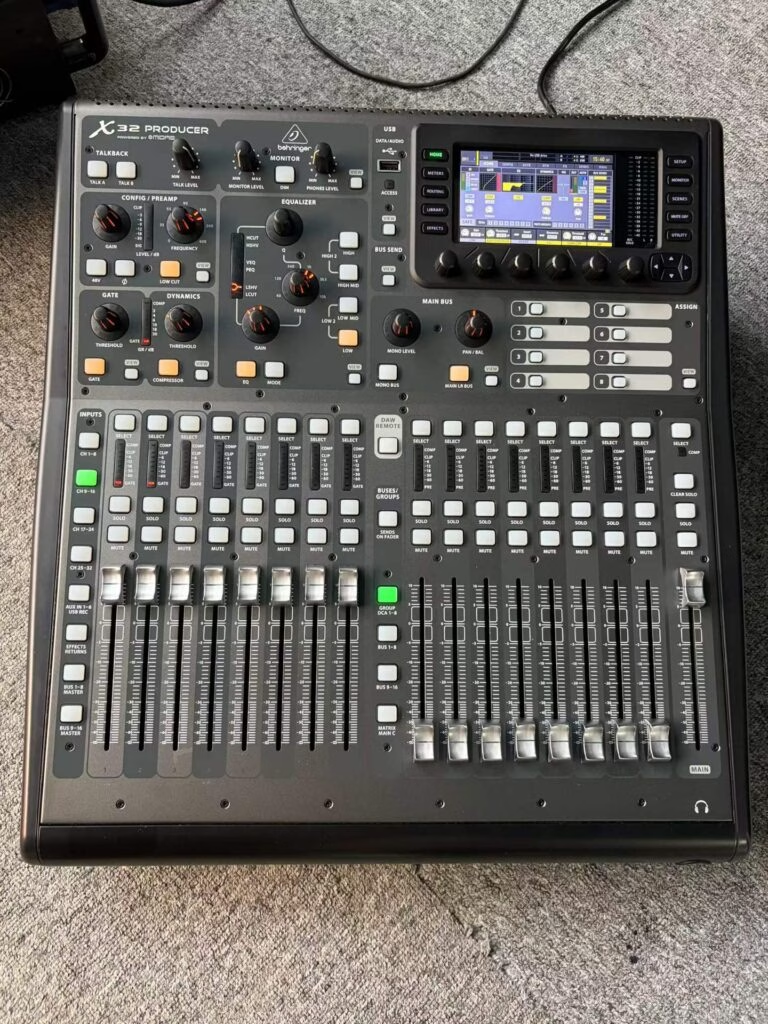
The catch is software dependency. If the manufacturer stops shipping firmware, your console is frozen at whatever features it had on that day. Behringer X32 units are 2,000-2,800 USD used in 2026 against 5,200 USD new, and that discount exists partly because buyers know the platform is ageing.
How do the failure modes compare in real money?
Start with what a service actually costs. On an analog desk you pay a technician by the hour and parts by the dozen. On a digital desk you pay for a board, if it can be found, and the labour is a swap rather than a diagnosis.
Analog: a 2008 amplifier channel costs 40-120 USD in parts if you can solder. Faders are 12-18 USD each. A full recap of a 24-channel desk is 300-500 USD in capacitors and a weekend.
Digital: a fader motor is 30-60 USD, but the motor driver IC is often a surface-mount part and the repair needs a hot air station. A dead DSP board is usually unrepairable and the replacement, if it exists, is 400-900 USD.
That is why used digital desks are cheap and used analog desks are not. The discount is a warranty you are agreeing to give yourself.
Which one holds value better?
Analog, by a distance. A working 24-channel analog desk bought for 800 USD in 2020 is worth 800-900 USD today. A 40-input digital console bought for 3,000 USD in 2020 is worth about 1,800 USD.
Look at depreciation a second way. A digital desk loses about 18% a year for the first six years. An analog desk loses closer to 3%, and it can go negative if the model becomes a studio favourite.
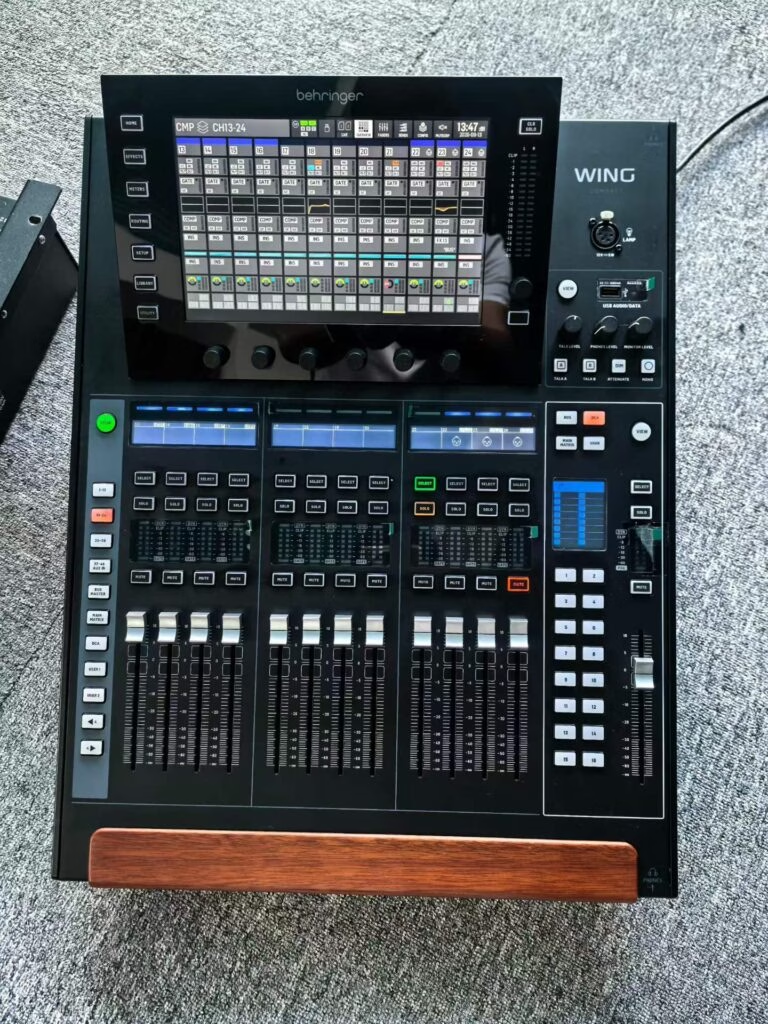
The exception is digital desks that became standards. Anything with a large installed base keeps parts availability and therefore keeps value. The Behringer WING Compact is 48 channels in a smaller frame with 24 Midas PRO preamps and 13 motor faders, and it is the current example of a digital platform that holds price because venues keep buying it.
Whatever you choose, buy the platform, not the spec sheet. Spurs and parts matter more in year four than channel count does in year one.
Key Takeaways
- Analog desks fail one channel at a time; digital desks fail as a whole unit.
- Buy used analog for monitor mixing, rental fleets, or a 10-year horizon.
- Buy used digital for scene recall, small load-ins, and multitrack recording.
- Analog holds value better; digital discounts are a self-issued warranty.