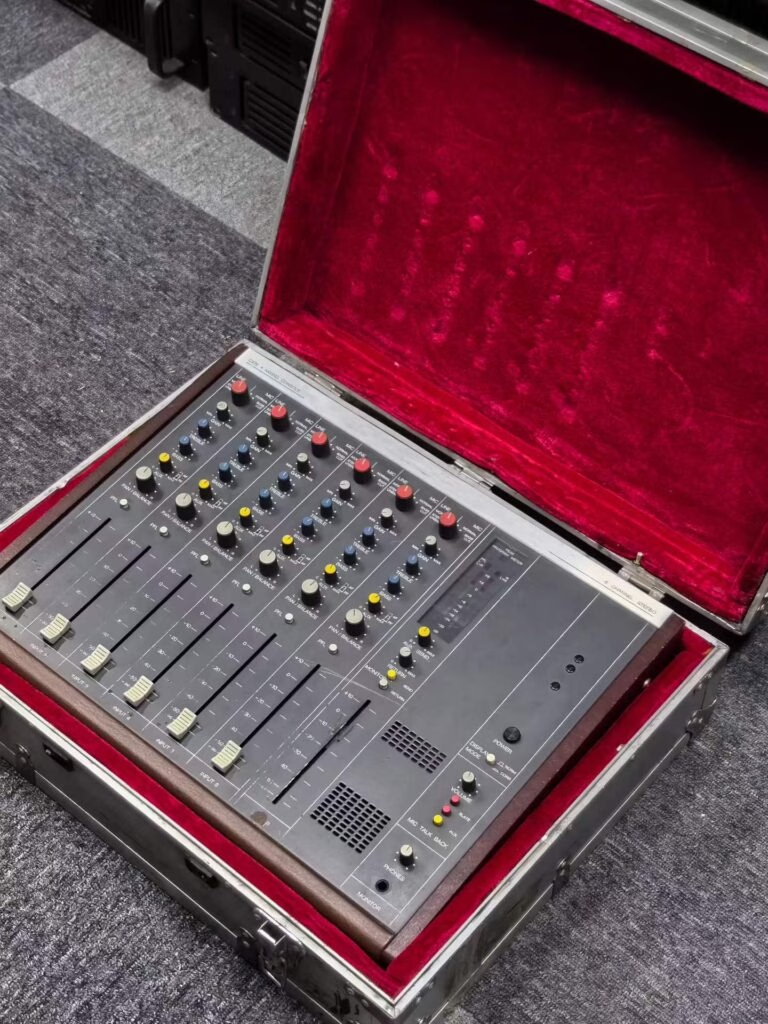
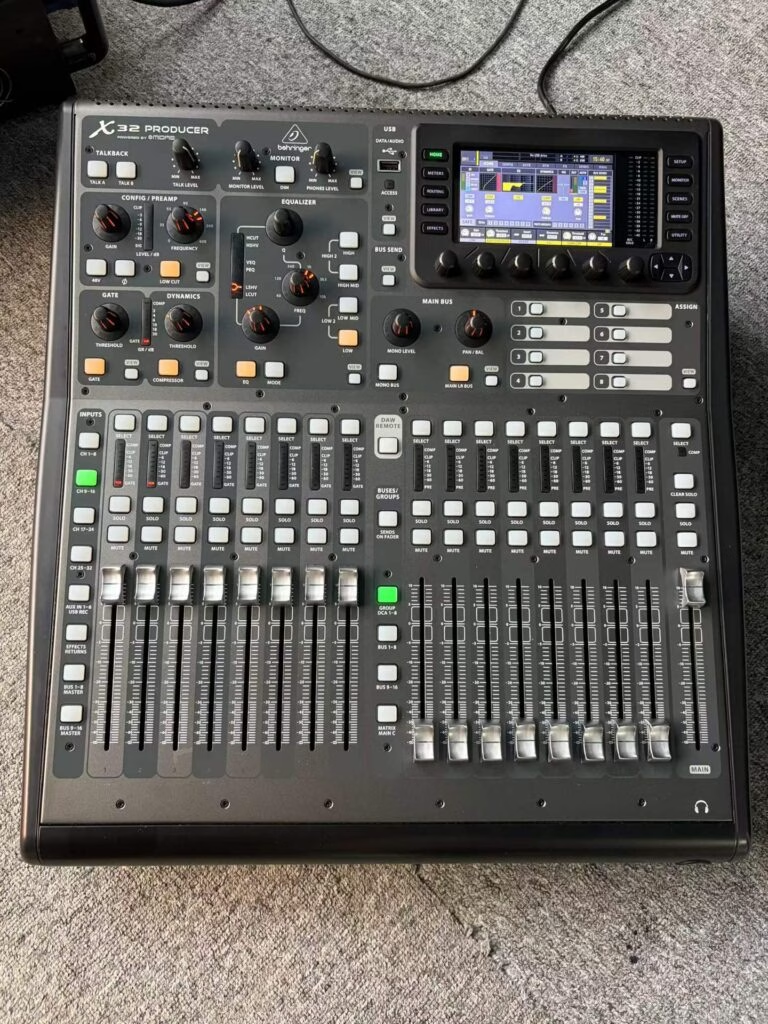
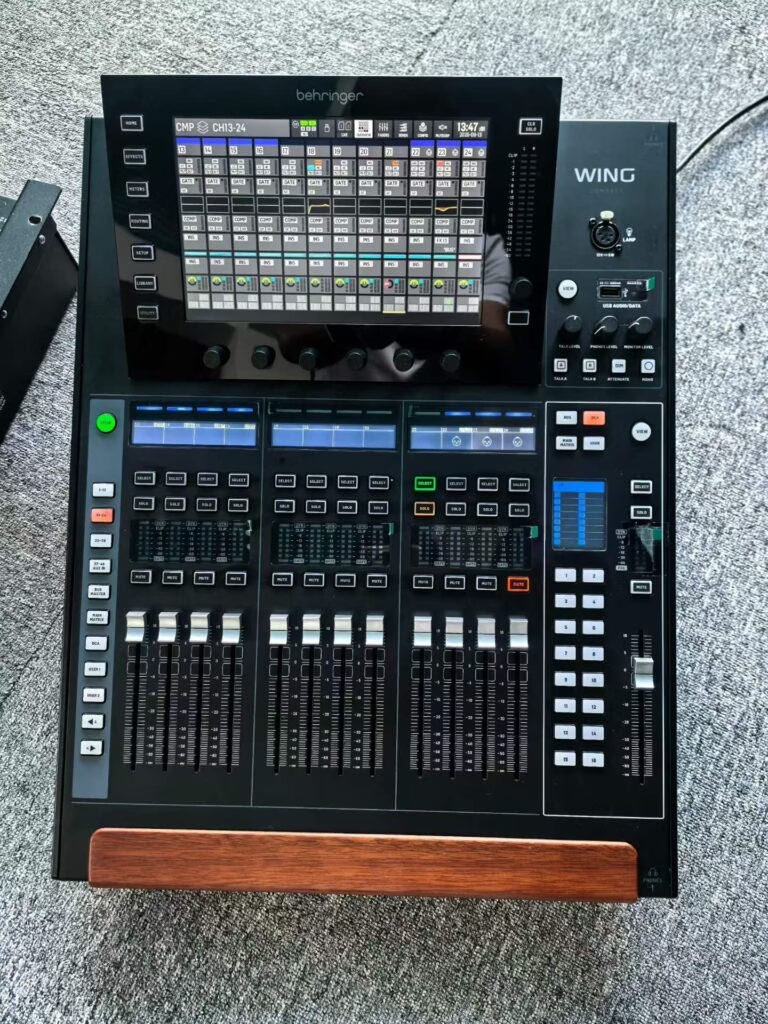
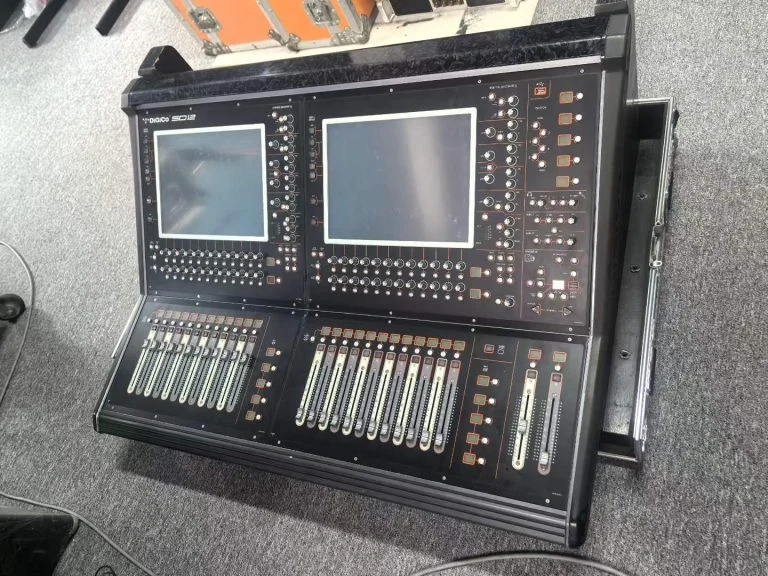
For a venue running three bands a night, buy used digital. For a dusty club with unstable mains power, buy used analog. A digital desk recalls a whole show in under a second but dies with the power supply; an analog desk needs a soldering iron and nothing else.
A digital desk with 32 channels costs more upfront but pays for itself in changeover time if you host three bands a week. Mix the same band every weekend and that math stops working.
What about hybrid setups?
many small venues run an analog desk into a digital snake, or a digital desk as a monitor console beside an analog FOH. That works, and it lets you upgrade one half at a time instead of replacing everything in one purchase.
How much does each type cost used in 2026?
- 24-channel analog with 4-bus: $400–900 used, $1,300–2,600 new
- 32-channel digital with motorized faders: $1,100–2,400 used, $3,500–6,000 new
- 48-channel digital with expansion: $2,200–4,500 used, $8,000–15,000 new
A used Yamaha DM1000 digital mixing console sits at the low end of the 48-channel bracket, around $1,200–1,900 depending on condition and whether the flight case is included. It launched in 2004 with 48 channels and 16 mic preamps, weighs about 19 kg, and boots in roughly 9 seconds.
Which one survives a bad electrical supply?
Analog, without question. A digital console has a CPU, an operating system image and a power supply that all have to work. Brownouts during a soundcheck are how digital desks lose their stored scenes. If your venue has a generator that trips, budget $250 for a proper UPS before you buy any digital desk.
Analog desks just sag. Bass gets muddy, meters drop, then it comes back. Annoying, not catastrophic.
Which is faster to operate on a show day?
Digital, by a wide margin once the desks are dialled in. A scene recall moves 48 channels of EQ, dynamics and routing in under 1 second; a human doing the same on an analog desk needs 15–25 minutes. If you host 3 bands per week, that is roughly 60 hours a year of saved changeover time. If you mix the same band every weekend, that advantage shrinks to near zero.
What breaks first on each?
Digital: fader motors, the power supply, and SD card corruption that erases your scene library. Analog: scratchy pots, broken insert jacks and dead channels from spilled drinks. Both fail at the channel level, but only analog fails in a way you can see and fix mid-show by swapping a cable.
Do you need a digital desk for recording?
Only if you want multitrack. Most digital consoles stream 32 channels over USB at 48 kHz, which makes a live recording close to free. An analog desk needs an outboard interface and a splitter, easily $600 more. That is the strongest case for digital in a small venue.
Which should a first-time buyer pick?
A used 16–24 channel analog desk at $300–500, plus a digital interface later. The reasoning is simple: analog teaches signal flow with every knob visible, and a beginner can hand a guest engineer an analog desk and get sound out of it in 5 minutes. Buy digital once you know what you are automating.
Key Takeaways
- Used analog 24-channel desks: $400–900. Used digital 32-channel: $1,100–2,400.
- Digital saves 15–25 minutes per band changeover when scenes are pre-built.
- Digital loses scenes in brownouts; add a UPS before you buy.
- First-time buyers learn faster on analog, then move to digital.