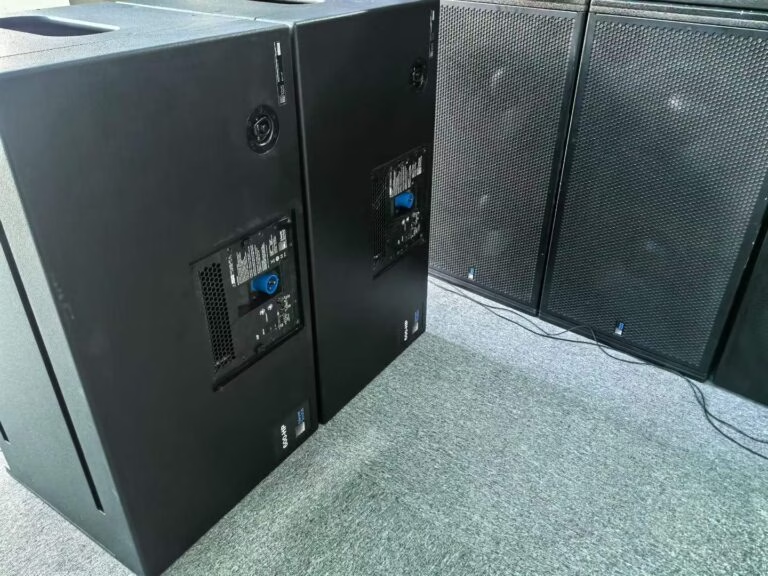
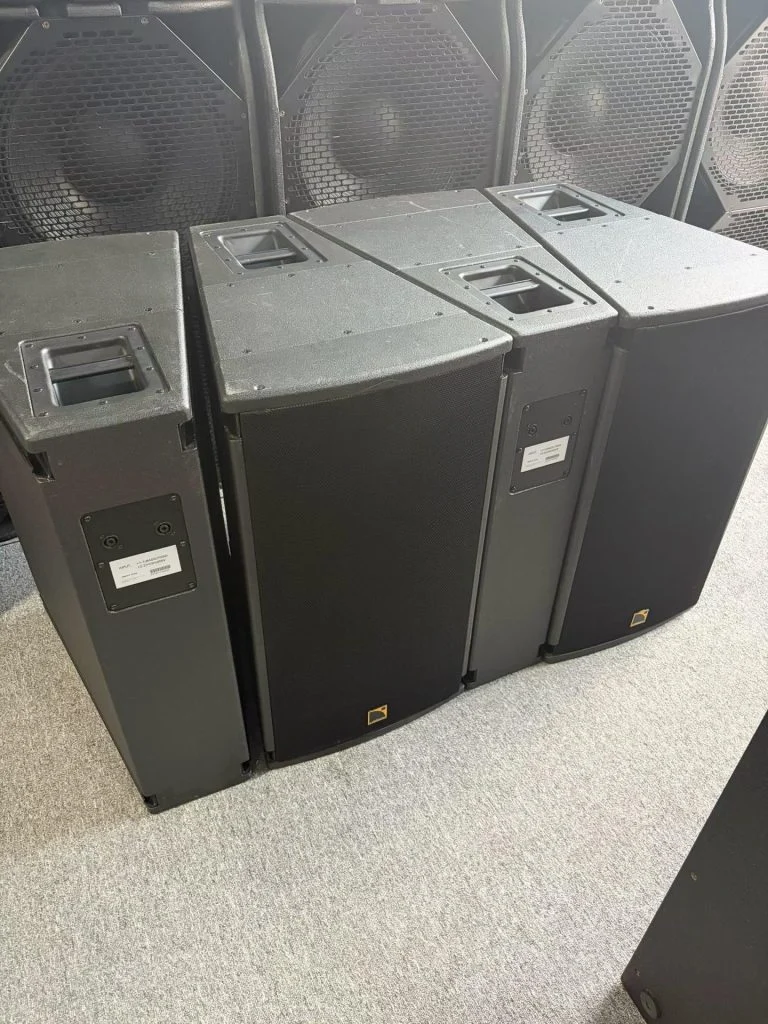
$60-200 per driver is the working range. Above that you are buying a name, below it you are probably buying a coil that has already been hot. The test that matters is DC resistance plus a slow cone push, and it takes 90 seconds per driver.
Eighteens are the most-rebuilt driver in pro audio, which means the second-hand market is a mix of excellent touring units and tired boxes that have been re-coned twice. Both look the same in a photo.
What should an 18-inch sub driver cost in 2026?
| Type | Used price each | Notes |
|---|---|---|
| Budget 18, ferrite | $60-110 | Heavy, thick magnet, hard to ship |
| Pro 18, ferrite | $100-180 | RCF, B&C, 18 Sound |
| Pro 18, neodymium | $140-260 | 4-6 kg lighter, better for flown |
| Recone kit | $45-120 | Plus $40-80 labour |
Neodymium carries a premium for a reason that is not about sound: it halves the weight. A ferrite 18 weighs 11-14 kg; a neo equivalent is 6-8 kg. In a sub with four drivers, that is 20 kg off the cabinet.
How do you test a used 18-inch driver?
- Multimeter on the terminals. A nominal 8 ohm driver reads 6-7 ohms DC. Open means a burnt coil. Below 2 ohms means a shorted turn.
- Cone push. Press straight inward with two fingers. Any scraping is a warped former.
- Cone and surround. Cracks or a chalky feel mean the surround is going.
- Magnet. Rust on a ferrite magnet face is cosmetic. Rust that has crept under the gap is not.
- Tinsel leads. Look for frayed braid where it meets the terminal. That is a $15 repair if caught early.
Do all five on every driver. A set of four drivers where two are marginal is normal, and that is exactly the kind of lot that gets sold at auction as “four working subs”.
Does a recone destroy the value?
It depends who did it. A factory recone with the original kit is fine and adds $40-80 of value over a tired original. A third-party recone with a generic kit changes the Thiele/Small parameters, which means the driver no longer matches its cabinet. In a horn-loaded sub, that mismatch can cost you 3-6 dB of output around the horn’s tuning point.
Ask which kit was used and whether the serial numbers were recorded. A driver with paperwork is worth 20-30% more than one without, and on a set of four that difference is real money.
Are four used drivers better than one new one?
For output, yes. Sub output follows displacement, and four used 18s move four times the air of one new 18. For reliability in a touring rig, matched sets matter more than count — mixing two driver models in one cabinet is a good way to destroy both, because they will share the load unevenly.
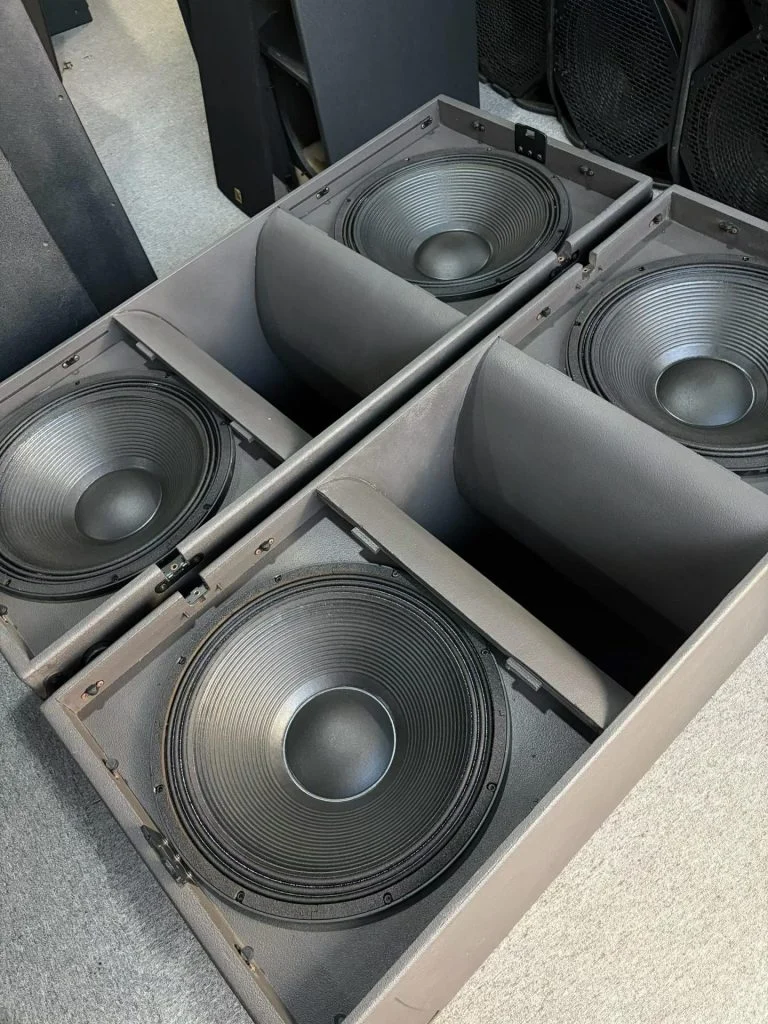
A matched set of four is what you want for a horn-loaded cabinet. Our B&C KS28 18-inch neodymium driver set of four is that kind of lot: same model, same production run, sold as a set rather than four singles.
Why do neodymium magnets lose strength?
Neo magnets demagnetise gradually above 80 degrees C. A sub driver that ran hot for a decade at 90 degrees loses flux, and lost flux means a higher Qts and less motor force — the driver gets quieter and looser in the bottom octave. Ferrite is far more heat-tolerant, which is why heavy old ferrite drivers still measure close to spec.
You cannot measure flux without a gauss meter, but you can infer it. If a neo driver needs noticeably more amp gain than its sibling for the same output, it has been heat-cycled.
What about shipping weight?
Four ferrite 18s are roughly 52 kg crated, which is 0.35 CBM. That is a manageable LCL shipment. Eight is 100 kg and becomes a pallet. If you are buying at auction, get the crate dimensions before you bid — freight on a badly crated set can exceed the bid itself.
Neo drivers ship better for the same reason they hang better: half the weight for the same displacement. If your cabinets are flown rather than ground-stacked, neo is not a luxury, it is the only sensible option.
Key Takeaways
- $60-200 per used 18-inch driver; neo adds 30-50%.
- 8 ohm driver should read 6-7 ohms DC. Open = burnt.
- Generic recones change T/S parameters and mismatch cabinets.
- Buy matched sets of four, not four similar singles.