Which used console suits which job?
**A used digital console fits a venue with repeatable shows and a fixed room. A used analog console fits touring and one-off events where repair matters more than recall.** Digital wins on channels per rack space and scene memory. Analog wins on repairability, resale and the fact that it boots in one second.
This is not a taste argument. A used digital vs analog mixing console decision comes down to what breaks and what that costs you at the wrong moment.
What actually fails on each type?
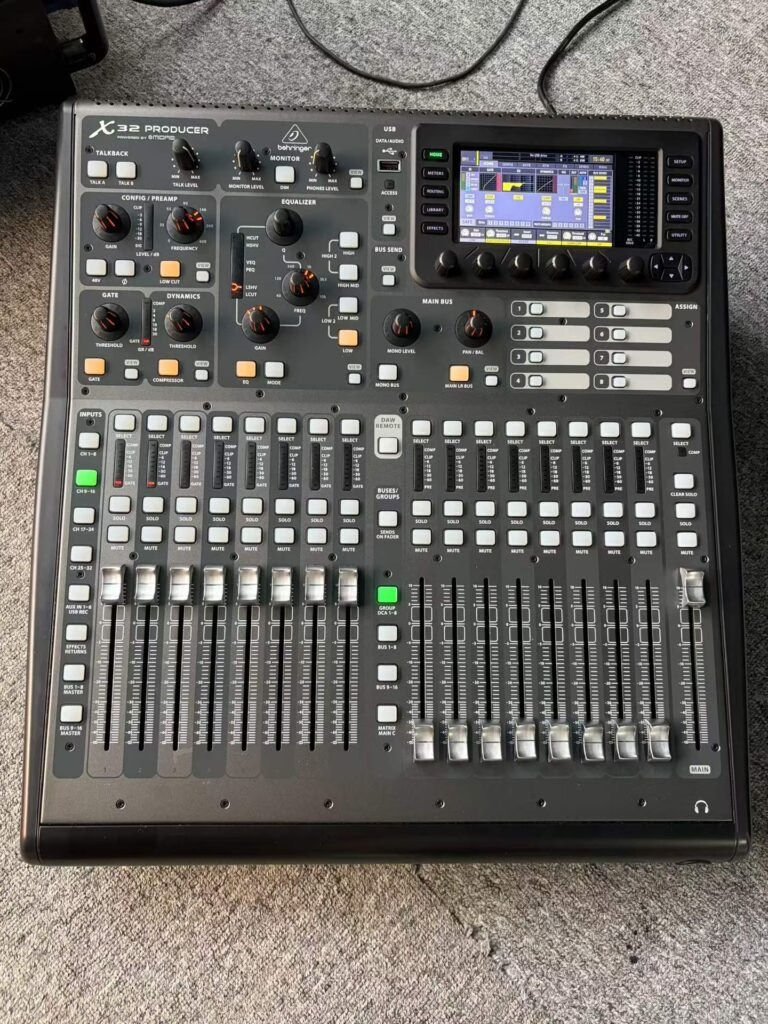
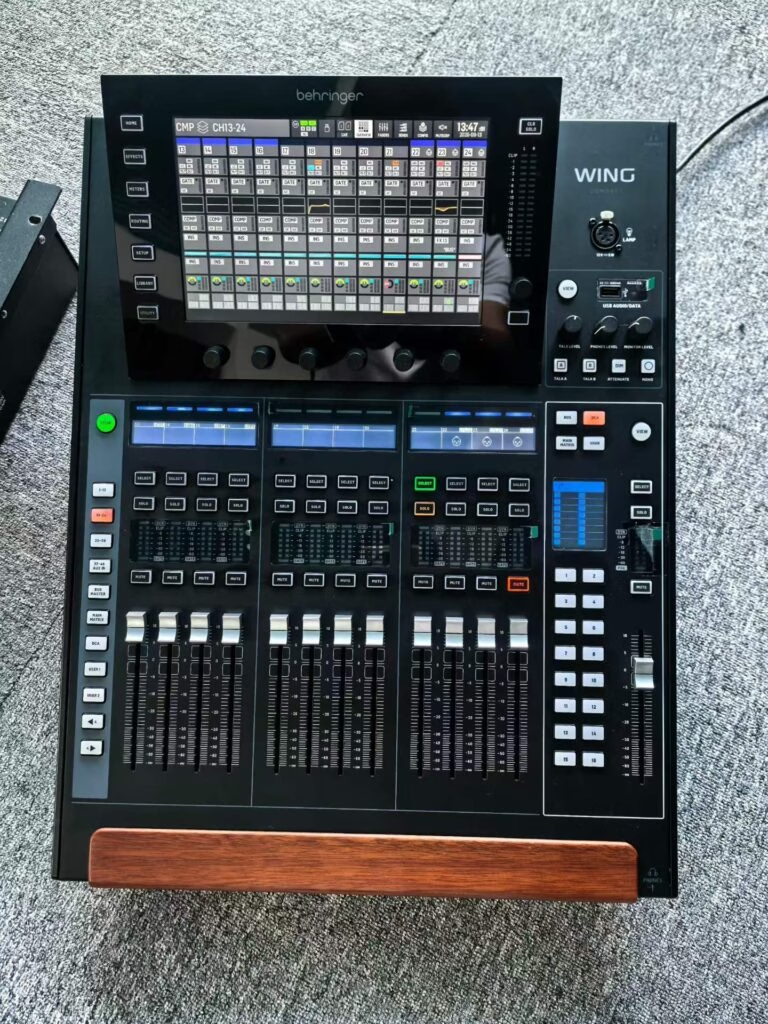
On a digital desk the fragile parts are the LCD or touchscreen, the fader motors and the internal PSU. A 2010s Yamaha DM1000 with a failing screen is still usable, because the desk has encoders and a lot of operators know the menu tree by muscle memory. A touchscreen-only console with a dead panel is out of service until a replacement arrives, and those panels are often discontinued.
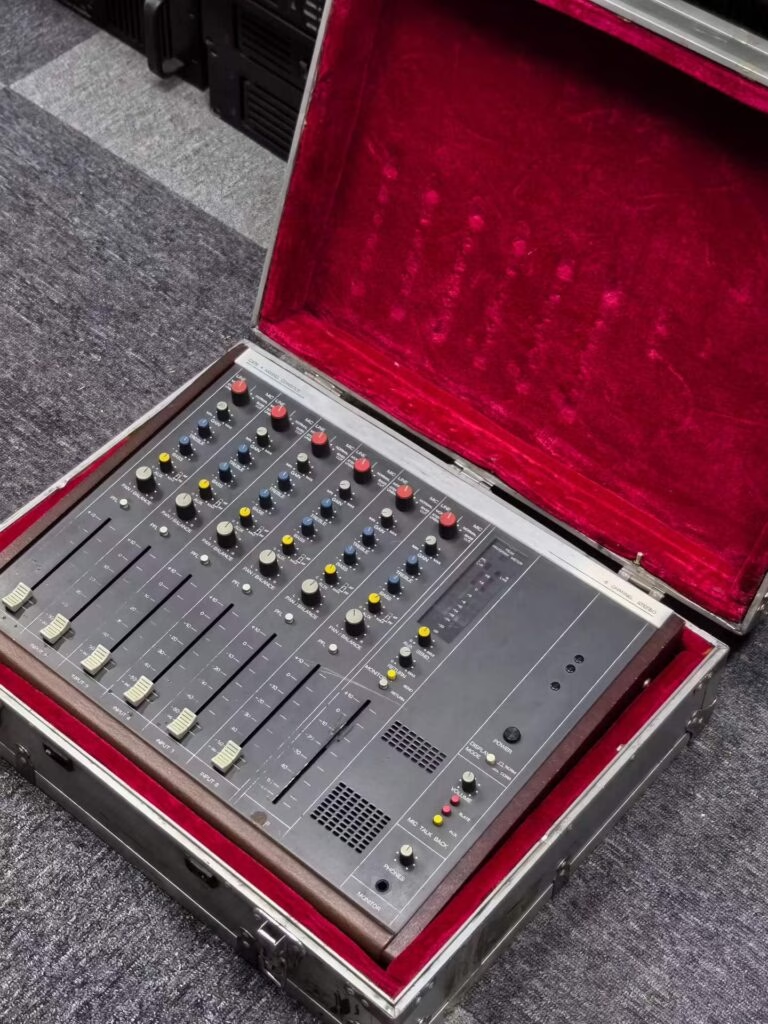
On an analog desk the failures are dirty pots, scratchy faders, dead channels and worn ribbon connectors. All fixable with a soldering iron and 30 USD of parts. The catch: a 40-channel analog desk weighs 60-90 kg, so freight and handling punish you every single move.
How do the numbers compare?
Both columns are used, tested, working:
| Used digital (DM1000 class) | Used analog (32 ch) | Used digital (48 ch rack) | |
|---|---|---|---|
| Typical price | 1,200-1,800 USD | 700-1,400 USD | 2,500-4,500 USD |
| Weight | ~28 kg | 60-90 kg | ~25 kg |
| Channels at 48 kHz | 48 mono | 32 mono + 4 stereo | 48 in / 24 out |
| Scene recall | Yes, stored scenes | No | Yes, plus show files |
| Field repair | Module swap | Component level | Module swap |
Look at the middle row before anything else. Weight is the cost nobody budgets for. A 75 kg desk needs two people, a flight case and a pallet, and air freight is simply not an option at that weight.
Where does each one let you down?
Digital drops you in two places. Firmware support ends eventually, and a console from 2012 will not get new features. And every operator who touches it needs training or at least a show file they trust. Hand a guest engineer an unfamiliar digital desk 40 minutes before doors and something will be muted that should not be.
Analog drops you in one place, but it hurts: no recall. If you run the same room weekly for different events, you rebuild the desk from zero every time, and that is 40-60 minutes of unpaid work per gig. Multiply by 50 gigs and the digital premium pays for itself.
What should you check before paying?
Test every channel, not a few. Microphone level into channel 1, phantom on, then channel 32. Push every fader through its full travel and listen for crackle. On digital, save and recall a scene twice. Then power cycle cold and confirm the desk remembers the show file. An honest seller will give you 30 minutes with headphones. One who will not is telling you something.
Check the PSU. On touring desks the power supply has usually done more hours than the mixing engine, and a replacement is 150-400 USD depending on model. Ask how many hours the unit has logged if the menu tracks it.
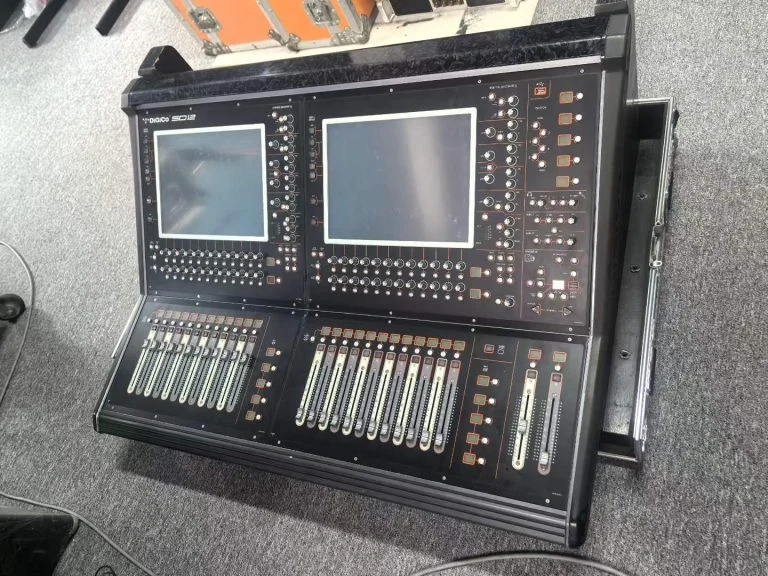
A used Yamaha DM1000 digital mixing console with a flight case is the low-risk entry point we usually point buyers toward: 48 channels, familiar layout, spares still findable. If you need a rack-mount stage box instead, a Digico MADI rack covers the 48-channel format without a console footprint. Both live under used mixing consoles.
Key Takeaways
- Digital for fixed venues and repeat shows; analog for touring and one-off events.
- Screens and fader motors are the weak point on digital desks, and panels get discontinued.
- Analog desks are repairable with cheap parts but heavy enough to change your freight bill.
- No scene recall on analog means 40-60 minutes of unpaid reset per gig.
- Test all channels, full fader travel, then a cold power cycle before you pay.