Yes, mostly. A 12-inch powered PA speaker that sells new for USD 900 goes for USD 400-550 used in good condition, and the parts that break — the amp module, the horn diaphragm — are the parts you can actually buy and swap. Buying used active speakers is one of the few places in pro audio where the trade genuinely works in your favour.
The exception is small venues that need warranty cover on a rig they depend on for income. If a nightclub’s sound fails, the club loses a night. For everyone else, second-hand active boxes are the sensible buy.
How much do used powered PA speakers actually sell for?
Prices vary by brand loyalty more than by specs. Two speakers with the same 1,000W class-D module and the same 12-inch woofer can be USD 250 apart, purely on the badge.
| Type | Typical used price | New price | Notes |
|---|---|---|---|
| 10-inch powered, 300-500W | USD 180-320 | USD 450-650 | Good for cafes, 50-80 people |
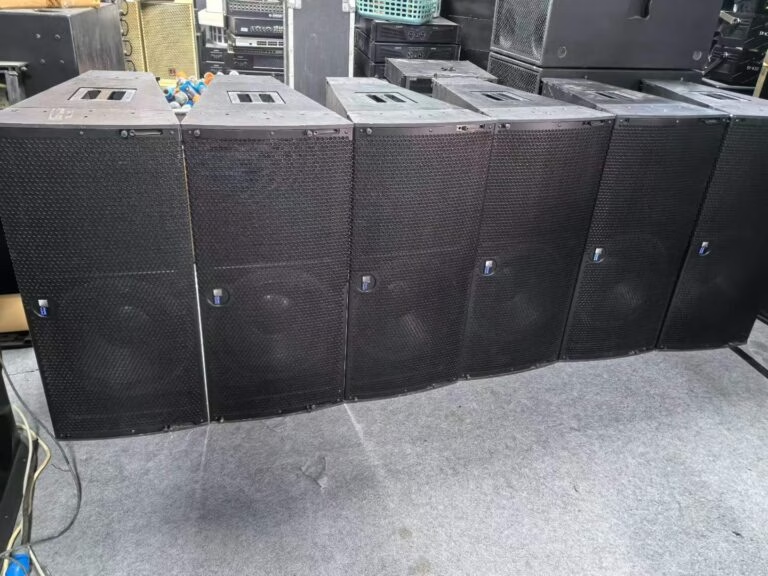
| 12-inch powered, 800-1,200W | USD 400-600 | USD 850-1,100 | The workhorse size |
| 15-inch powered, 1,000-1,500W | USD 550-900 | USD 1,100-1,600 | Heavier; watch shipping cost |
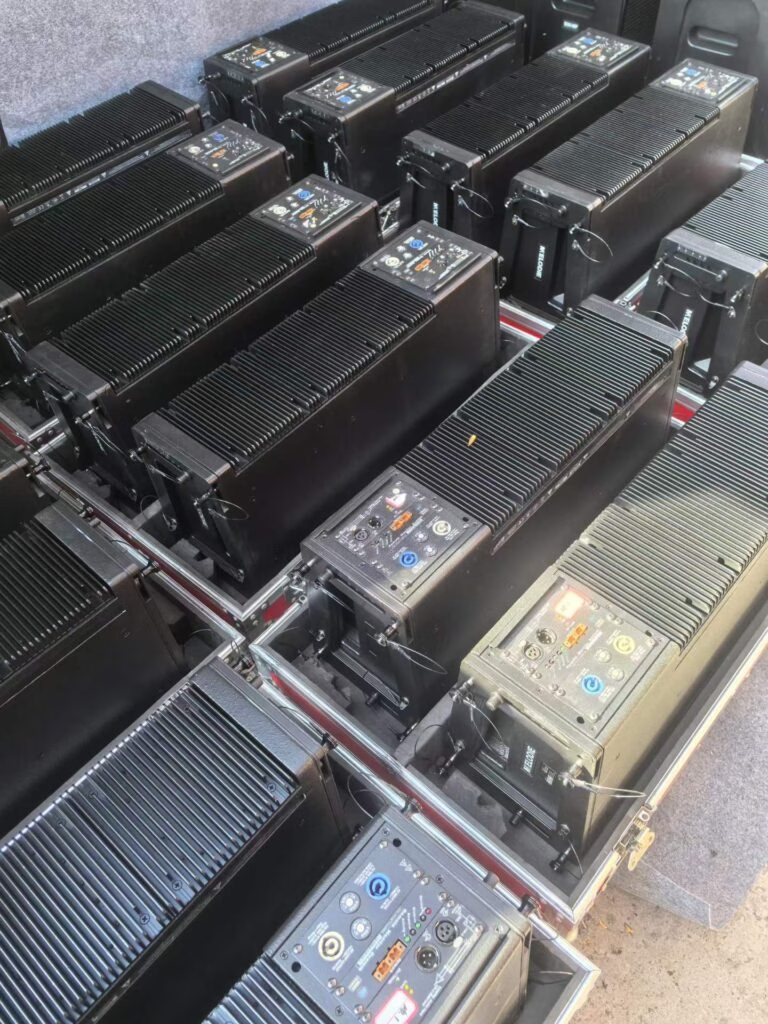
| Line-array element (self-powered) | USD 1,200-2,500 | USD 3,000+ | Check module firmware version |
What breaks first in a used active speaker?
The amplifier module, then the compression driver diaphragm, then the power supply caps. In that order. Drivers handle abuse well; electronics handle heat badly, and heat is what a gigging speaker gets.
- Amp module: listen for a hiss at idle with no input. Some hiss is normal. Crackle or a pulsing thump is not.
- Driver: play a 60 Hz sine sweep. A rubbing voice coil makes a scratching sound and the cone moves unevenly.
- Horn: a blown diaphragm sounds compressed and dull above 6 kHz. Sweep upward and listen for the point where it drops off.
- Power supply: run it at 60% for 20 minutes and feel the rear panel. Too hot to hold your hand on means caps are tired.
Should you buy powered or passive speakers used?
Powered, for most buyers. One cable, no amp matching, no guessing about crossover points. The downside is that when the module dies, the whole box goes out of service, and module replacements for older lines can be hard to find. Passive boxes are more repairable but push the complexity into amp racks, which is a different set of problems.
A middle path many touring teams take: buy passive cabs and one good used amp per pair. If we are shipping from China, that is often the cheaper configuration because passive boxes have no electronics to declare or test.
How do you bench-test one before wiring it in?
Give it an hour, not five minutes. Power it up with nothing connected and listen for 30 seconds. Then feed pink noise at moderate level for 15 minutes and check the rear panel temperature. Then run a full-band music track at 80% and walk around the box — a working speaker sounds even from every angle. A failing module usually shows itself as a level that drops on one side of the room, or a rattle on a specific note.
For a self-powered two-way box like the K-array KF12, also confirm the limiter LED behaves — it should flash on peaks and not stay lit. A limiter that stays on means someone drove it hard, and the drivers have taken the wear.
When is new actually the better call?
Three cases. First, if the model is under two years old and the used price is within 25% of new — the saving is not worth the missing warranty. Second, if you need matched pairs for a rental fleet and the used market only has singles. Third, if the speaker needs a firmware version you cannot verify. Active boxes increasingly ship with DSP profiles, and a locked or outdated firmware can leave you with a box that will not play with the rest of your rig.
Key Takeaways
- Used powered PA speakers typically sell at 40-55% below new.
- The amp module fails first, then the horn diaphragm, then power supply caps.
- Bench-test for an hour: idle hiss, pink noise, heat check, full-band sweep.
- Passive cabs plus a used amp rack are easier to repair and cheaper to ship.
- Skip used if the discount is under 25% or the firmware cannot be verified.