Short answer: on used pro audio listings, Like New means the unit looks and works as if it just came out of the box — usually under 50 hours of use, no rack rash, all original caps and knobs. Excellent allows scuffs, corner dents and faded screen text, but no electrical faults. Neither grade is a legal term. It is whatever the seller says it is, so the photos decide.
We grade every unit that leaves our warehouse in Guangzhou by hand, and the arguments we have with buyers are almost never about sound. They are about a 5mm nick on a speaker grille that showed up worse in photos than in real life.
What is the difference between Excellent and Like New?
A used condition grading table is the fastest way to see it. Here is roughly how the trade splits it, in the ranges you will see on eBay, Reverb and Chinese export listings:
| Grade | Cosmetics | Hours of use | Typical discount vs new | What to expect inside |
|---|---|---|---|---|
| Like New | 0-2 small marks | 0-50 | 15-25% off | Original capacitors, box, manual |
| Excellent | Light rack rash, faded labels | 50-1,500 | 30-45% off | Original electros, tested, no hum |
| Very Good | Scratches, one dented corner | 1,500-5,000 | 50-60% off | May need pots cleaned |
| Good / Fair | Missing knobs, worn grille | 5,000+ | 65%+ off | Plan on a recap or driver swap |
If a seller calls something “Excellent” but the photos show a bent rack ear and rusted XLR sockets, the grade is wrong, not the price. Trust the picture.
Which flaws should you accept, and which should stop the deal?
Cosmetic damage is usually free to live with. Electrical damage is not.
- Accept: rack rash on the faceplate, faded silk screen, a scuffed corner, a missing rubber foot, a foot that rattles loose.
- Ask about: scratchy pots, one dead LED in a meter bridge, a fan that ticks, slightly discoloured display.
- Walk away: crackling speakers that surge, a burnt smell, bent chassis that means a drop, water staining inside the vent slots, cut or spliced mains cables.
A cheap trick that works on any listing: ask for a photo of the rear serial plate and the vent grille. Serial numbers tell you build year, and photos of vents tell you how the unit lived. Dust is fine. Rust is a red flag.
Who actually grades the gear — the seller or you?
In practice, you do. Grading is a marketing language, and no standards body enforces it. The only honest test is a checklist you run yourself: ask the seller to play pink noise through every channel, photograph the VU meters during playback, and film a 20-second clip with the amp at 80% gain. A real gear shop will do that. A flipper will stall.
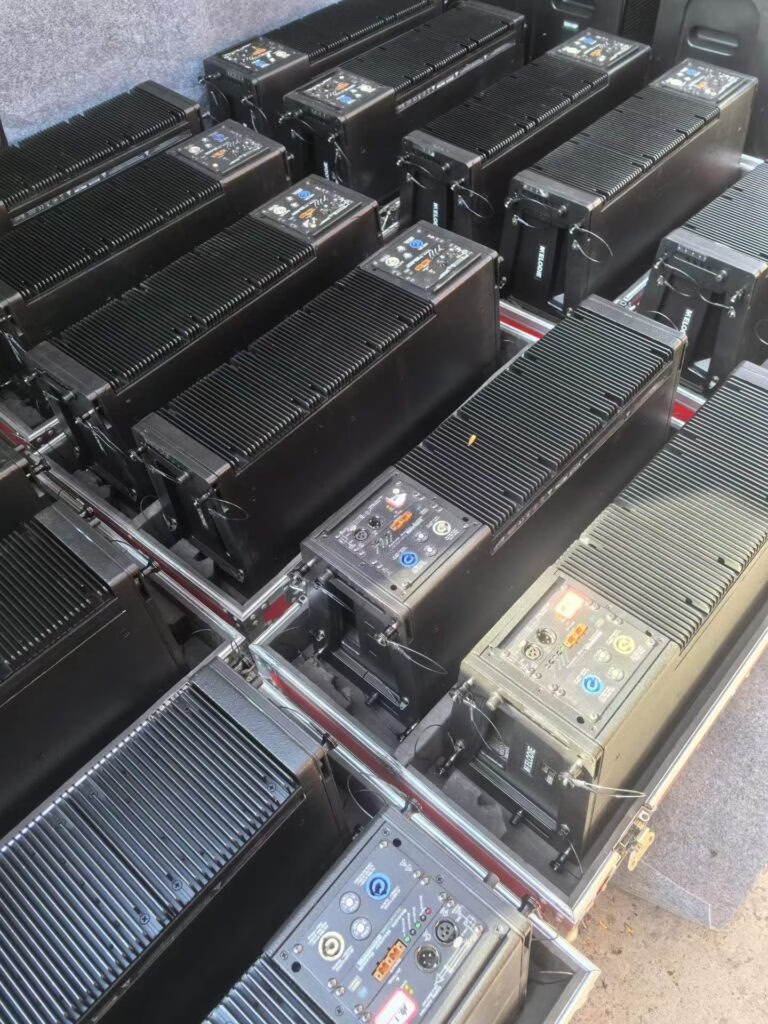
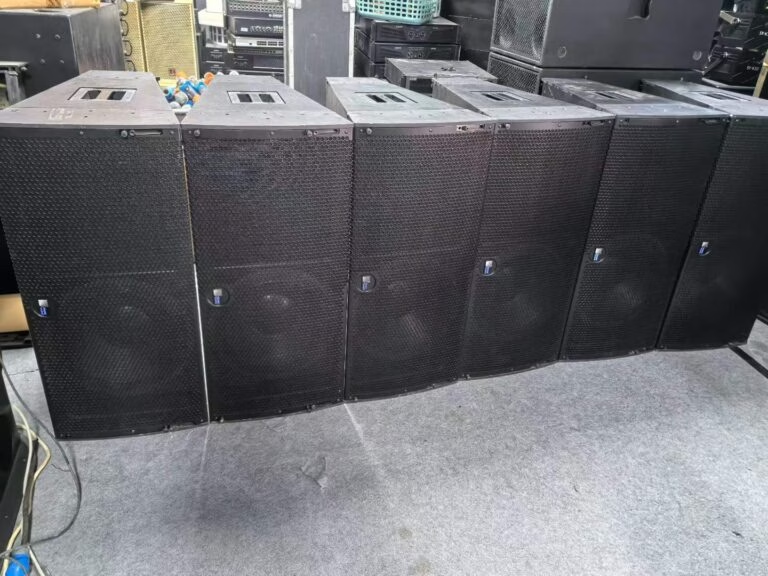
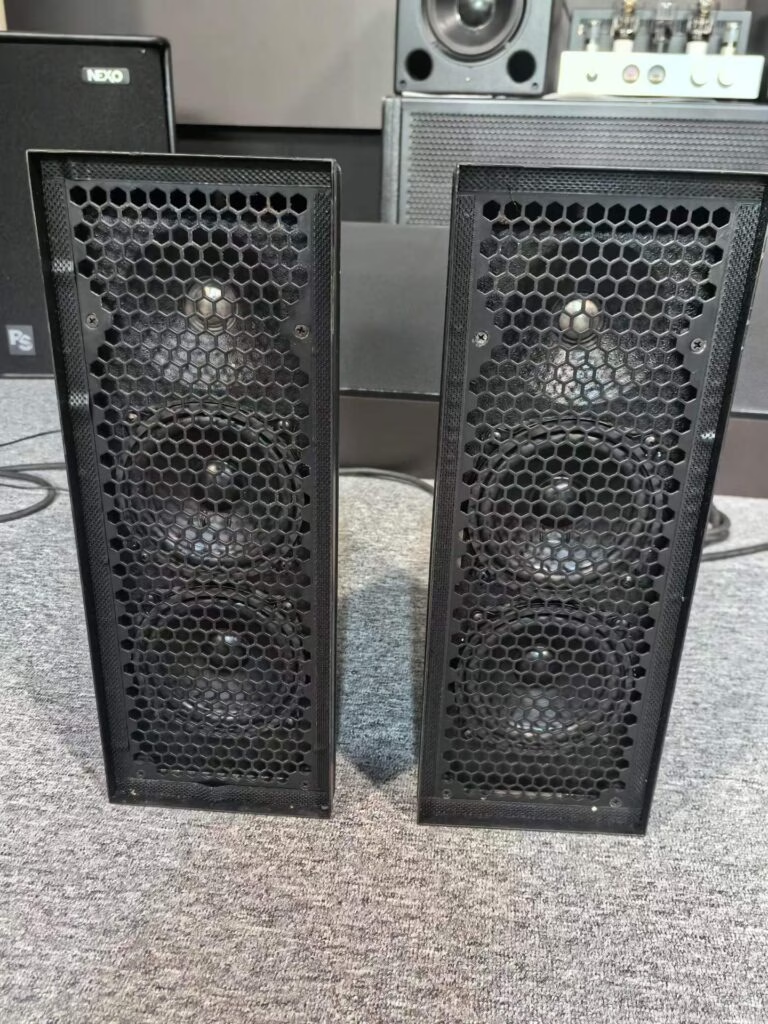
When we list an K-array KF12 self-powered 2-way speaker, each unit gets its own photo set and its own note about which test passed. That is slower than assigning a grade and moving on, but it removes the arguments later.
Does the grade change what shipping costs you?
Yes, because heavier and bulkier gear costs more to move. A 44-channel mixing console in a flight case runs about 60-80 kg; sea freight from Shenzhen to a European port is roughly USD 120-200 per cubic metre right now, and air freight is 3-5 times that. A “Very Good” unit with a cracked case often costs more in shipping and crating than the discount saves you.
Practical rule: if the cosmetic damage forces extra packing (foam, a custom crate, double-wall carton), the grade needs to be at least 20% cheaper than an Excellent unit of the same model, or buy the better one.
What should you ask for before paying?
- Six photos minimum: front, back, both sides, top, and the serial plate.
- A 30-second video of the unit powering on and passing signal.
- Written confirmation of what was tested and with what gear.
- The exact weight and packed dimensions, in centimetres and kilograms.
- Whether the flight case is included — always confirm, always.
Key Takeaways
- Like New = under ~50 hours, near-perfect cosmetics, 15-25% below new.
- Excellent = light rack rash and scuffs, no electrical faults, 30-45% below new.
- Grade names are unregulated. Photos and test video are the only real evidence.
- Cosmetic flaws are fine; rust, burn smells and spliced mains cables are deal-breakers.
- Heavy cosmetic damage can raise crating cost enough to erase the discount.