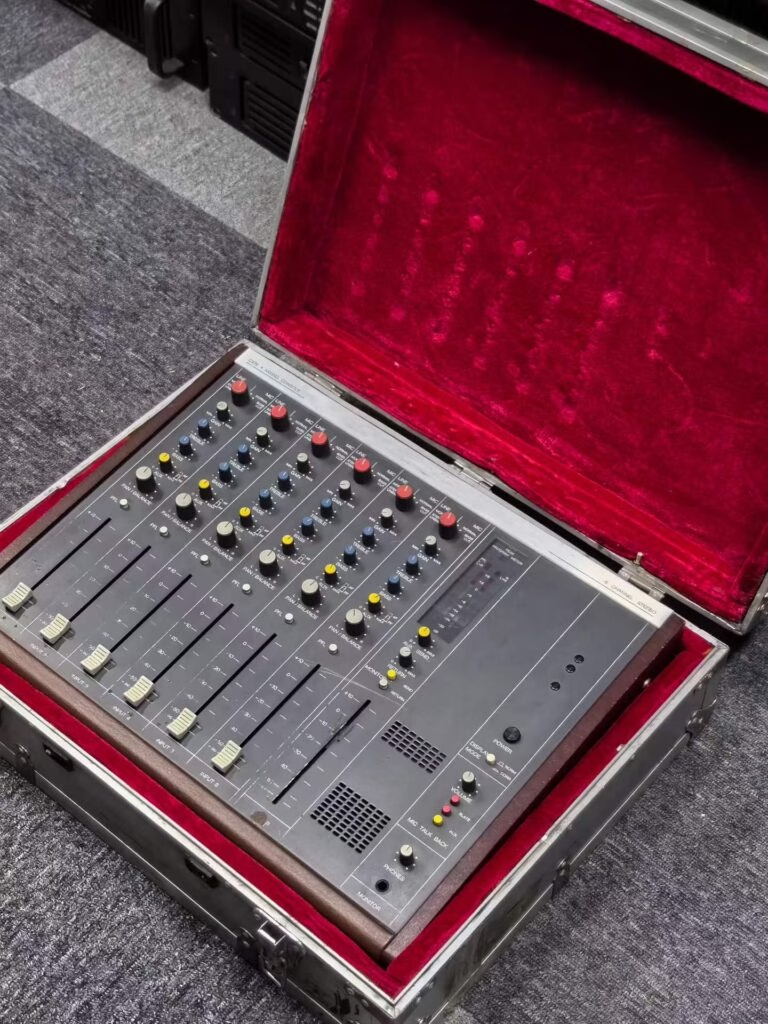
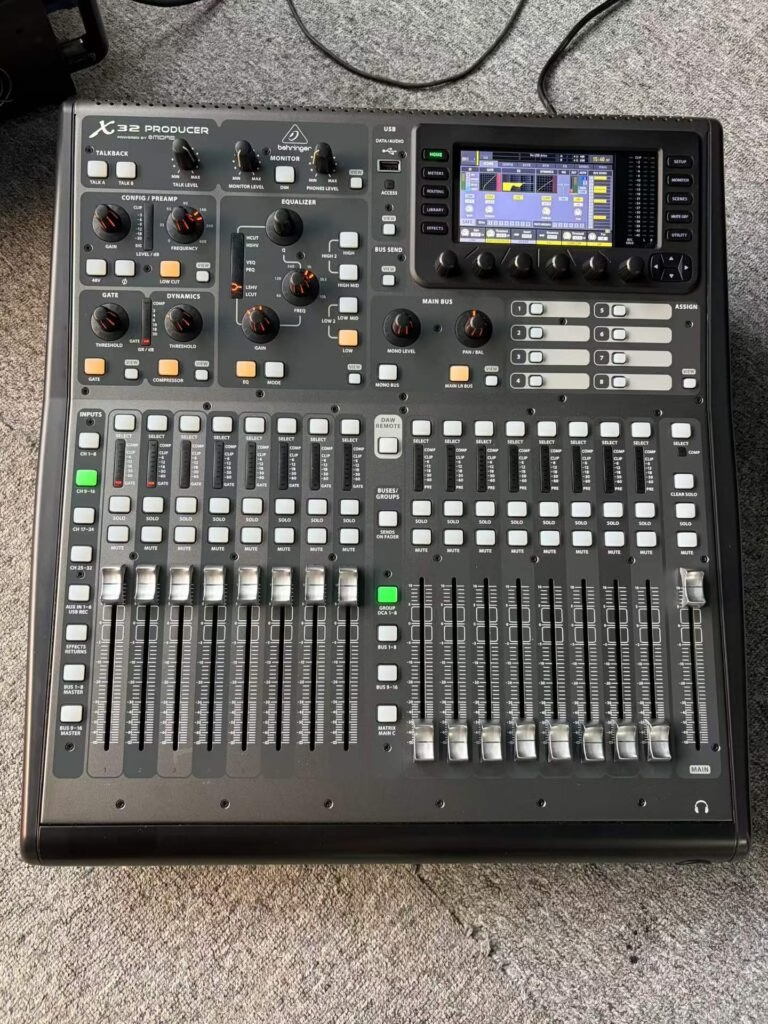
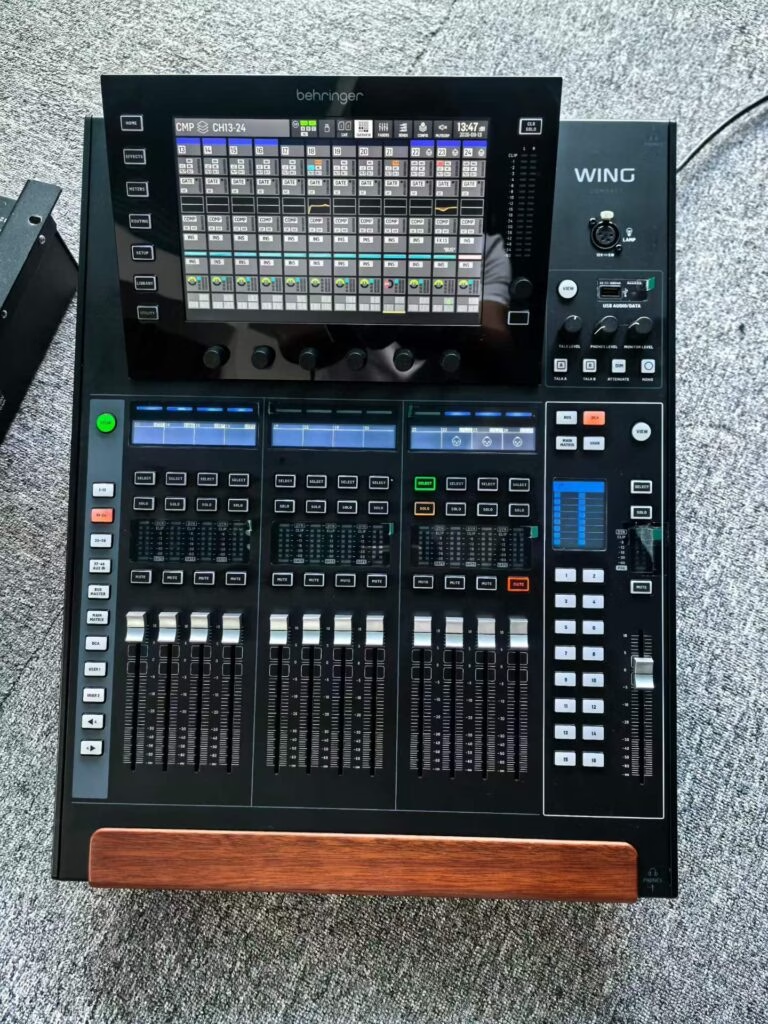
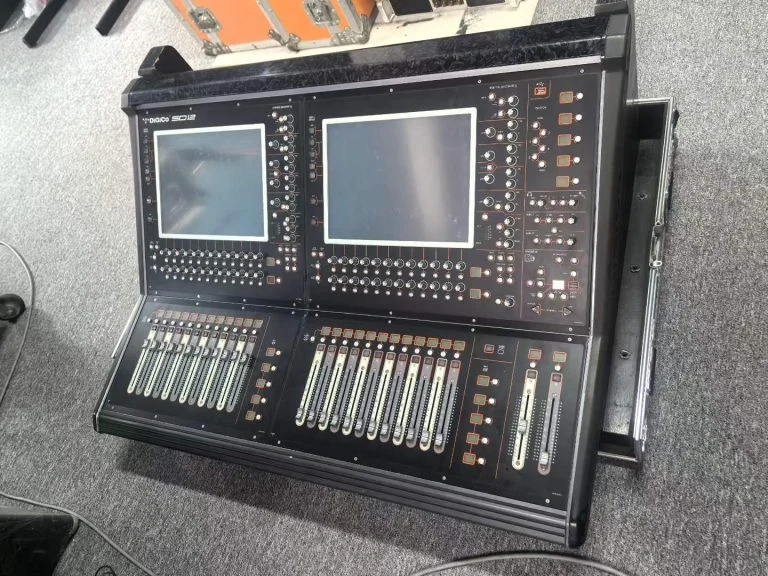
Short answer: buy digital for anything that moves between venues or needs more than 16 channels. Buy analog for a fixed install where volunteers run the desk and repair cost matters more than features. A used 24-channel analog desk costs $600-1,200 and a tech can fix it with a soldering iron.
The price gap has closed. A mid-2010s digital console now sells for less than a comparable analog desk did new, which flips the old advice that analog was the budget choice.
What does digital actually give you?
- Scene recall: reset a whole show in two seconds, no marker tape.
- Dynamics and EQ on every channel without an outboard rack.
- Multitrack recording on most current models.
- One Cat5 or one USB cable instead of a 16-channel snake.
That last point is underrated for touring. A 30-metre analog snake weighs around 18 kg; a Cat5 drum weighs 1 kg. On a fly date with airline weight limits, digital wins before the first soundcheck.
Where does analog still win?
Repair. A dead channel on an analog desk is a $40 pot or a $3 op-amp. The same fault on a digital console can mean a $300 board swap and a two-week wait. If your desk lives in a humid club and nobody services electronics, analog fails softer.
Speed also matters. Volunteers at a community venue learn an analog desk in an evening. A digital desk with layers and menus takes weeks, and mistakes are invisible because the screen hides what the next fader will do.
How do the used prices compare?
| Desk type | Used price 2026 | Repair cost | Learning time |
|---|---|---|---|
| Analog 16 ch | $400-800 | $20-100 | 1 evening |
| Analog 24-32 ch | $600-1,200 | $50-250 | 1-2 evenings |
| Digital 16-24 ch | $700-1,500 | $200-600 | 1-2 weeks |
| Digital 32-48 ch | $1,200-2,500 | $300-900 | 2-4 weeks |
What should you check on a used digital desk?
Faders first, then screens, then card slots. Fader motors are the wear item, and a desk with two dead motors tells you it saw heavy use. On the Yamaha side, the DM1000 page shows the 16-bus layout that made the model a rental staple – useful as a reference for what a solid used digital desk looks like.
Check that every input preamp passes signal and that the firmware is the last release. Ask about scene memory retention after unplugging. On analog desks, test every channel for scratchy pots and check the master fader for channel imbalance.
Which one fits your situation?
- Church or community venue, volunteer operators: analog 24 ch.
- Touring band with a fixed engineer: digital 32 ch.
- Rental fleet: a mix – analog desks survive abuse, digital desks rent at higher rates.
- Studio with a DAW: skip both, buy a control surface.
Key Takeaways
- Digital wins on scenes, channels and touring logistics; analog wins on repair cost.
- Used digital 32-channel desks now cost $1,200-2,500.
- Analog 24-channel desks run $600-1,200 and are locally repairable.
- Fader motors and screens are the main used-digital failure points.
- Match the desk to the operator, not to the spec sheet.