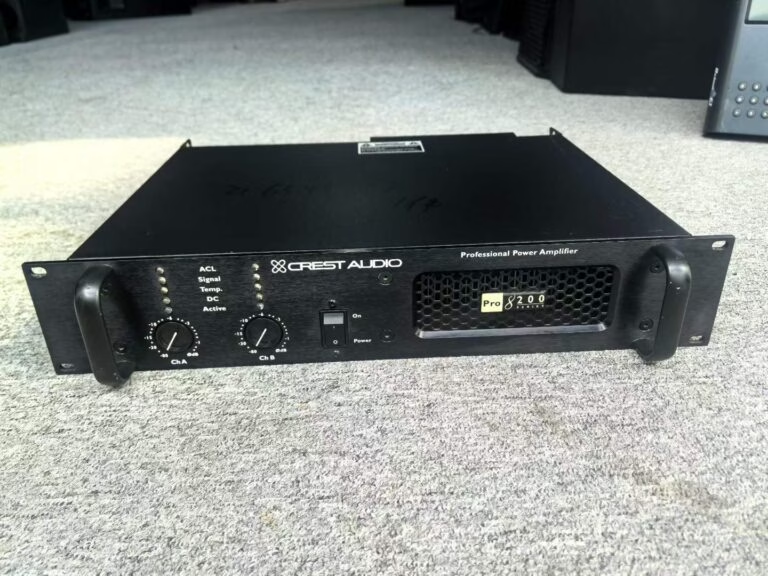
Short answer: Like New should mean no visible wear and a full bench test pass. Excellent allows light rack rash, scuffs on corners, or a faded screen, but the electronics must work 100 percent. Neither label says anything about hours of use, so treat the words as cosmetic shorthand and ask for test data.
Search used speakers for sale uk and every listing shows a grade. The problem is that grade is self-assigned. One seller’s excellent is another seller’s well used. Here is how the words are actually used in the trade, and how to check them.
What does each grade usually cover?
| Grade | Cosmetics | Function | Typical discount vs mint |
|---|---|---|---|
| Like New | No marks, original box possible | Full test, often unopened since removal | 10-15 percent |
| Excellent | Small scuffs, clean rack ears | Full test, all channels and I/O working | 20-30 percent |
| Good | Visible scratches, worn grille cloth | Works, minor cosmetic faults | 35-45 percent |
| For parts | Anything | Faulty, not fully tested | 60 percent+ |
Those percentages are pulled from real export quotes on 2026 stock, not a price guide. A K-array KF12 pair graded Excellent typically lands 25 percent under a sealed carton. That gap is the honest value of the cosmetic risk you accept.
Why do exporters grade differently from retail shops?
Export stock comes from rental houses and event companies that retire gear in bulk. A unit that ran 40 weddings a year will show rack rash even if the amp modules are fine. Graders working at container volume look at the front panel and the corners, snap photos, and move on. They are not measuring capacitor life.
So the grade is a floor, not a ceiling. Buy the unit, not the label.
What should you ask before paying?
- Photos of the exact serial number you are buying, not a stock shot of the model.
- A bench test video with a signal source and a meter, or at least a screenshot of the test rig.
- Whether the unit was serviced: new caps, replaced fans, firmware version.
- Original accessories: flight case, power cable, rack ears, dust cover.
- Return policy in writing, including who pays return freight from your port.
Where the grade labels break down
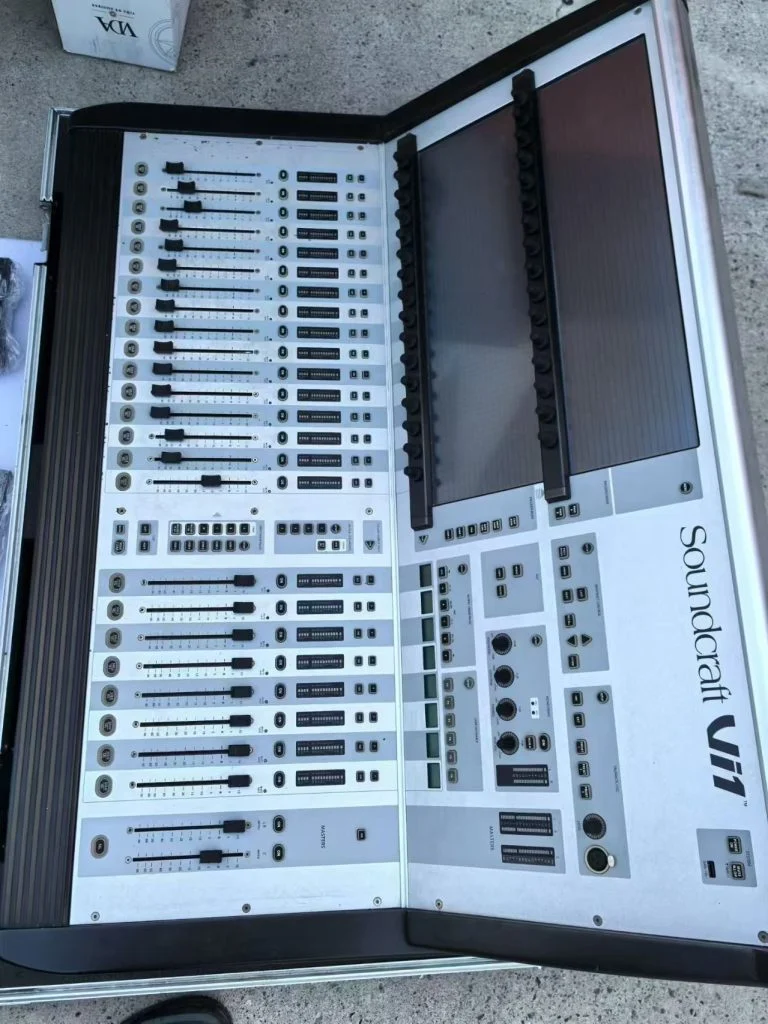
Two failure points matter more than cosmetics. First, fans and power supplies wear out silently, and a clean front panel hides a 12,000-hour fan. Second, screens and encoders on digital gear die from dust and heat long before the audio path fails. If you are looking at a digital console, read the Yamaha DM1000 listing and check whether the display and faders were tested, not just powered on.
For speakers, push on the cone gently, listen for rubbing, and check that the horn diaphragm is original. A reconed 12-inch driver sounds different and resells lower. If cosmetics are your main concern because the gear goes on a showroom floor, spend the extra 25 percent; if it goes into a road case, Excellent is money well spent.
Does the graded price still beat new after shipping?
Usually yes, but run the numbers. Add freight, import duty, and the cost of one service visit. On a $900 used speaker pair, sea freight from China to a European port runs $180-260 per pallet position, and duty adds 0-6 percent depending on the code. If the total still lands 30 percent under new, buy used. If it lands within 10 percent, buy new and keep the warranty.
Key Takeaways
- Grade words describe paint and plastic, not hours or capacitor health.
- Excellent should still mean a full function test on every channel and input.
- Expect roughly 20-30 percent off mint for Excellent, 10-15 percent for Like New.
- Ask for photos of your serial number and a bench test, in writing.
- Add freight and duty before you compare against new pricing.