The short version: a used digital vs analog mixing console decision comes down to three numbers – channel count, number of bands or events per year, and whether a local tech can service it. Digital wins above 24 channels. Analog wins when the desk must stay repairable for another decade. Neither wins on sound quality in 2026, because both are clean enough that the room decides.
What does a used digital console actually give you?
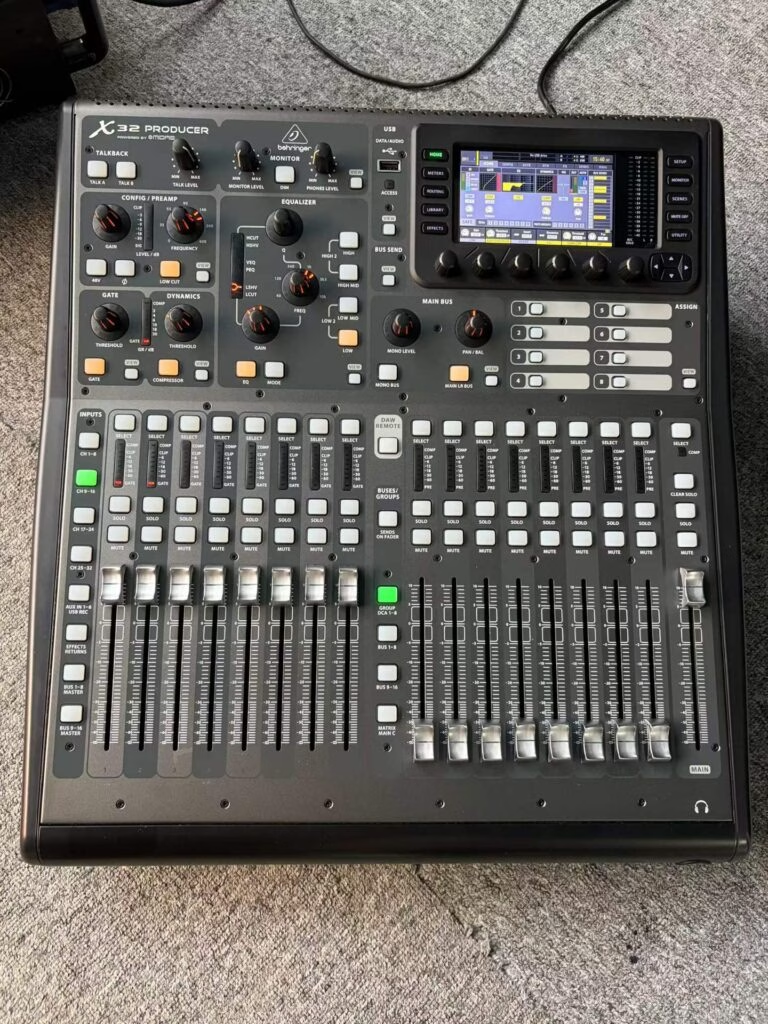
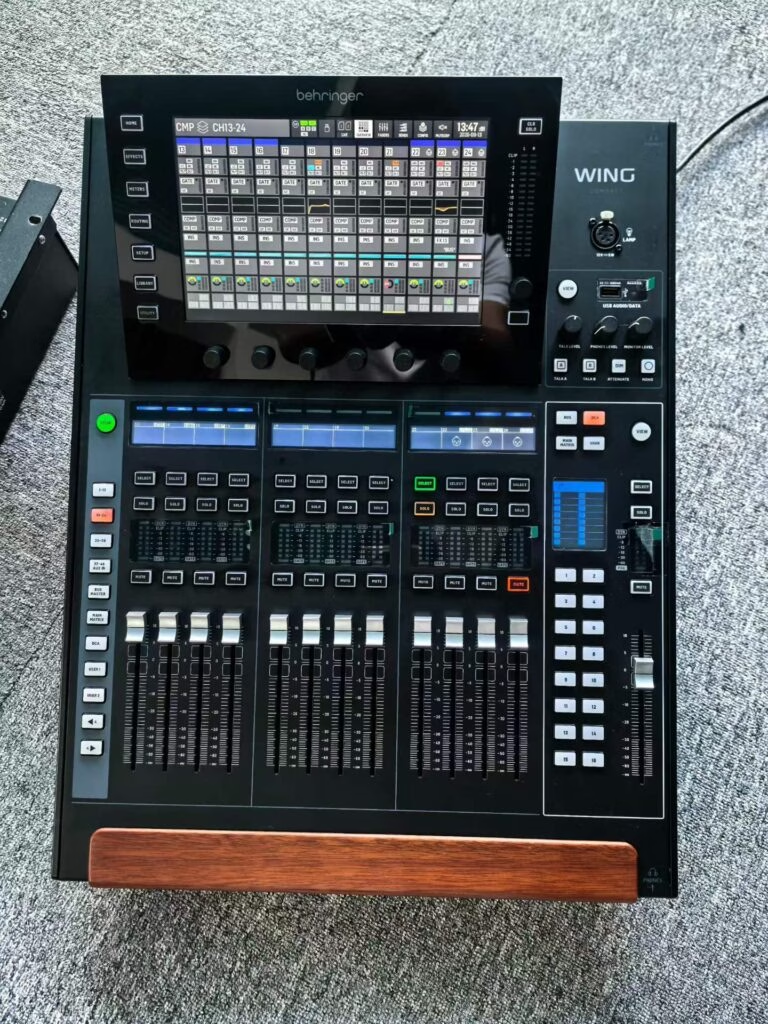
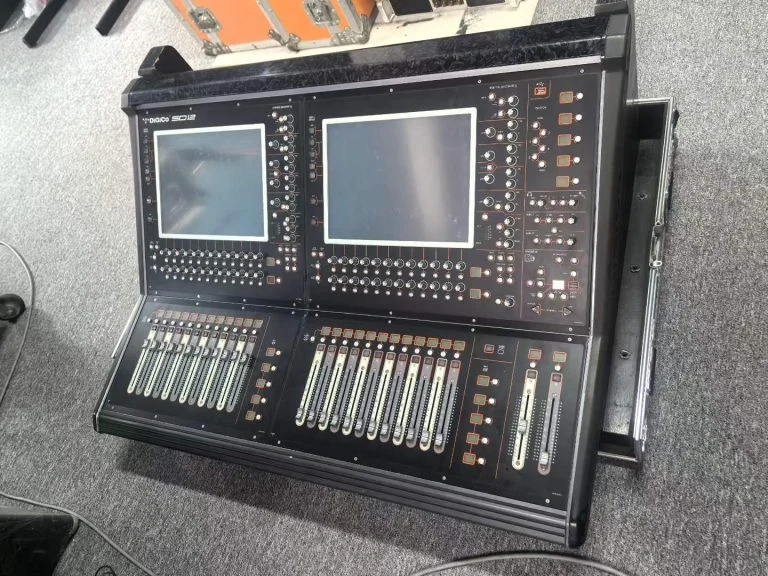
Scene recall, built-in dynamics on every channel, 4-band parametric EQ everywhere, and a small footprint. A Yamaha DM1000 packs 48 channels into a 19-inch rack with 100 mm motorised faders – that is the whole reason it still sells for $900-1,400 used in 2026 despite shipping in 2001.
The catch is dependence. Digital desks live or die on firmware, power supplies and one or two custom chips. If a DSP chip goes, the desk is a boat anchor. Analog desks fail one channel at a time.
Why do analog desks keep selling?
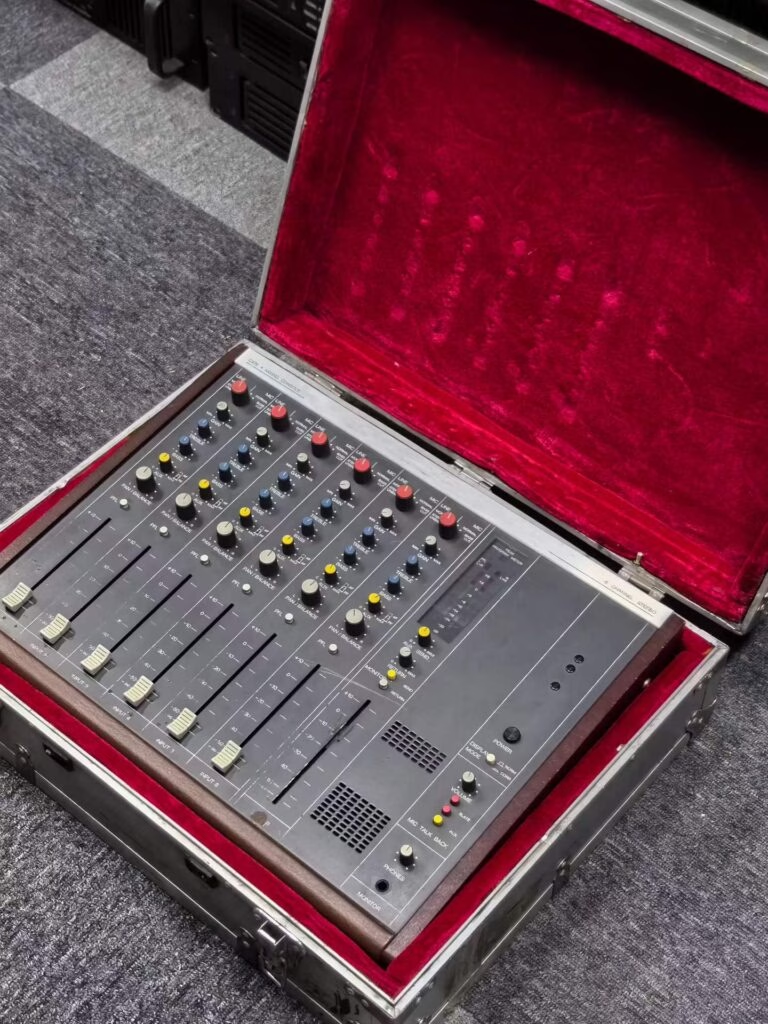
Because a 24-channel analog desk can be repaired with a soldering iron and a schematic. Faders are $15-40 each, op-amps are cents, and every city has someone who can fix one. For a church or a club that keeps gear for 15 years, that matters more than scene memory.
The downside is physical. A 32-channel analog desk weighs 40-60 kg, has 500+ knobs to clean, and takes two people to move. If you tour, that is a daily tax.
How do the two compare on real numbers?
| Factor | Used digital | Used analog |
|---|---|---|
| Typical price, 24-32 ch | $900-3,500 | $500-1,500 |
| Weight | 12-25 kg | 35-60 kg |
| Channels per rack unit | 16-48 | 3-8 |
| Repair path | Board swap, firmware, parts supply | Component level, any tech |
| Failure style | Whole desk dead | One channel at a time |
| Recall for repeat events | Instant | Paper and photos |
What breaks first on each?
On digital: the power supply, then the fader motors, then the screen backlight. A DM1000 with dead motor faders still mixes, but you lose recall of fader positions, which is half the point.
On analog: dirty pots and scratchy faders first, then dead channels from a blown op-amp. Cleaning a 24-channel desk properly takes 3-4 hours. Budget that labour into the price.
Which one suits your situation?
- Houses of worship, theatres, corporate AV: digital, because recall saves 30-60 minutes per event.
- Clubs, small rental, community venues: analog, because it survives abuse and any tech can fix it.
- Touring with 40+ inputs: digital, no argument. Analog at that size needs a truck.
- Studio with outboard gear: either. A used analog desk gives you real sends to compressors; digital gives you total recall.
What should you check before buying either?
Power supply age and type, every channel on headphones, every fader swept end to end, and the availability of spares. For digital, ask the seller to show the firmware version screen. For analog, ask for the schematic – if it is not public, think twice.
Both formats are on our used mixing console listings, and the Yamaha DM1000 page shows the digital end of the range with full specs.
Is a hybrid desk worth considering?
Rarely. Early hybrid designs from 2005-2012 combine a digital core with an analog surface and inherit the weaknesses of both: heavy, hard to service, and dependent on a discontinued OS. If you want digital control with analog feel, buy a modern digital desk with real faders instead.
Does the venue size change the answer?
Yes, more than the gear does. A 120-seat room with a 12-input setup does not need 48 channels, and a digital desk there means menus at every show. A 400-cap venue with three support acts in one night needs recall, and no analog desk will give it to you at any price.
Count the inputs you actually use, add four for growth, and let that number pick the format. If the answer is 20-24, both formats work and price decides.
What about spare parts five years from now?
Ask before you buy. For analog, the answer is almost always yes: standard pots, faders and op-amps, or a substitute. For digital, check whether the manufacturer still stocks the LCD panel and fader assembly. A 2010s digital desk with no fader parts left is a desk with a countdown.
Key Takeaways
- Above 24 channels or frequent repeat events, used digital wins on weight, recall and processing per channel.
- For long-term serviceability with a local tech, used analog still wins – it fails one channel at a time.
- Check the power supply first on digital, the pots first on analog. Both cost 3-4 hours of labour to bring back.
- A used Yamaha DM1000 at $900-1,400 remains the cheapest route to 48 channels and motorised faders.