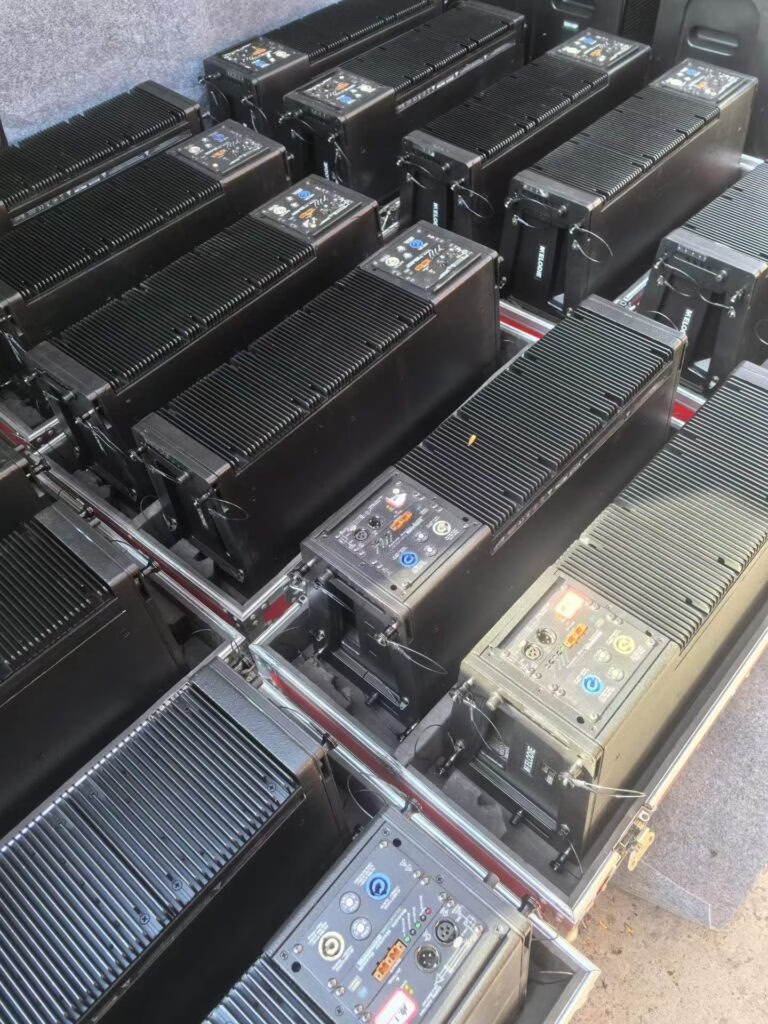
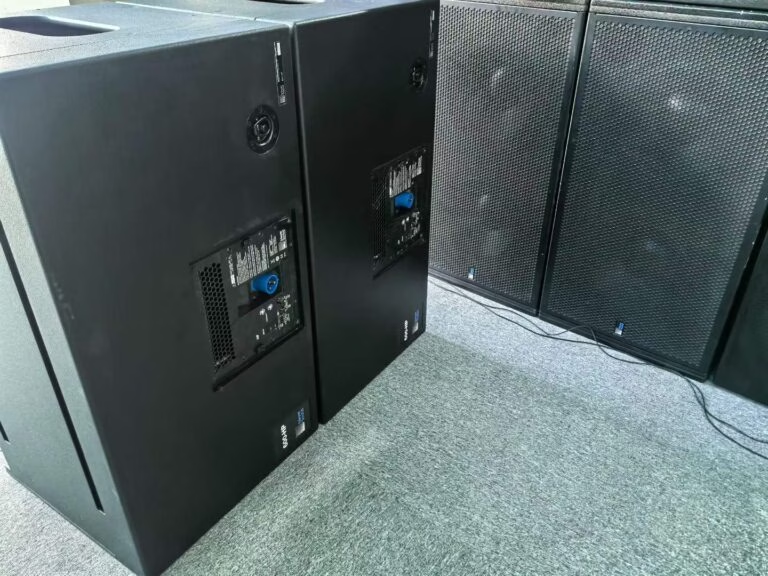
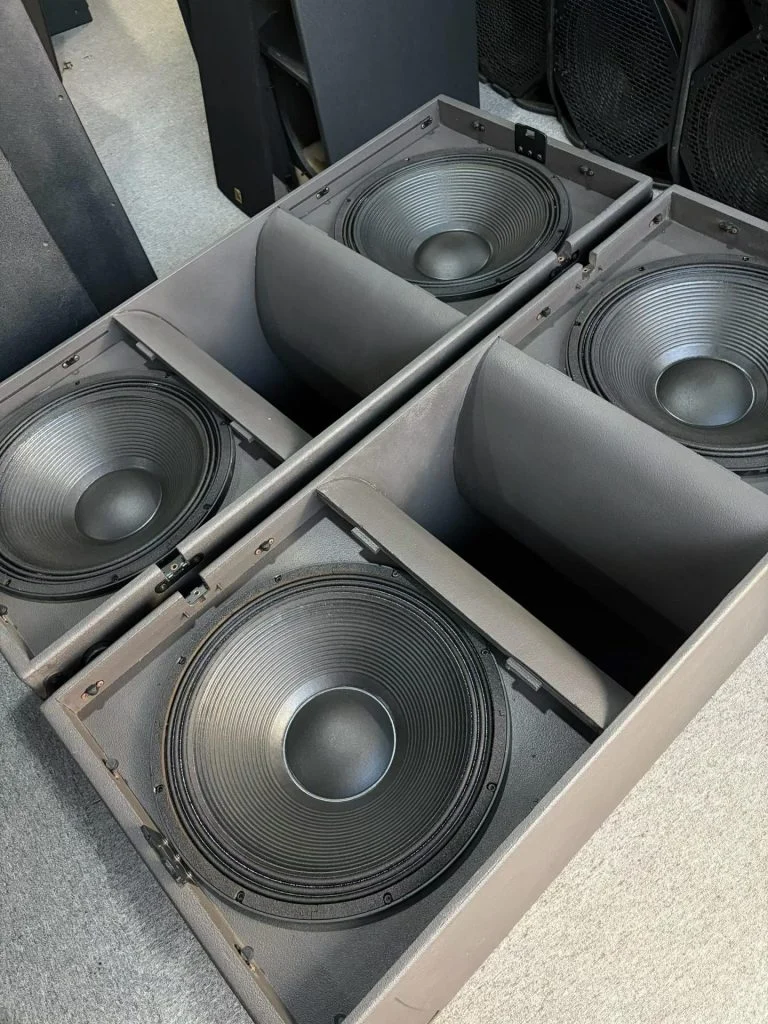
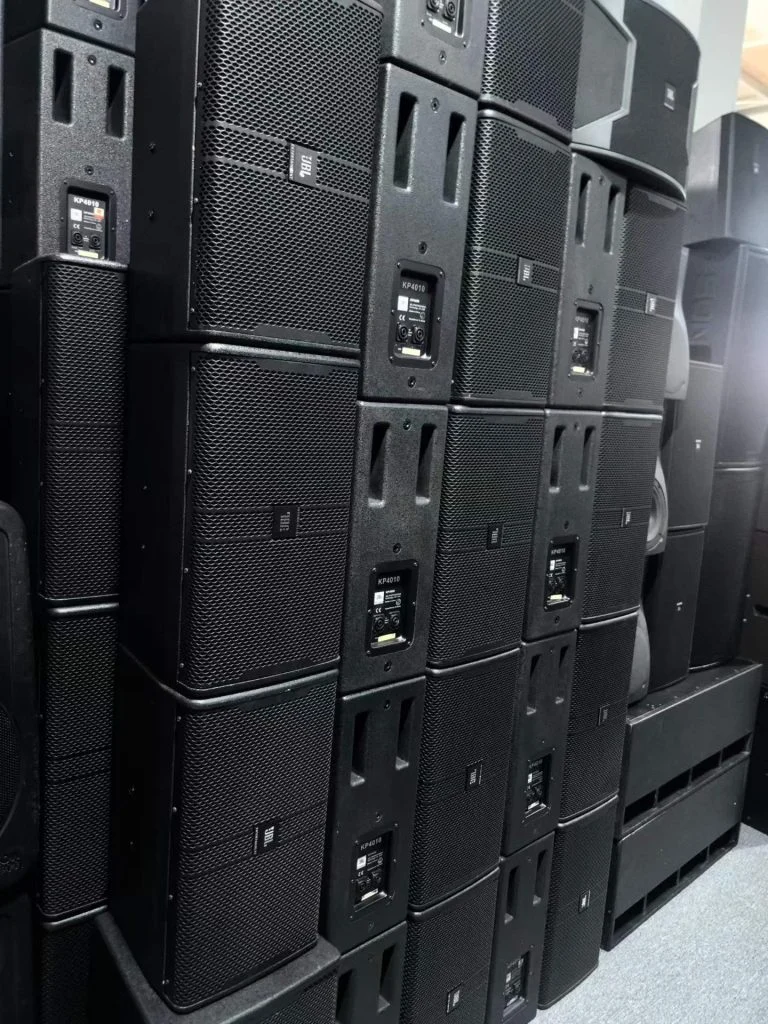
Used powered PA speakers are worth buying if you can test them, and a bad idea if you can’t. A self-powered box concentrates its risk in one component: the amp and DSP module. Test it for five minutes and you know almost everything. Prices land at 40-55% of new: a 12-inch two-way box in the KF12 class runs $250-$700 used against $900-$2,000 new.
The part nobody mentions: amp modules are the single most common failure, and on discontinued models a replacement board can cost more than the box is worth. That asymmetry is the whole argument.
What actually fails first in a powered speaker?
In order of frequency across rental-house stock I’ve handled: electrolytic capacitors in the amp module (8-12 years), input jack and XLR connector solder joints (constant plugging), fan bearings drying out, DSP board faults after a power surge, and finally driver failure. The cabinet and driver usually outlive the electronics by years.
That ordering matters. A used box that sounds fine at low volume but goes into protect at high SPL has a supply problem, likely caps. A box that hums when nothing is plugged in has a grounding or PSU issue. Both are repairable, neither is cheap.
How do you test one in five minutes?
- Power on with nothing connected. Listen for hum, hiss and fan noise at idle. Silence plus a quiet fan is correct.
- Play music at moderate level through both the XLR and the TRS/1-4-inch input. Both should reach the same loudness.
- Run it at high level for 60-90 seconds. It should not drop into protect, thin out, or start crackling.
- Sweep the level knob from zero to full while playing. Any crackle means a dirty or worn pot.
- Check the limit LED behaviour: solid at extreme level is normal, flickering at moderate level is not.
Do that and you have tested the expensive 60% of the box. Skip it and you are buying a cabinet.
Where does a used powered box beat a passive one?
| Factor | Powered used | Passive used |
|---|---|---|
| Price, 12in two-way | $250-$700 ea | $80-$220 ea |
| Extra cost | None, amp is inside | Needs an amp, $200-$600 for a 2-4 ch unit |
| Cable runs | One XLR per box, 100m is fine | Speaker cable, shorter runs, heavier gauge |
| Failure risk | Amp module kills the whole box | Amp dies, boxes keep working |
| Service | Module swap, $150-$450 if available | Any amp works |
| Best for | Portable rigs, small venues, fast setup | Fixed installs, big rooms, long-term ownership |
For a club install running 8 boxes and planning to keep them 10 years, passive still wins: separate amps are cheap and serviceable. For a mobile DJ or a promoter doing 40 gigs a year who needs two boxes in a car, powered wins every time.
What’s the honest downside?
Repairability. A 2009-era powered box with a dead module and no available replacement is a paperweight, and you’ll be selling it as ‘For parts’ for 20% of what you paid. Passive is boring but a passive box from 1998 with a torn cone can be fixed for $90 and used tomorrow.
Second downside: shipping. A powered 12-inch box is 15-22 kg. Air freight on eight of them from China runs $900-$2,200, which can wipe out the used discount entirely. Sea freight changes the maths at 12+ units. Here’s how the numbers look on a 12-unit KF12 listing: one warehouse, one freight bill, one test report.
Which buyers should avoid used powered speakers?
Anyone who can’t inspect before paying, anyone running a 24/7 install where downtime costs more than the gear, and anyone buying a model whose amp module is no longer produced. Check whether the manufacturer still lists the module before you buy, because that single fact decides whether a $400 box is a bargain or a $400 cabinet with a hole in the back.
Key Takeaways
- Used powered PA boxes run 40-55% of new: $250-$700 for a 12-inch two-way against $900-$2,000 new.
- The amp module is the main risk. Confirm a replacement is still available before buying.
- A five-minute test (idle noise, both inputs, 90 seconds loud, knob sweep) covers most of the risk.
- Passive wins for fixed installs and long ownership; powered wins for portable rigs.