Short answer: a vintage analog console is worth buying if it is a real classic with parts support and you want its specific colour, and it is a trap if it is just old. “Vintage” is not a quality grade. A 1970s broadcast desk and a 1990s budget live desk are both old, and only one of them is worth restoring.
Why do vintage consoles still sell?
Two reasons. Sound and scarcity. Transformer-based input stages, discrete class-A gain blocks, and hand-wound inductors in the EQ produce a colour that plugin emulations chase but never quite nail. Names like Neve and API carry that reputation, and a well-kept frame can appreciate rather than depreciate.
The downside is everything around the sound. These desks are heavy, they need recapping, and a single faulty channel strip can cost more to service than a modern digital desk costs to buy.
Which vintage consoles actually hold value?
- Neve 80-series and 1073-based desks: the benchmark, prices stay high and rarely fall.
- API 1608 and legacy 2488: studio workhorses with strong parts support.
- SSL 4000 series: still in use daily, resale is solid, but maintenance is heavy.
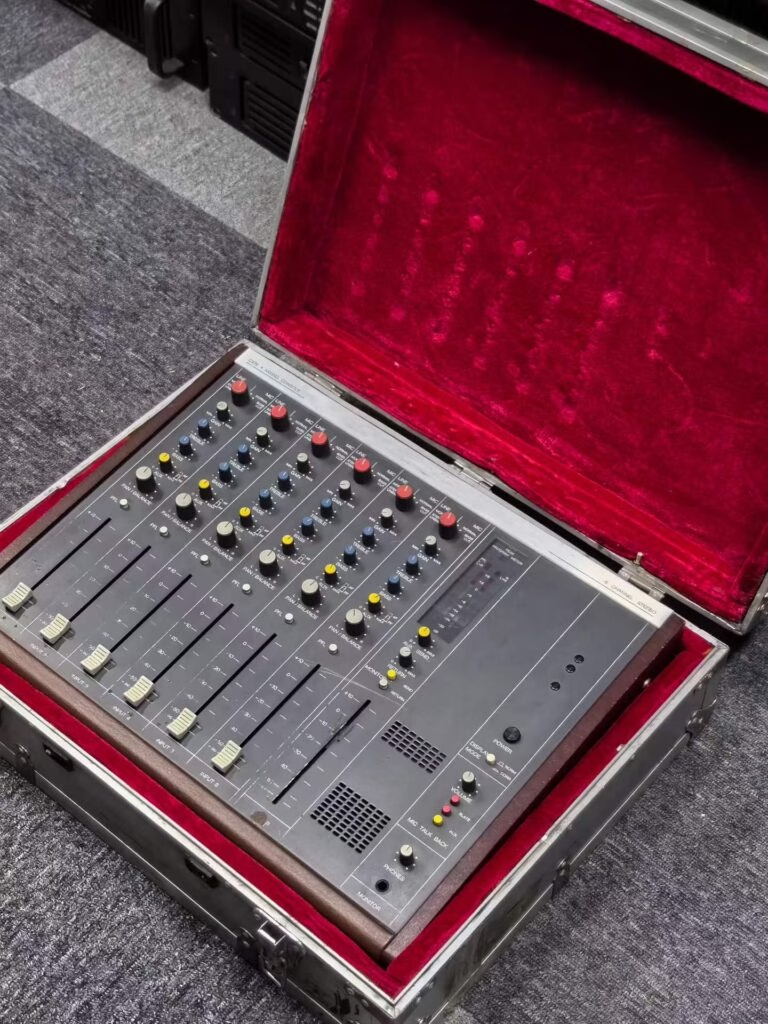
- Budget 1980s-90s live desks: usually not worth restoring, parts are gone.
Notice the pattern: the desks worth buying are the ones manufacturers still support.
What does ownership really cost?
| Cost item | Typical range |
|---|---|
| Full recap of a 24-channel desk | $1500-4000 |
| Single channel strip repair | $150-500 |
| Power supply rebuild | $400-1200 |
| Motorised fader replacement, each | $80-200 |
Add shipping. A loaded analog frame can weigh 200 kg or more, so freight and crating easily add four figures. If you are not set up to service it locally, walk away.
Who should actually buy one?
Buy a vintage desk if you record in one room, you have a tech you trust, and you want the tone as part of your sound. Skip it if you tour, if you need recall, or if you need the desk to just work every night with no surprises. For those jobs a used digital console is the honest answer, and the Yamaha DM1000 is a good example of a reliable used digital desk with full scene recall.
How do you tell a keeper from a wreck?
- Ask for a service history and the name of the tech who worked on it.
- Confirm every channel passes signal, one dead channel is a bargaining chip, ten is a project.
- Check the power supply, it is the first thing to fail and the most expensive.
- Look for swollen caps, scorch marks, and previous modifications.
- Verify parts availability for the specific model before you commit.
Key Takeaways
- Vintage only means old, not good. Classics with parts support are the ones worth buying.
- Neve, API, and SSL desks hold value; 1980s-90s budget live desks usually do not.
- A full recap runs $1500-4000 before shipping.
- Buy only if you can service it locally and want its tone.
- If you need recall and reliability, a used digital desk is the better fit.