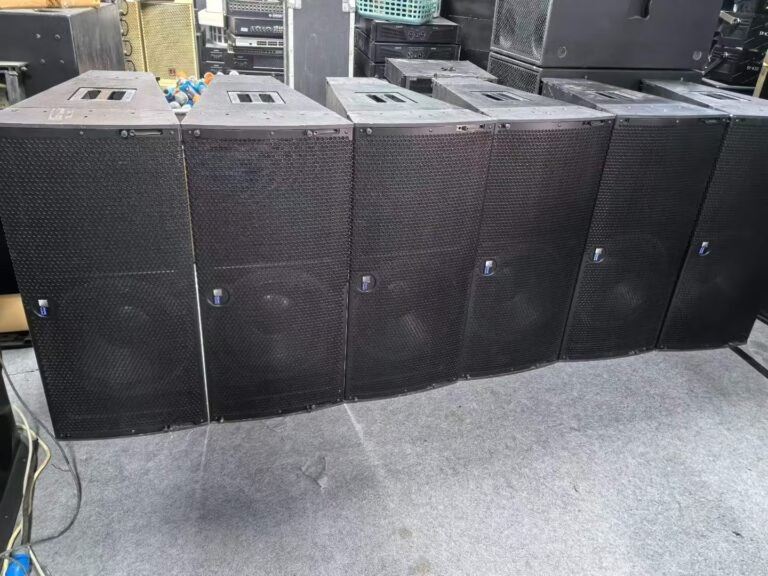
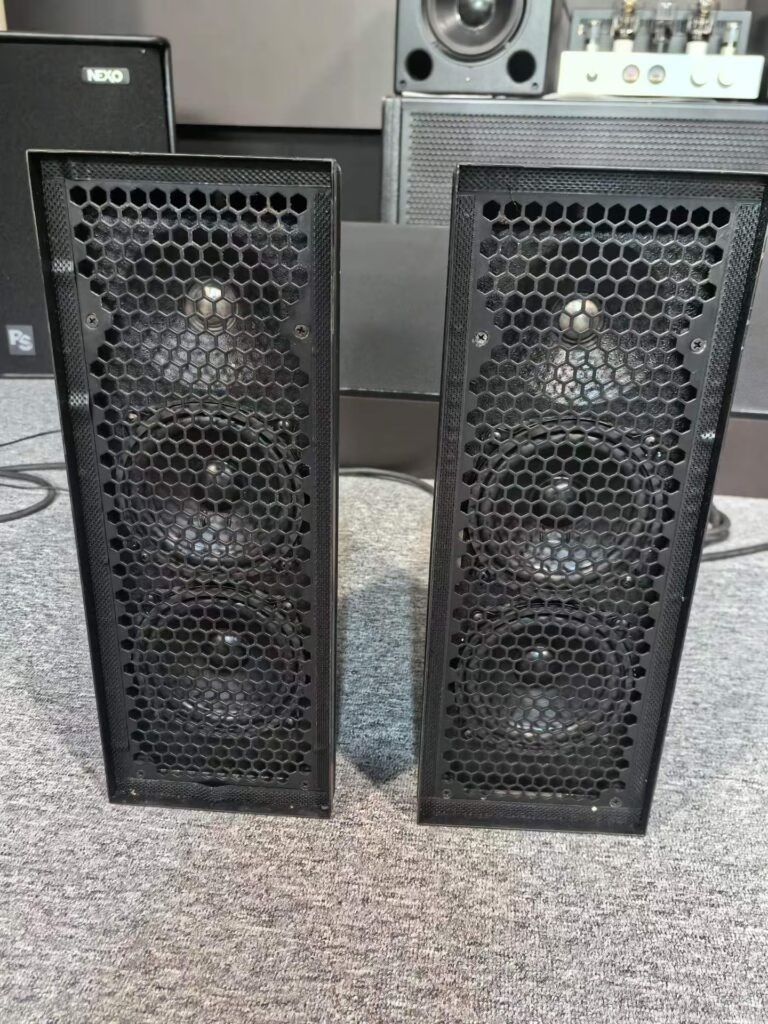
A real condition grade is a warranty in disguise. “Excellent” should mean the unit powers on, passes audio, and has only light cosmetic marks. “Like new” means it looks unmarked, often still boxed. When a seller cannot tell you what was tested, the grade is decoration — ignore it and ask for proof.
Why do condition grades matter more on used pro audio than on phones?
A scratched phone still makes calls. A used speaker with a tired cone or a dried-out amp can fail at the worst moment — mid-show, at full volume. Condition on pro audio is not about looks. It is about whether the moving parts and the electronics still have life in them.
What each grade should actually promise
| Grade | What it should mean | Typical price |
|---|---|---|
| Like new / open box | Unmarked, full function, often original packaging | 60-70% of new |
| Excellent | Fully working, light marks, no repairs needed | 40-60% of new |
| Good | Works, visible wear, maybe a replaced part | 30-45% of new |
| Fair | Works but shows age; may need service soon | 20-35% of new |
| For parts | Not fully working — sold to fix | 10-20% of new |
What should the seller be able to prove for each grade?
- Excellent or better: a video of every function working, powered at performance level
- Excellent: clear photos of each scratch, and of the back panel and connectors
- Any grade: honest notes on repairs, re-cones, or replaced amp modules
- Like new: confirmation the box and accessories exist if they claim “open box”
If a listing says “excellent” with two photos and no test video, treat it as “good” until proven otherwise. Photographs of a clean front grille tell you nothing about what is behind it.
Which flaws actually matter and which are just cosmetic?
Cosmetic scrapes on the cabinet reduce price a little and affect sound not at all. Torn cone surrounds, corroded connectors, a noisy fan, and a burnt smell are real problems. Ask specifically about the cone, the amp module, and the power supply — those three decide whether the grade is honest.
This is why buying from an exporter that physically tests and grades each unit beats rolling the dice on a marketplace photo. You can see how a properly graded unit is described on our used pro audio shop page, and the K-array KF12 speaker listing shows the level of detail a clean “excellent” grade should carry.
How to use a grade to negotiate
- Ask which grade the seller gives and what test backs it up
- Downgrade one level mentally if there is no test video
- Use visible flaws to ask for 10-20% off, not to reject the deal
- For “for parts” units, only buy if you already know the exact repair cost
Key Takeaways
- “Excellent” should mean fully working with light marks, at 40-60% of new price.
- No test video means downgrade the grade by one step.
- Cone, amp module and power supply are the three things to probe.
- Cosmetic wear is cheap to accept; electrical faults are not.
- A trustworthy seller names what was tested, not just the grade.