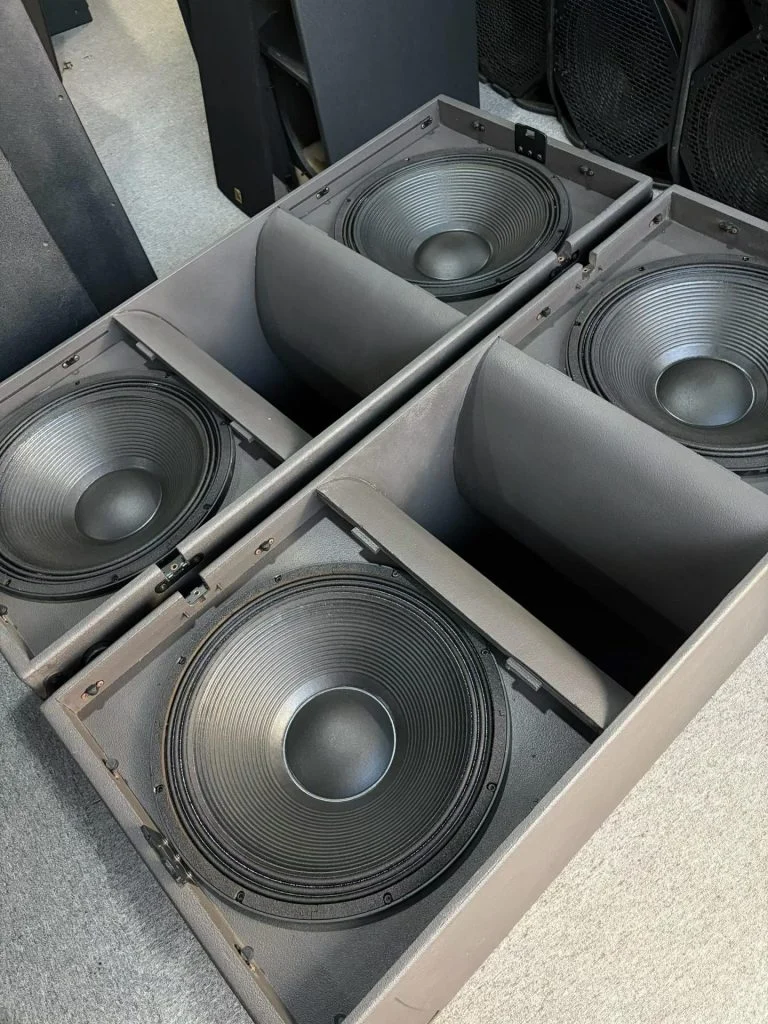
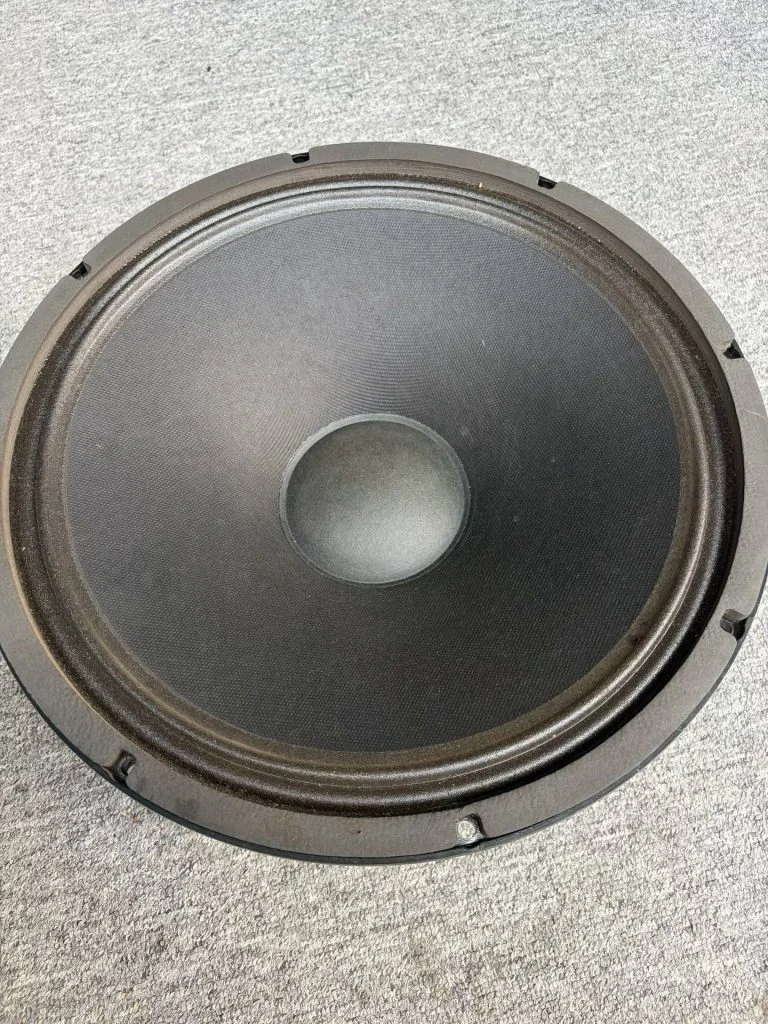
On five-year total cost, a used 18-inch sub at $450–$800 usually wins by $300–$700 over buying new. The condition is that the driver is original and does not need a recone in the first 18 months. If it does, the margin drops to near zero.
Most buyers compare sticker prices and stop. That is the wrong comparison. Subs are heavy, they ship expensively, and recones are a scheduled cost, not an accident.
What does a new 18-inch sub really cost?
A new powered 18-inch sub from a mainstream brand runs $1,200–$1,800 for 1,000–1,600 W. A passive 18-inch in a decent cabinet is $700–$1,100 without amplification.
Then add: shipping $80–$180 for a 45 kg box, a case at $150–$250 if it tours, and cables. Total for one powered unit lands near $1,600.
What does a used one actually cost?
Used pricing in 2026 for an 18-inch sub in good condition:
| Type | Used price | New price | Saving |
|---|---|---|---|
| Passive 18″ cabinet | $280–$480 | $700–$1,100 | 55–60% |
| Powered 18″ sub | $450–$800 | $1,200–$1,800 | 55–65% |
| Touring-grade 18″ (branded) | $900–$1,500 | $2,400–$3,200 | 55–60% |
The 55–65% band is stable across brands. Subwoofers depreciate fast because they are heavy, unfashionable and awkward to store. That is your advantage.
What are the hidden costs over five years?
Three real ones:
- Recone: $120–$220 for an 18-inch driver, once in five years on touring duty.
- Capacitors in the amp module: $80–$150 for a tech to swap the main bank, typically at year 7–9.
- Second shipping: if you sell it on, you pay again. A 45 kg sub ships for $90–$160.
Total hidden cost: roughly $250–$500 over five years. Compare that to the $600–$1,000 you saved at purchase and the maths still works.
What kills the deal: a sub that needs a recone at month six. That is $180 plus a second freight leg, and it means the seller either did not test it or knew. Always ask for a sweep test video at 35–45 Hz before you pay.
Does a used sub hold value better?
Yes, and it is one of the better arguments for buying used. A new $1,500 sub is worth about $700 after three years — a 53% drop. A used sub bought at $700 will still fetch $550–$650 in three years. You rent it for $50–$150 instead of $800.
Depreciation flattens fast on heavy gear. The first buyer absorbs the drop from new to used; every buyer after that deals in a narrow band. Two expensive categories buck this — line arrays and anything with a proprietary control protocol — but plain 18-inch subs hold value fine.
When should you buy new instead?
Four cases. You need a warranty for a client install. You need identical units for a rental fleet. The model is the newest generation with a real spec jump, such as going from 2015-era to 2024-era DSP. Or you cannot inspect before paying.
That last one matters most for imports. Buying a used sub sight-unseen from 8,000 km away needs a seller who will send a sweep video, a photo of the driver cone and the cabinet edges, and the serial number. Without those, the used saving is a bet, not a discount.
One more: if your venue runs 130 dB regularly, buy new and keep the warranty. Pushing 15-year-old sub drivers to their limits is how you pay for two recones in one year.
Key Takeaways
- Used 18-inch subs run 55–65% below new across all tiers.
- Five-year hidden costs (recone, caps, resale shipping) total $250–$500.
- Net saving over five years is typically $300–$700.
- Depreciation flattens after year three; a used sub holds value in a narrow band.
- Never buy a used sub without a 35–45 Hz sweep video.
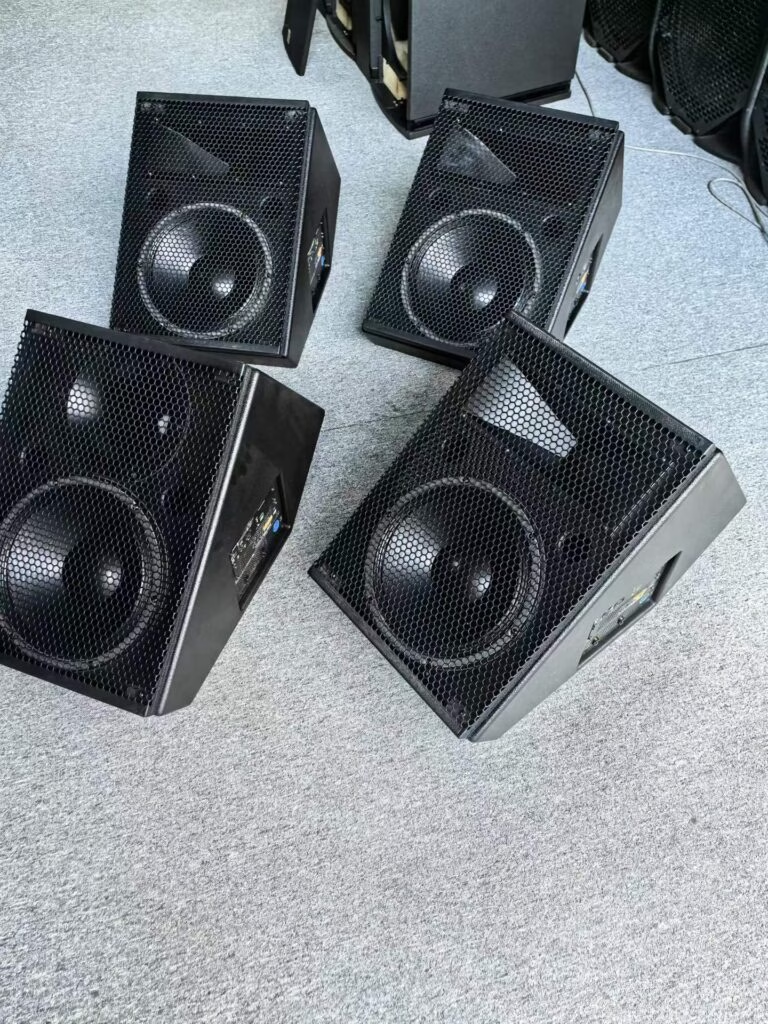
Pair a sub with a clean top box and you have a rig. The K-array KF12 handles tops on its own, and the speaker category lists sub options.